
Modern Literature
There is no single modern Indian literature for the same reason there is no single Indian language. There are overlapping literary systems with different canons, magazines, scripts, political histories, and reading publics. Translation lets them meet, but unevenly: a major Malayalam or Assamese novelist may remain less visible nationally than an ordinary Indian-English one because English travels through publishers, universities, and foreign prizes with less friction.
Modernity did not arrive all at once with the British; colonial rule changed the material conditions of literature. Print expanded, prose genres acquired new prestige, newspapers and journals created publics, standardized languages hardened around scripts, and education produced both new readers and new arguments over whose language counted.
Reform, nation, and the novel
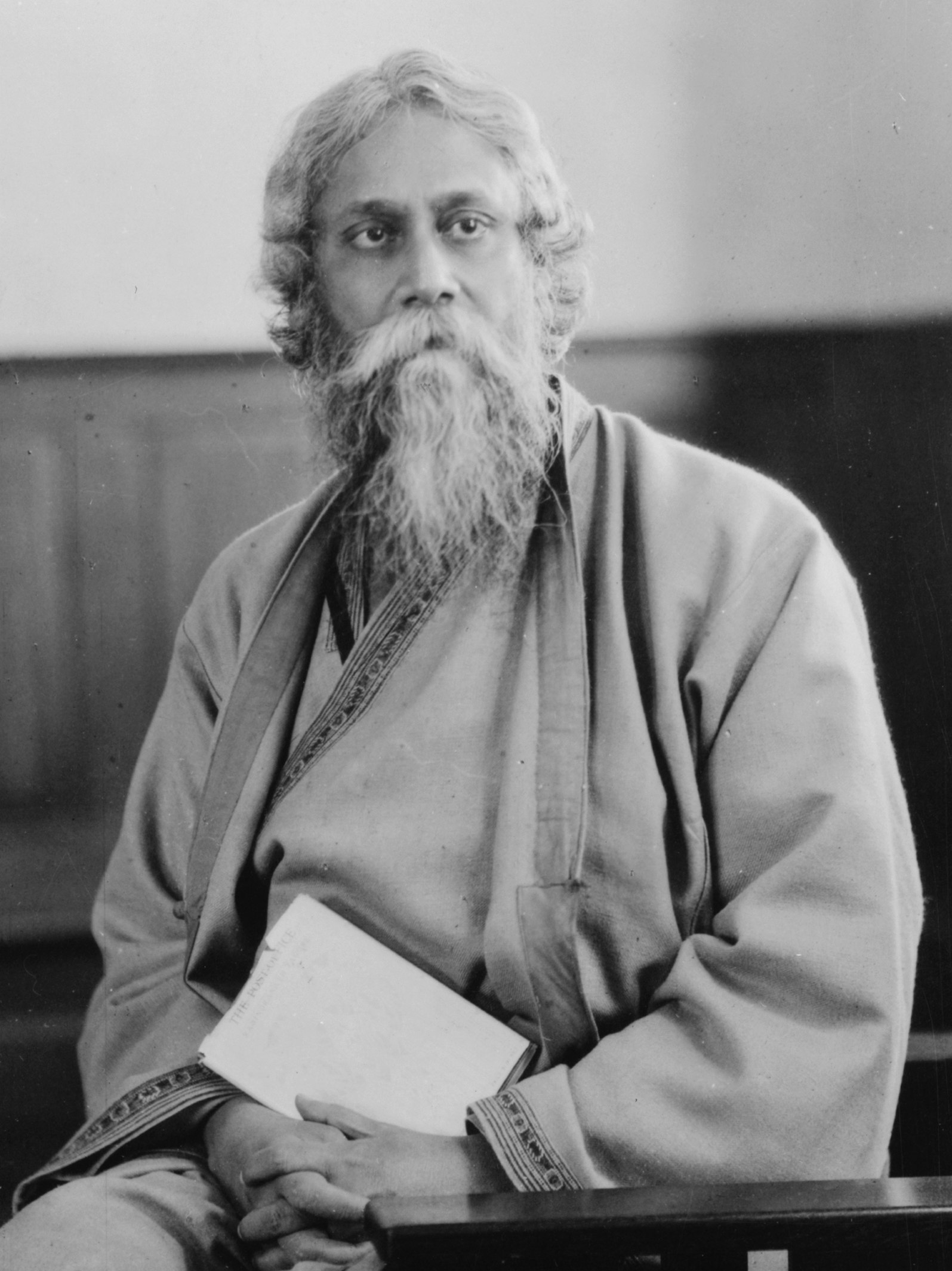
Nineteenth-century Bengal witnessed an early concentration of print institutions and the emergence of new prose. Bankimchandra Chattopadhyay’s novels blended history, romance, and the Hindu national imagination; “Vande Mataram,” drawn from Anandamath, became an anticolonial hymn and later a source of dispute because its nation is a goddess not every citizen can worship. Rabindranath Tagore wrote poems, songs, stories, novels, plays, and essays while criticizing the nationalism for which others recruited him. His work belongs to Bengali literature before it belongs to the category “world poet.”
Comparable transformations occurred in other languages on their own schedules. Fakir Mohan Senapati used irony and an intrusive narrator in Odia to expose colonial property and village exploitation. O. Chandu Menon’s Indulekha staged English education, caste, and marriage in Malayalam. Subramania Bharati joined Tamil poetic renewal to nationalism, feminism, and caste reform. Bharatendu Harishchandra and later writers helped make modern Hindi prose, while the separation of Hindi and Urdu into Hindu and Muslim public languages gathered political force.
The novel proved useful because it could place the large abstractions, reform, nation, caste, women’s education, and religious identity, inside households and property disputes. It also imported European forms into literary cultures that had their own long narrative traditions. The result was neither imitation nor untouched continuity.
Urdu and the progressive imagination
Urdu poetry entered the colonial period with an immense courtly inheritance. Mir and Ghalib made the ghazal capable of carrying metaphysical doubt, erotic loss, urban ruin, and jokes about the structure of language in a couplet whose two lines can form a world. Muhammad Iqbal later drew on Persian and Urdu philosophical poetry to shape Muslim selfhood, anticolonial thought, and a political legacy claimed differently in India and Pakistan.
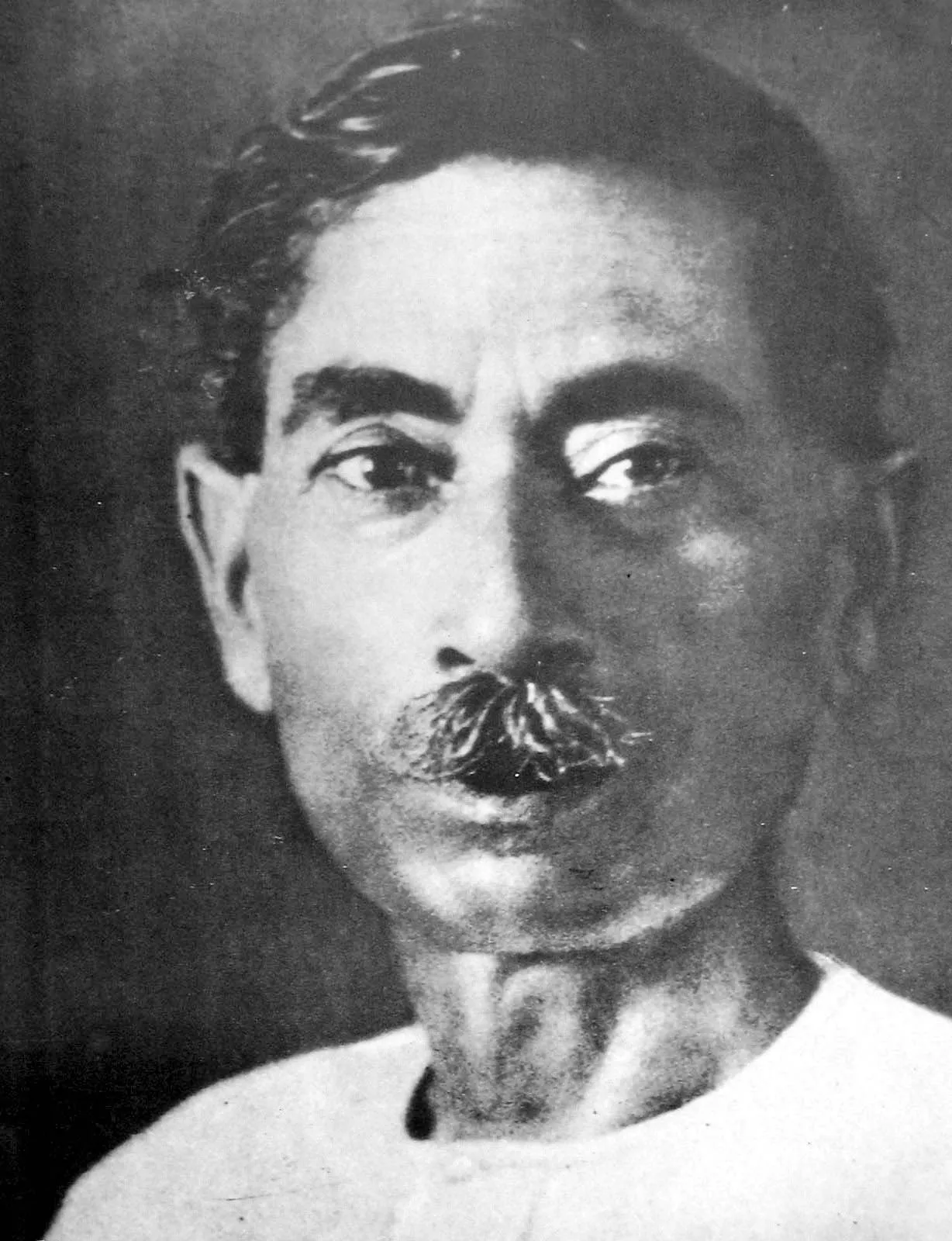
The Progressive Writers’ Association, announced in Lucknow in 1936, argued that literature should confront colonialism, class, caste, gender, and social reaction. Premchand, already the central realist of Hindi and Urdu fiction, presided over its first conference. Saadat Hasan Manto, Ismat Chughtai, Krishan Chander, Rajinder Singh Bedi, Faiz Ahmed Faiz, Mulk Raj Anand, and many others wrote work more unruly than any program could contain.
Chughtai’s “The Quilt” put female desire and domestic power into Urdu fiction and brought an obscenity trial. Manto’s stories refused the moral simplifications of nationalism and respectability. Faiz made the language of the ghazal carry the weight of prison, revolution, and disappointed freedom without turning poetry into a poster.
Partition
Partition produced one of the largest bodies of literature about political violence anywhere. Manto’s “Toba Tek Singh” locates the new border inside an asylum. Bhisham Sahni’s Tamas, Yashpal’s Jhutha Sach, Khushwant Singh’s Train to Pakistan, Amrita Pritam’s address to the Punjabi poet Waris Shah, Qurratulain Hyder’s River of Fire, and later works by Intizar Husain and Krishna Sobti treat the event as a massacre, migration, gendered violence, civilizational break, and an absurd administrative decision that entered individual memory.
Calling all of it Indian literature is both necessary and inadequate. Urdu, Punjabi, Bengali, and Sindhi literary worlds crossed the borders drawn around them; writers moved, stayed, returned, or became national figures in a country whose subject they could not fit inside.
After Independence
Post-independence writing did not follow one national sequence. The Hindi Nayi Kahani examined the urban middle class and the failures of intimacy. The Kannada Navya movement brought modernist form to new social worlds; U.R. Ananthamurthy’s Samskara made a Brahmin death into an argument about ritual authority and desire. In Malayalam, Vaikom Muhammad Basheer’s apparent simplicity held prison, poverty, love, madness, and Muslim domestic life; O.V. Vijayan and M. Mukundan made modernism local in different ways. Tamil writers from Pudumaipithan through Ashokamitran, Ambai, and Perumal Murugan transformed the short story and novel by exploring the city, sexuality, caste, and region.
Mahasweta Devi wrote about tribal dispossession and resistance without reducing politics to the background. Indira Goswami brought Assamese worlds of widowhood, insurgency, and religious institutions into national view. Temsula Ao, Easterine Kire, and Mamang Dai write northeastern histories that the standard national canon barely registers. These names are not a complete list. Their incompleteness is the point.
Dalit writing
Ambedkar gave anti-caste literature a political language in English and Marathi, but Dalit literary movements made lived humiliation, anger, labor, and revolt into new aesthetics. Baburao Bagul’s stories and Namdeo Dhasal’s poetry broke decisively with respectable Marathi. Daya Pawar’s Baluta made autobiography a central form. Omprakash Valmiki in Hindi, Bama and P. Sivakami in Tamil, Siddalingaiah in Kannada, and writers across Gujarati, Telugu, Malayalam, Punjabi, and other languages refused the treatment of caste as a village custom seen from above.
“Dalit literature” names both social location and a movement over who may represent whom. It changed mainstream canons, vocabulary, publishing practices, and criticism while sparking its own debates over gender, class, religion, and the politics of recognition.
Women writing the private as political
Women had always written, but print, education, reform, and organized feminism changed access to and reception of their writing. Rokeya Sakhawat Hossain’s Sultana’s Dream imagined a world where women govern, and men live in seclusion. Rashid Jahan’s stories attacked sexual hypocrisy and helped ignite progressive writing. Amrita Pritam, Ismat Chughtai, Qurratulain Hyder, Krishna Sobti, Ashapurna Devi, Lalithambika Antharjanam, Ambai, Kamala Das, and many others made household, body, labor, and desire into political subjects without agreeing on a program called women’s writing.
The category must also ask which women reached print. Savitribai Phule’s nineteenth-century Marathi poems come from an anti-caste teacher opening schools for girls; Tarabai Shinde’s Stri Purush Tulana attacks patriarchy across caste society; Baby Kamble and Bama write gender from inside Dalit experience. Adding women to an inherited canon is not the same as changing the hierarchy that built it.
Indian English and the translation problem
Raja Rao, R.K. Narayan, and Mulk Raj Anand established different possibilities for the Indian novel in English before Independence. Later, Salman Rushdie, Amitav Ghosh, Arundhati Roy, Vikram Seth, Kiran Desai, and many others made Indian English globally visible. The success is real. So is the distortion produced when foreign readers and metropolitan publishers mistake Indian writing in English for Indian literature.
Translation is the only answer, and it is an imperfect one. Sanskrit and Bengali accumulated strong translation traditions; major works in smaller languages may wait decades. English often becomes the bridge through which a Tamil reader meets a Manipuri writer, giving it national power beyond the number of people who use it at home. Every anthology, therefore, contains a hidden history of translators, grants, publishers, scripts, and available expertise.
The honest way to approach modern Indian literature is not to search for ten representative books. It is to enter through one language, then follow translations outward while remembering what has not crossed.