
Puranas
What they are. A genre, not a single text. Tradition enumerates eighteen Mahapuranas and, often, eighteen Upapuranas, but the lists vary, and many more texts claim Puranic status. They were composed and repeatedly reworked in Sanskrit, then retold and extended in regional languages, over more than a thousand years. A Purana ideally covers five topics: the pancha lakshana: primary creation, recreation after cosmic dissolution, genealogies of gods and sages, the reigns of the Manus who govern cosmic eras, and dynasties of kings. Few surviving texts are confined to that scheme. They also contain myth, theology, temple and pilgrimage lore, ritual instruction, ethics, astrology, and devotional narrative.
When. Puranic themes and genealogies have old precedents, but the surviving Puranas are layered compilations whose recoverable forms mostly took shape from the Gupta period through the medieval centuries. Individual sections may be much earlier or later than the work that now contains them. The Bhagavata is commonly dated around the 9th or 10th century CE, though estimates vary. The tradition claims greater antiquity: Puranas call themselves a “fifth Veda” and attribute their transmission to Vyasa. That claim establishes continuity with Vedic authority even as the genre develops different subjects, audiences, and forms of worship.
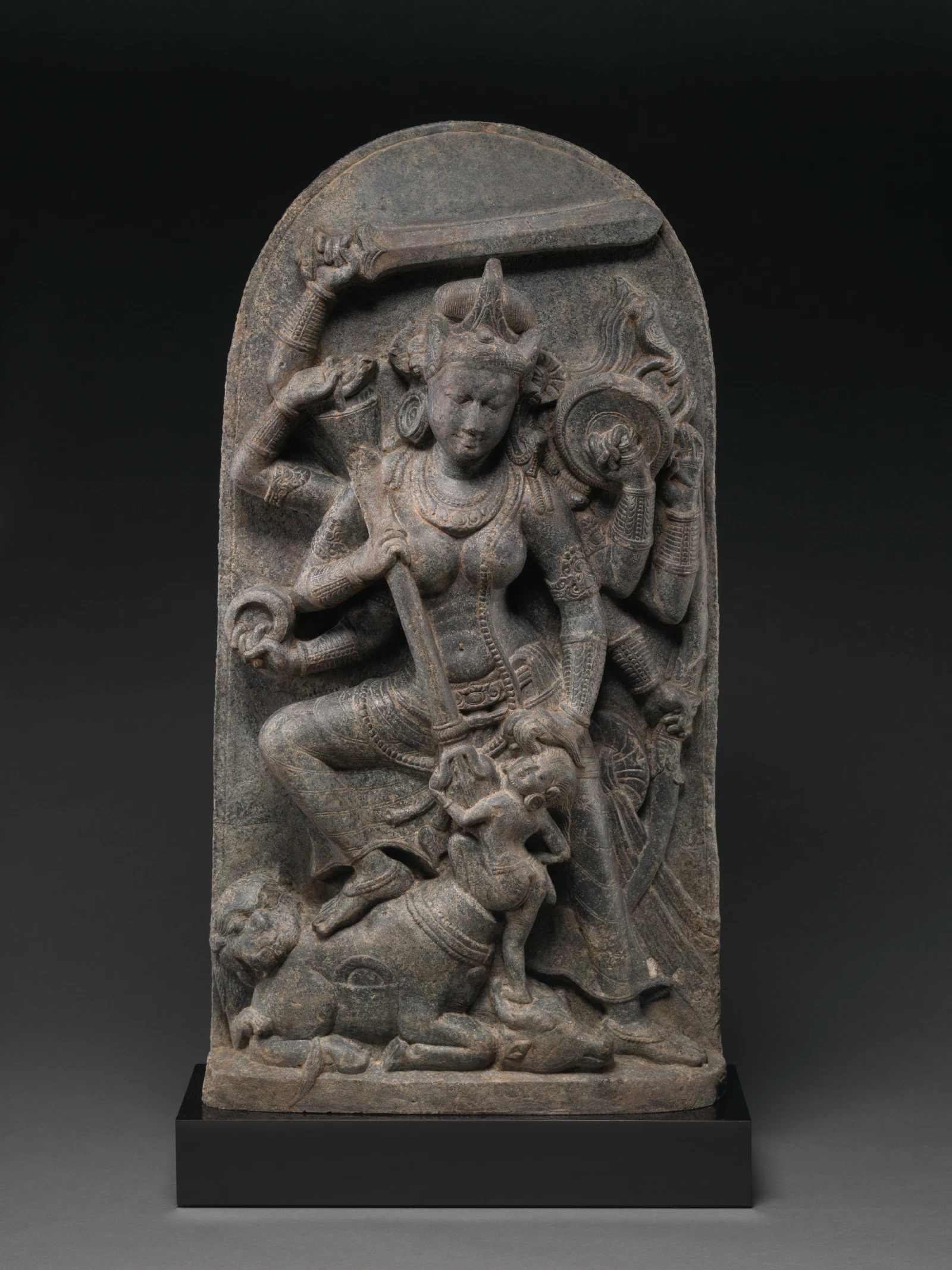
The threefold grouping is a later gloss. Some Puranic lists arrange the eighteen Mahapuranas into three groups: six sattvika works associated with Vishnu, six rajasa works associated with Brahma, and six tamasa works associated with Shiva. Later summaries often reduce this to three sectarian sets of six. Modern scholarship treats the scheme as a classification imposed on the corpus rather than a principle that governed composition. The lists vary, individual Puranas are sectarian in ways the labels do not predict, and many honor several gods at once.
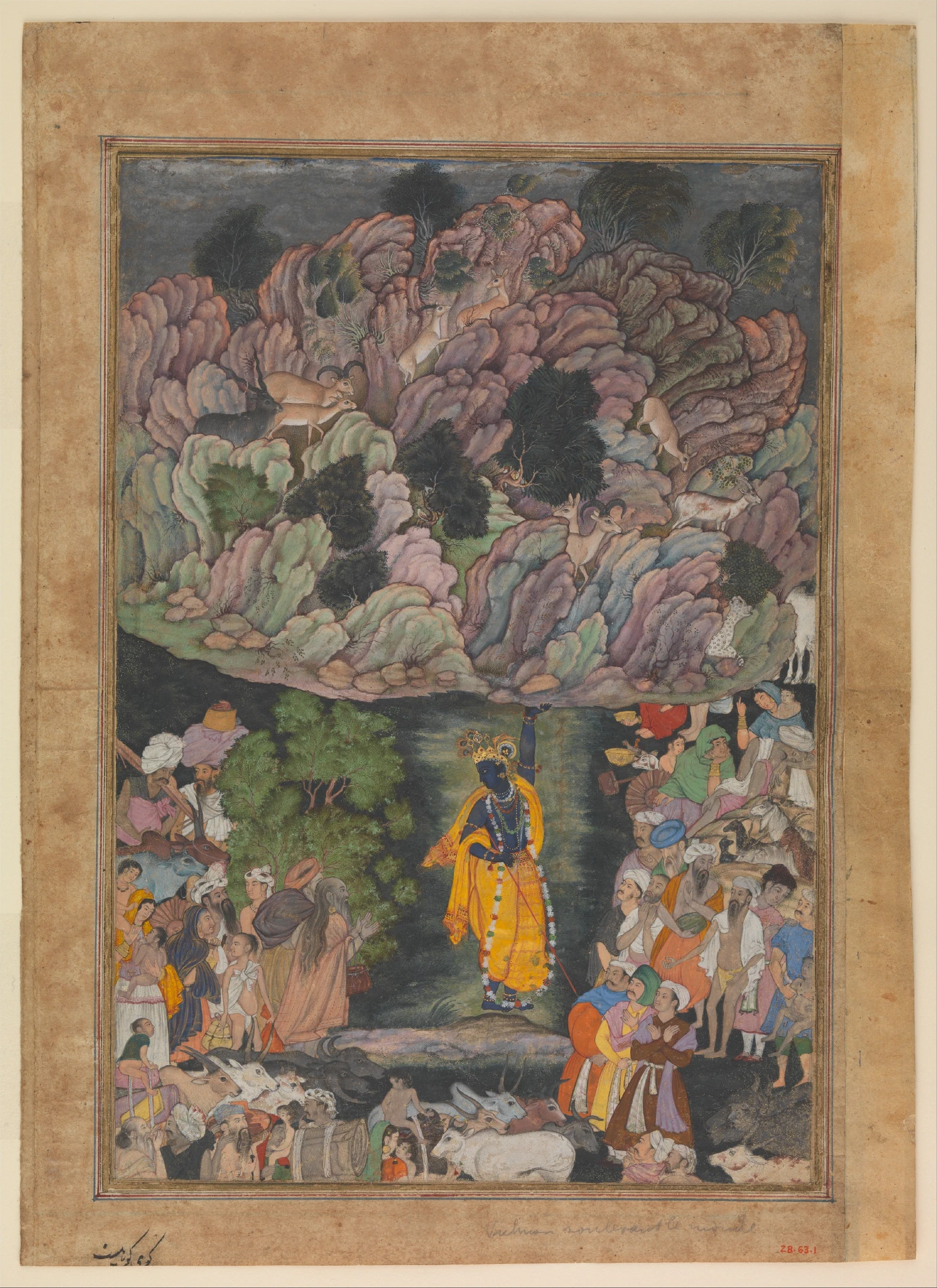
An especially influential Vaishnava example. The Bhagavata Purana, traditionally reckoned at roughly 18,000 verses in twelve books, is among the genre’s most consequential devotional works. Its tenth book elaborates Krishna’s childhood and youth in Vrindavan: the butter theft, the flute, and the dance with the gopis. These stories have precedents in the Harivamsha and Vishnu Purana, but the Bhagavata gives them a distinctive emotional and theological form that became central to many traditions of Krishna devotion. Chaitanya’s Bengali Vaishnavism, and later the Hare Krishna movement, draw directly on it.
Why this page exists. The Puranas helped consolidate and circulate stories about deities, temple myths, pilgrimage geographies, ritual calendars, and cosmologies, such as the four yugas and the recurring cycles of creation and dissolution. They did so alongside the epics, Agamas, Tantras, Dharmashastras, temple institutions, and local traditions rather than replacing all of them. Many Brahmanical classifications place Puranas within smriti, formally below Vedic shruti, while sectarian communities may grant a particular Purana much greater practical authority. The genre never really closed: sthala puranas and local texts glorifying individual temples and pilgrimage sites continued to be composed well into the colonial period.