
Agamas & Tantras
If the Vedas provide nominal authority and the epics and Puranas provide widely shared stories, the Agamas and Tantras provide much of the operating system: how a temple is laid out, an image installed, a deity invoked, a mantra transmitted, a daily ritual performed, and a practitioner initiated into a lineage. They are among the most practically influential and least commonly read bodies of Indian religious literature.
The two labels overlap, and their boundaries vary across traditions. Agama means something handed down or arrived; tantra can suggest a system, framework, or loom. Neither names one book, one sect, or one doctrine. They refer to large, internally diverse corpora produced mainly from the middle of the first millennium CE onward, with older elements and long later histories.
Temples and sectarian worlds
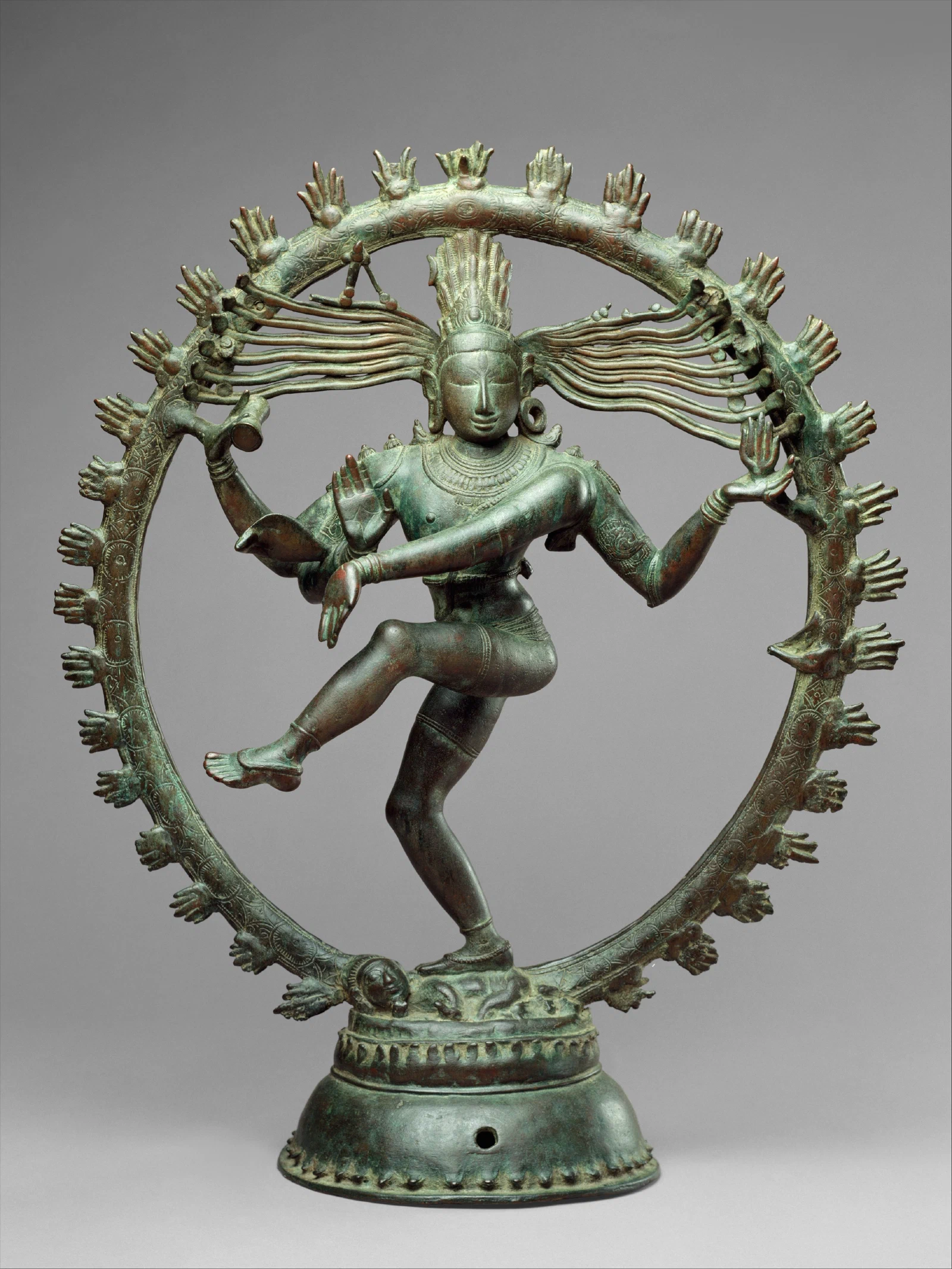
The Shaiva Agamas describe the forms of Shiva, cosmology, initiation, image worship, temple construction, priestly qualifications, and paths to liberation. They became especially important to Shaiva Siddhanta in South India, where Sanskrit ritual texts interacted with Tamil devotional poetry and powerful temple institutions.
Vaishnava traditions developed the Pancharatra and Vaikhanasa corpora, which continue to govern worship in major Vishnu temples. Shakta Tantras center the Goddess in forms ranging from benign household deities to Kali and the fierce Mahavidyas. Their ritual geometries, especially the yantra and the Sri Chakra, translate theology into diagrams that are contemplated, installed, and worshipped.
The categories are not sealed. A text may call itself an Agama, Tantra, Samhita, or Yamala; lineages borrow ritual technologies while insisting on theological difference. What unites much of the material is the claim that liberation and worldly power require effective practice received through initiation, not merely assent to doctrine.
Mantra, body, and visualization
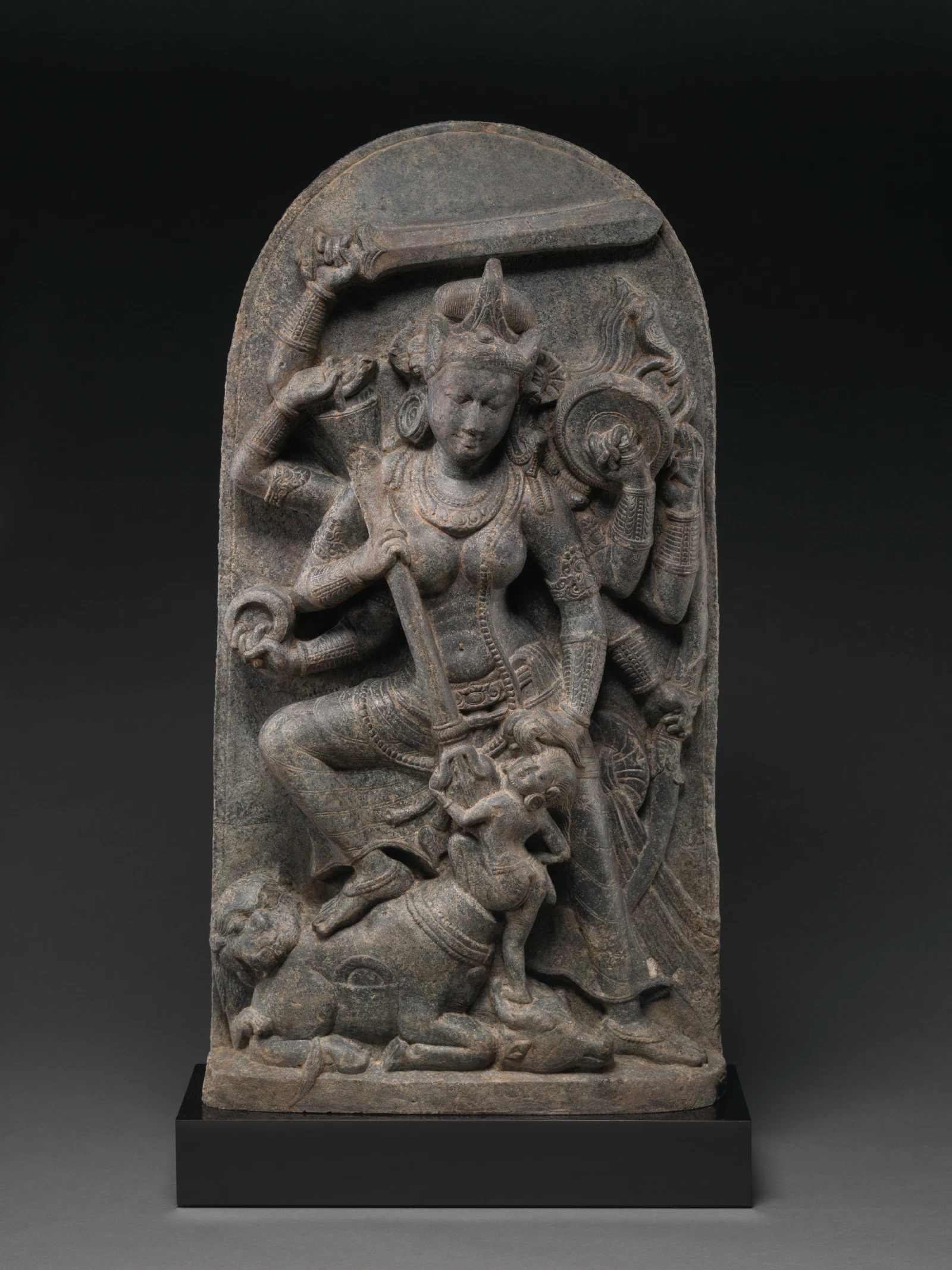
Tantric systems treat sound as action. A mantra is not only a sentence with a translatable meaning; its syllables embody a deity or power and become effective through correct transmission and repetition. Practitioners visualize deities, construct mandalas, identify parts of the body with cosmic structures, direct breath and subtle energies, and transform ordinary materials into ritual offerings.
This attention to the body distinguishes Tantra from the caricature of Indian religion as escape from embodiment. The body can be impure and impermanent while also being the necessary instrument of liberation. Later hatha yoga inherited subtle-body maps, breath practices, locks, and channels from several ascetic and tantric environments, though modern posture-based yoga rearranged them again.
Some traditions deliberately use substances or acts ordinarily prohibited, including meat, alcohol, and sexual ritual. These practices are real, usually restricted, and far less representative than the colonial and modern fascination with them suggests. Most tantric ritual is disciplined, repetitive, hierarchical, and about as bohemian as learning a complex liturgy from an exacting teacher.
Buddhist and Jain forms
Tantra was not only Hindu. From roughly the seventh century, Buddhist traditions developed texts and practices centered on initiation, mandalas, mantras, fierce and erotic deities, and the rapid transformation of the practitioner into a Buddha. Indian masters and translators carried these systems to Tibet, Nepal, the Himalayas, China, and Southeast Asia. Much Indian Buddhist tantric literature survives principally in Tibetan translation.
Jain traditions also adopted mantras, diagrams, protective deities, and ritual manuals, interpreting them within their commitments to non-violence and liberated teachers. “Tantric,” therefore, describes a field of shared technologies and competition across religious boundaries, not proof of a single hidden religion beneath them.
Text and authority
Agamic and tantric traditions often claim revelation from Shiva, Vishnu, the Goddess, Buddha, or another enlightened source. Many organize teaching as a dialogue between a god and a goddess. Authority also depends on lineage: a text without the initiation and oral instruction needed to use it may be inert or dangerous.
That makes these works difficult to place inside the simple hierarchy of shruti and smriti. Some communities treat their own Agamas as revelations equal to or superior to the Vedas; others reconcile the two; critics reject tantric practice as heterodox. In lived temple Hinduism, the theoretical ranking matters less than the fact that an Agama may determine what priests do every morning.
Why they are easy to miss
European scholars and Indian reformers often preferred the philosophical Upanishads and the Gita because those texts appeared to be respectable books of universal religion. Tantra looked ritualistic, sectarian, sexual, magical, or corrupt. Modern commercial spirituality then made the opposite mistake, reducing Tantra to liberated sexuality and secret energy.
Between those distortions sits the historical fact: Agamic and tantric systems shaped temple worship, sacred architecture, deity imagery, pilgrimage, mantra, yoga, kingship, household ritual, and the religious map of South and Himalayan Asia. A survey of Indian texts that omits them explains doctrine while leaving out the instructions people used.