
Upanishads
What they are. Texts associated with different schools of the four Vedas were composed in their principal early forms roughly between 700 and 100 BCE. The oldest, Brihadaranyaka and Chandogya, remain close to late Vedic prose and ritual speculation; later works move toward the language and concerns of classical Indian philosophy. Formally, they are shruti, “that which is heard,” continuous with the Vedic collections to which they belong. Their new questions emerge from that ritual setting rather than simply replacing it.
The turn. Ritual remains present, but it is increasingly internalized, reinterpreted, or set beside a new group of questions: what is the self, what grounds reality, what survives death, and how can rebirth end? The texts do not offer a single systematic answer. Some passages identify atman (self) with brahman (ultimate reality); others distinguish them or describe their relationship differently. Tat tvam asi, “you are that,” from the Chandogya became central precisely because later schools could disagree about what kind of identity it asserts. Knowledge and moksha, release, increasingly displace the earlier aim of a well-provisioned afterlife.
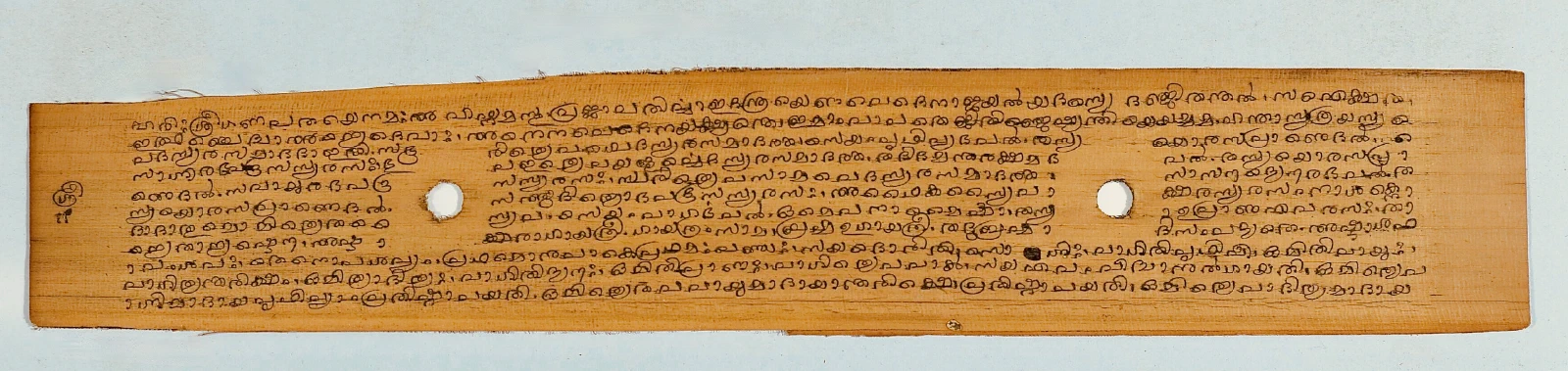
A common group of thirteen is called principal: Brihadaranyaka and Chandogya (the oldest and longest), Katha, Isha, Kena, Mundaka, Mandukya, Prashna, Taittiriya, Aitareya, Shvetashvatara, Kaushitaki, and Maitrayaniya (also called Maitri). Other traditional and modern lists count 10, 11, 14, or more. The Katha, in which a boy reaches the house of Death and presses him for answers, is the one to start with. The Mandukya, twelve short prose sections analyzing waking, dreaming, and deep sleep as three states of consciousness pointing toward a fourth beyond them, is the densest.
Every major school of Vedanta argues based on these texts. Shankara’s Advaita reads the identity claims literally: atman is brahman, without remainder, and the sense of a separate self rests on ignorance (avidya). Ramanuja’s Vishishtadvaita reads the same verses as qualified non-dualism, where selves remain distinct yet exist as dependent modes of brahman. Madhva’s Dvaita reads them as dualist, with finite selves eternally dependent on but never identical to God. All three claim the Upanishads as a foundation and accuse one another of misreading them. Other Hindu schools drew on some Upanishadic concepts while grounding their central arguments elsewhere; Buddhist, Jain, and materialist schools rejected Vedic authority altogether.
A note on authority. Many Hindu traditions affirm some form of Vedic authority, but they do not assign the Vedas the same role. Vedic rites continue in priestly, domestic, and sacrificial settings, while temple worship, devotional theology, pilgrimage, and festival practice also draw heavily on epics, Puranas, Agamas, Tantras, and local traditions. Purva Mimamsa no longer exists as a large independent sect, but its ritual hermeneutics and theories of language remain active in Sanskrit scholarship and traditions that perform Vedic rites. The distinction to notice is therefore not dead scripture against living practice, but several kinds of textual authority operating in different settings.