
Cinema
There is no Indian film industry. There are several, they work in different languages under different economics, and the habit of calling the Hindi one “Bollywood” and treating the rest as regional variants describes the marketing rather than the map.
Silence, then sound
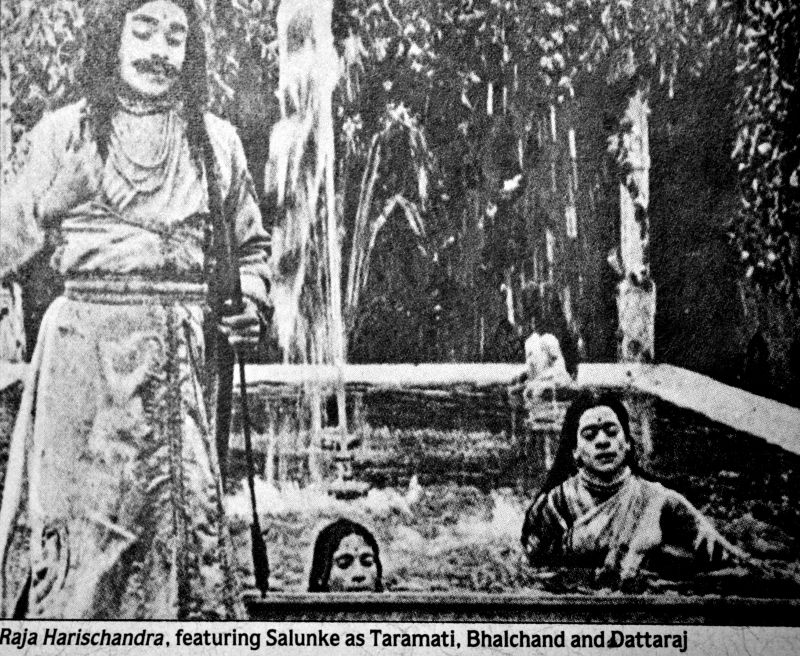
The Lumière programme reached Bombay in 1896, within months of Paris. Dadasaheb Phalke’s Raja Harishchandra (1913) is conventionally the first Indian full-length feature, and its subject, drawn from the epic-Puranic story world, set a pattern: the new technology went to work immediately on the oldest available material.
Sound arrived with Alam Ara in 1931, and it changed the industry’s shape permanently. A silent film could cross language boundaries with new intertitles. A talkie could not. From 1931 the industry necessarily divided along linguistic lines, and the separate centers that still exist, Bombay for Hindi, Madras and later Chennai for Tamil, Hyderabad for Telugu, and substantial Bengali, Marathi, Malayalam, and Kannada industries, date from that division. Sound also brought songs, and songs never left.
The studio era of the 1930s and 1940s produced Prabhat, Bombay Talkies, and New Theatres, working on salaried contracts with in-house talent. That system dissolved after Independence into an independent-producer, financier-driven model whose chronic problems, opaque money, star-dependent budgets, and delayed schedules, persisted for decades and were only partly addressed when the government granted filmmaking formal industry status in 1998, opening access to bank finance.
The popular Hindi film
The dominant form that emerged in the 1950s is not a failed attempt at realism. It is a distinct commercial form with its own rules: songs that comment on and advance the action, a moral universe centered on family and fate, comic and melodramatic registers held in the same film, and a running time built for an audience that has traveled to be there. Critics called it the masala film, and the term stuck without ever quite becoming an insult.
Its peak years produced Raj Kapoor’s tramp figure in Awaara (1951), which became extraordinarily popular in the Soviet Union and the Middle East; Guru Dutt’s Pyaasa (1957), the best film the industry has made about its own compromises; Mehboob Khan’s Mother India (1957); and Bimal Roy’s social realism. The 1970s brought Amitabh Bachchan’s “angry young man,” a figure of urban grievance who arrived with Zanjeer and Deewaar precisely when the developmental promise was fraying, and Sholay (1975), which has never really left circulation.
Liberalization changed the audience. The 1990s family film, Hum Aapke Hain Koun..! and Dilwale Dulhania Le Jayenge, addressed a prosperous domestic middle class and an overseas one simultaneously, and overseas box office became a line item that shaped what got made. The multiplex from the 2000s split the market again, making room for smaller films with narrower audiences alongside the large ones.
Ray and the other cinema
Satyajit Ray’s Pather Panchali (1955), completed on almost no money with a largely amateur crew, and its sequels Aparajito (1956) and Apur Sansar (1959) made Indian cinema legible to the rest of the world and remain the work by which it is measured abroad. Ray received an honorary Academy Award in 1992, weeks before his death.
Around and after him, Ritwik Ghatak made films of jagged intensity about Partition and displacement that were largely ignored in his lifetime. Mrinal Sen, Shyam Benegal, Govind Nihalani, Mani Kaul, and Kumar Shahani built what was variously called parallel cinema or New Indian Cinema, supported for a time by state funding through the Film Finance Corporation and by the Film and Television Institute of India at Pune. Adoor Gopalakrishnan and G. Aravindan did comparable work in Malayalam. State support thinned in the 1990s and much of that ecosystem went with it, though its people moved into television and, later, streaming.
The other industries
Tamil and Telugu cinema are not junior partners. Both have their own star systems, their own myth-making, and, in Tamil Nadu especially, a direct line into politics: M. Karunanidhi wrote screenplays before becoming chief minister, and M.G. Ramachandran and later Jayalalithaa moved from the screen to the office of chief minister. In Andhra Pradesh, N.T. Rama Rao did the same after decades playing gods on screen. Nowhere else in the world has film stardom converted into governing power quite so reliably.
Malayalam cinema, working with small budgets and a small home market, has spent the last decade or so producing the most consistently interesting mainstream films in the country, largely by taking ordinary life seriously and refusing to inflate it. Kannada cinema, Marathi cinema, Bengali cinema after Ray, and Assamese and Manipuri filmmaking each have distinct histories that the national conversation mostly ignores.
The most recent shift runs the other way. Telugu productions such as Baahubali and RRR were released simultaneously in multiple languages at a scale that made the Hindi industry’s home market look small, and “pan-Indian film” became a category. RRR then won an Academy Award for Best Original Song in 2023. The center of financial gravity has moved south, and the Hindi industry has not fully absorbed that yet.
Censorship and politics
Films require certification from the Central Board of Film Certification before release, under legislation dating from 1952, and the board can demand cuts as a condition. That is prior restraint, and it applies to a mass medium in a country whose constitution protects expression, which is why the arrangement has been litigated continuously.
Formal censorship is only part of the pressure. Films have been pulled or recut after protests, threats to theatres, and state governments declining to guarantee security. Streaming platforms arrived outside the certification regime and were brought under government rules in 2021. The industry’s own commercial caution does much of the remaining work: it is easier to avoid the subject than to defend the film.