
Culture
Indian culture carries the imprint of several thousand years of migration, trade, and conquest, absorbed rather than replaced, which is part of why looking for a single origin is the wrong exercise. Nearly everything covered here arrived from somewhere. Nearly everything covered here is unmistakably Indian. Both are true, and the second does not cancel the first.
Three habits are worth resisting while reading any of this.
The first is treating antiquity as the measure of value. Some of what follows is genuinely very old: a Tamil literary record spanning over two millennia, a grammar of Sanskrit that behaves like a formal system. This mathematical tradition produced a series of zeros and infinities. But film music has been the country’s popular music for 90 years, cricket provides a vocabulary strangers can use immediately, and the chili in the food arrived in the sixteenth century. Age is a fact about a form, not a claim about its importance.
The second is assuming that “traditional” means unbroken. Most of the classical dance forms performed today were reconstructed in the twentieth century, often by reformers distancing themselves from the hereditary communities that had preserved them. The standard sari drape spread through photography and cinema. A major public festival in Maharashtra was deliberately reorganized in the 1890s for nationalist purposes. Tracing when, by whom, and why people remade something is usually more revealing than tracing how far back it goes.
The third is looking for the center. There isn’t one. The financial center of Indian cinema has moved south; the largest newspaper markets are in Hindi rather than English; the most consequential religious and literary movements often began in vernaculars far from any capital. Any account of Indian culture organized around Delhi, or around Sanskrit, or around what is legible in English, will be describing a fraction and calling it the whole.
Culture is also a way of organizing power, which is why caste appears here rather than only in a society chapter, and why the texts that different Indias have used to explain themselves get a section of their own.
-
Languages
Four language families, twenty-two scheduled languages, no national language, and the two agitations that made sure of it.
-
Art & Architecture
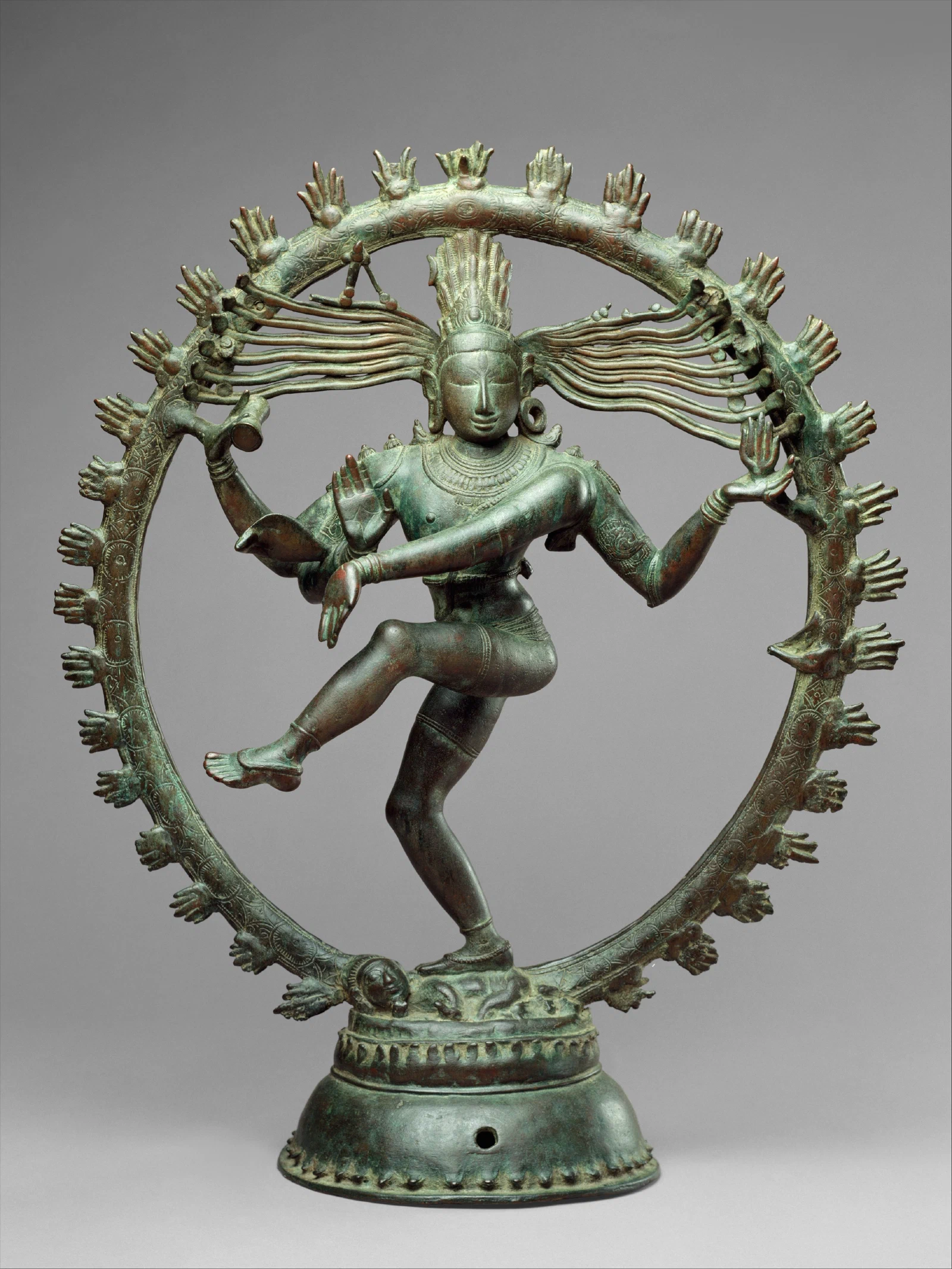
Mauryan pillars, Gandharan Buddhas, Ajanta, Ellora, Chola bronzes, Mughal gardens, and the cities nobody planned.
-
Textiles & Craft
Cotton, the first global commodity India dominated, the trade that put chintz and khaki into English, and what mechanization did next.
-
Caste
Varna, jati, the colonial census, and the reservation system, plus the instrument that hardened caste being deliberately restarted in 2027.
-
Music
Two classical systems from one theoretical root, and the film music that has actually been the country’s popular music for ninety years.
-
Dance
Eight classical forms tracing to one treatise, most of them reconstructed in the twentieth century by reformers distancing themselves from the women who carried them.
-
Cinema
Not one film industry but several, with different economics, star systems, and politics, and no agreement on which is the center.
-
Media & the Phone
One state broadcaster, then satellite, then cheap mobile data, and no common answer to what the country watched last night.
-
Cricket & Sport
A colonial import that became the one language strangers across most of the country can use immediately, and everything else competing for what is left.
-
Food
There is no Indian cuisine, the food most people think of as timeless is younger than the Mughal Empire, and what people say they eat is political.
-
Festivals
No single calendar, several kinds of time running at once, and a public settlement that mostly holds.
-
Diaspora
Indenture, merchant networks, the Gulf, and Silicon Valley: four migrations that produced very different Indias abroad.
-
NGOs
Three waves of the Indian voluntary sector, the Right to Information Act, and what FCRA did to all of it.
-
Science & Medicine
Zero, infinite series, a grammar that behaves like a formal language, and the harder question of whether institutions survive a generation.
-
Astronomy
It began as a calendar problem, produced real models and real instruments, and never fully separated from the astrology that shares its arithmetic.