
Languages
India has no national language. This surprises people, including many Indians, and the surprise is the useful part: the absence is not an oversight but the outcome of a fight that was serious enough to kill people.
Four families
The 2011 census recorded 19,569 raw mother-tongue returns, rationalized to 1,369 mother tongues and grouped into 121 languages. Nearly all speakers belong to one of four families.
Indo-Aryan, about 78% of mother-tongue speakers, descends from the same ancestral stock as Persian, Greek, and Latin, and covers Hindi, Bengali, Marathi, Gujarati, Punjabi, Urdu, Odia, Assamese, Kashmiri, Sindhi, Nepali, and a long tail of others. Dravidian, about 20%, is unrelated to Indo-Aryan and includes Tamil, Telugu, Kannada, and Malayalam, as well as smaller languages scattered as far north as the Brahui of Balochistan. Austroasiatic, including the Munda group and Santali, and Tibeto-Burman, including Meitei, Bodo, Mizo, and hundreds of Northeastern languages, account for most of the remainder. The Andaman Islands host languages that fall into none of these categories and may represent one of the oldest surviving linguistic strata anywhere.
Two things follow. The first is that the north-south division everyone reaches for is real at the level of language family, which is why it survives as a political shorthand. The second is that it is inadequate at every other level: the Munda languages sit in the middle of the Indo-Aryan belt, and the Northeast belongs to neither half of the story.
Long contact has also made families more similar to one another in ways that pure descent cannot explain. Retroflex consonants, verb-final word order, and a shared stock of vocabulary run across the family boundary, which is why linguists treat South Asia as a sprachbund, a convergence area, rather than as a set of sealed trees.
The Eighth Schedule
The Constitution came into force in 1950 with fourteen languages in its Eighth Schedule. There are now twenty-two. Sindhi was added in 1967; Konkani, Manipuri, and Nepali in 1992; Bodo, Dogri, Maithili, and Santali in 2003. Each addition took a political campaign, because scheduling affects recruitment examinations, official translation, textbook production, and the standing of a language in public life.
The list also includes Sanskrit, reported as a mother tongue by 24,821 people in the 2011 census, alongside Bengali, reported by about 97 million people. It excludes Bhojpuri, spoken by tens of millions. The Eighth Schedule is a political document, not a linguistic ranking, and reading it as a census of importance produces nonsense.
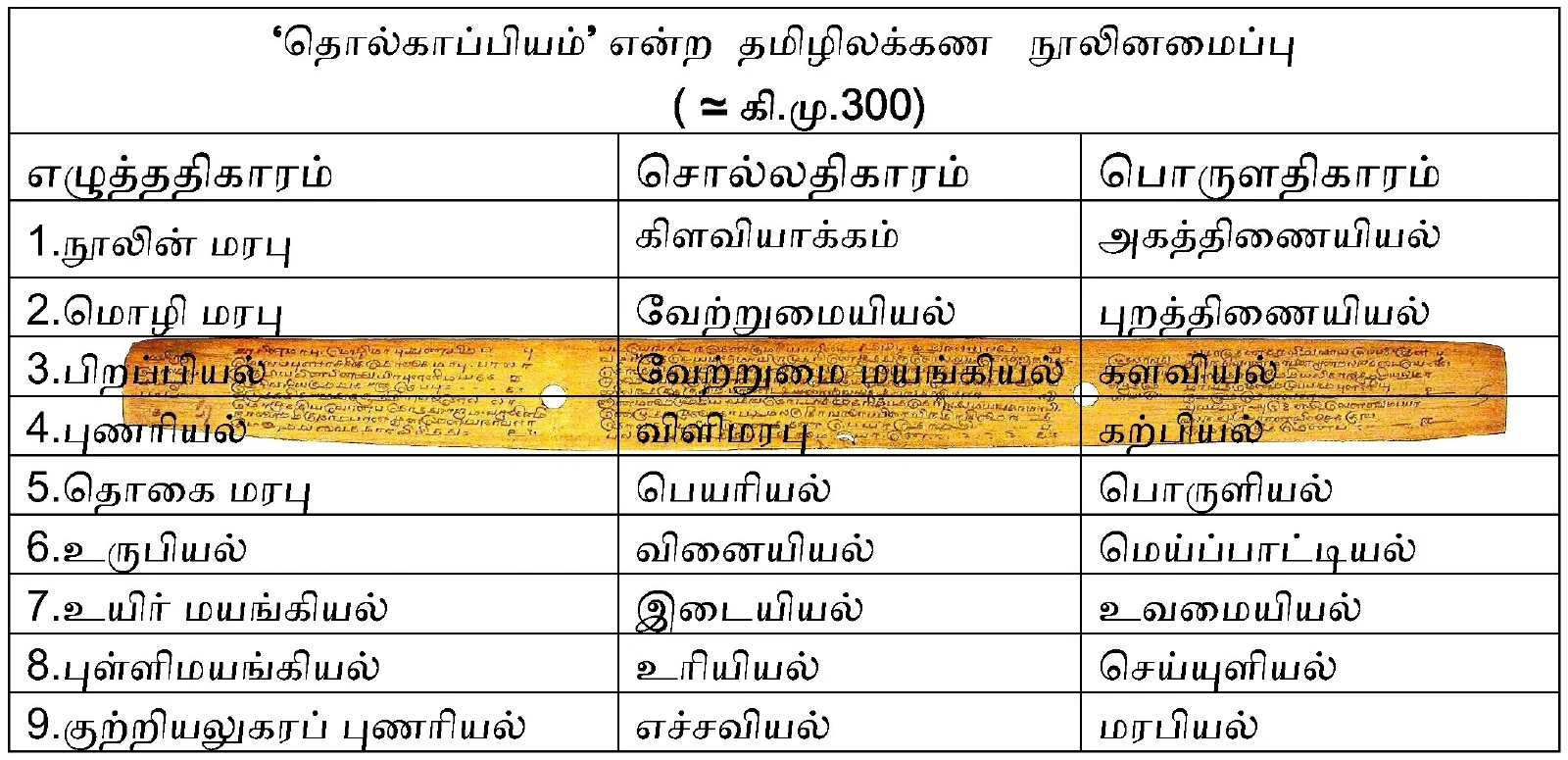
The separate category of classical language status, which carries research funding and academic chairs, began with Tamil in 2004 and Sanskrit in 2005, was extended to Kannada and Telugu in 2008, Malayalam in 2013, and Odia in 2014, and was widened again in 2024 to include Marathi, Pali, Prakrit, Assamese, and Bengali. Each round has been argued in the language of scholarship and settled in the language of politics.
The Hindi problem
The census figure for Hindi, around 528 million in 2011, is an artifact of aggregation. It folds in Bhojpuri, Rajasthani, Chhattisgarhi, Magahi, Haryanvi, and dozens of other varieties, several of which have their own literatures and speakers who do not consider themselves Hindi speakers. Count them separately, and Hindi remains the largest language in India by a wide margin. Count them together, and it becomes something else: a claim about who belongs to a single linguistic nation.
Hindi and Urdu compound the problem from the other direction. In ordinary speech, they are substantially the same language, sharing grammar and core vocabulary. They diverge in script, in formal register, and in the literary and religious traditions each draws on, Sanskrit for one and Persian and Arabic for the other. The split into two named languages is a product of the nineteenth and twentieth centuries and of the communal politics that ran through them, not of any linguistic necessity.
Two agitations
Article 343 made Hindi the official language of the Union and allowed English to continue for 15 years, indicating that English would end in 1965. Opposition in the Tamil country had already surfaced in the late 1930s, when compulsory Hindi teaching in Madras Presidency schools triggered protests and arrests.
The second agitation, in 1965, was far more serious. Students across Madras State struck; there was rioting, police firing, deaths, and several self-immolations. The central government retreated. The Official Languages Act was amended so that English would continue indefinitely alongside Hindi, and the Congress lost Madras State to the DMK in 1967 and has never governed Tamil Nadu since.
That is the origin of the arrangement India actually runs on. English survives as a link language partly because a southern state made the alternative politically impossible. The three-language formula in schooling, dating back to the national education policy of 1968, has been accepted unevenly across the country and rejected outright in Tamil Nadu, which teaches two.
The map redrawn
The other consequence was territorial. Political boundaries at Independence were inherited from colonial provinces assembled for administrative convenience. Demands for states organized along linguistic lines grew through the 1940s and early 1950s. They became impossible to defer after Potti Sriramulu died in December 1952, following a fast for a Telugu-speaking state. Andhra State was created in 1953, and the States Reorganisation Act of 1956 redrew much of the rest of the map along linguistic lines.
Bombay State was split into Maharashtra and Gujarat in 1960, and Punjab was divided in 1966. Later states, including Jharkhand, Chhattisgarh, Uttarakhand, and Telangana, were carved on grounds of region, tribe, development, or neglect rather than language, so the linguistic principle explains the mid-century map better than the current one.
The reorganization is often described as a concession to parochialism. The opposite reading is stronger: giving language a legitimate territorial home made it possible to be emphatically Tamil, Marathi, or Bengali, and Indian, competing for power within the Union rather than only against it. Several neighboring states that suppressed comparable demands fared considerably worse.
Scripts
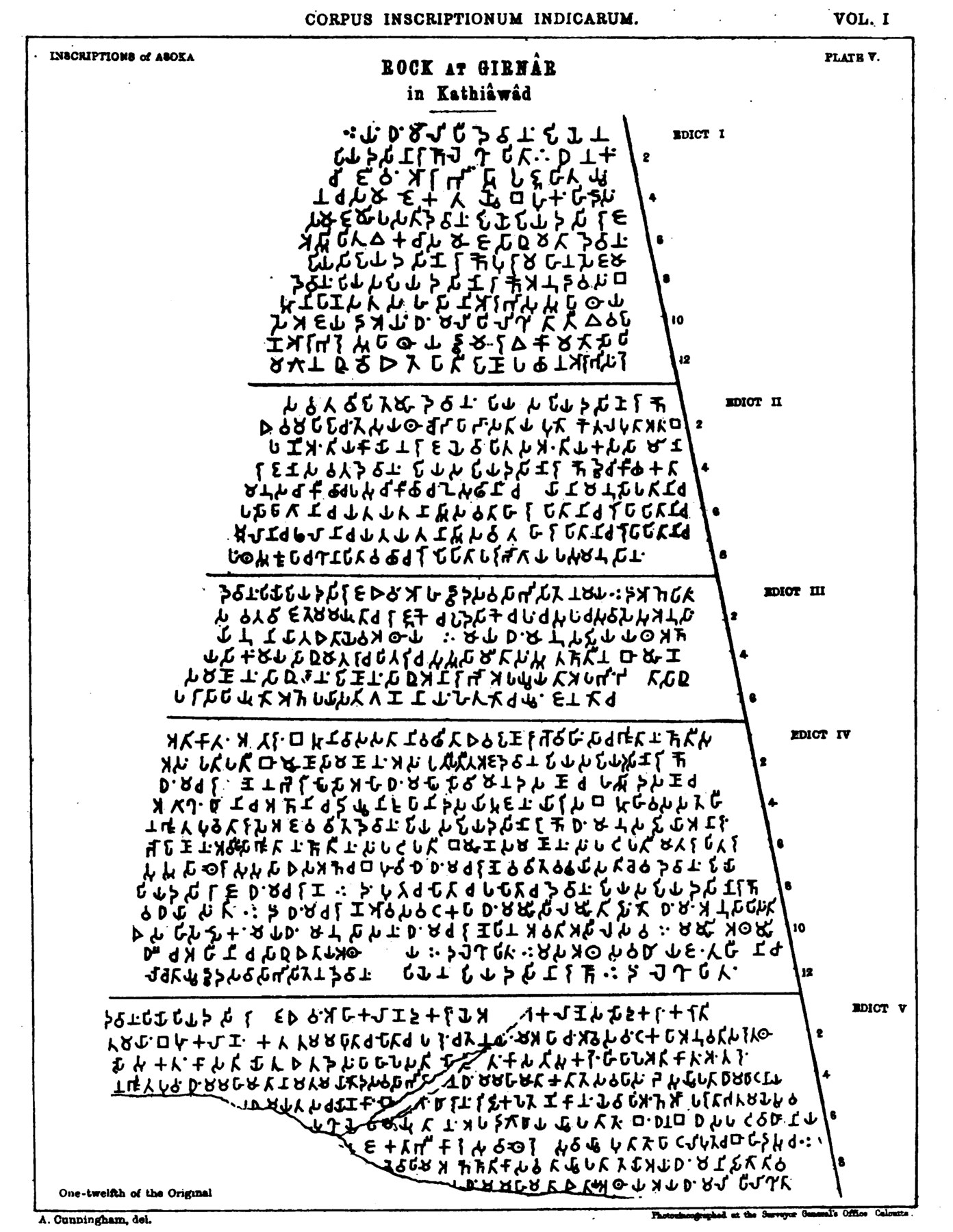
Most Indian scripts descend from Brahmi and share a structural logic: a consonant that carries an inherent vowel, which other marks modify. This is why Devanagari, Bengali-Assamese, Gurmukhi, Gujarati, Odia, Tamil, Telugu, Kannada, and Malayalam look unrelated but behave alike. Urdu, Kashmiri, and Sindhi use adapted versions of the Perso-Arabic script. Some communities have adopted scripts as acts of assertion: Santali is written in Ol Chiki, devised in the 1920s by Raghunath Murmu specifically so that the language would not have to borrow the alphabet of a dominant neighbor, and Meitei has revived the older Meitei Mayek in place of the Bengali script.
Script choice is rarely only technical. It determines what a literate person can read, which archive remains open, and which neighbor the language most closely resembles.
Loss
George Grierson’s Linguistic Survey of India, compiled between 1894 and 1928, remains the largest single documentation effort ever attempted here. The People’s Linguistic Survey, led by Ganesh Devy, a century later, counted around 780 living languages and argued that a substantial number had disappeared within living memory.
The pressure runs in one direction. Smaller languages give way to state languages, state languages give way to Hindi and English in employment and higher education, and each step is individually rational for the family making it. The Andamanese languages are the extreme case: Bo lost its last fluent speaker in 2010. Most of what is disappearing is undocumented, and unlike a demolished building, nobody photographs it on the way out.