
Science & Medicine
Indian science is usually presented either as a list of ancient priority claims or as a colonial import that took root after 1947. Both accounts are convenient, but neither withstands contact with the material. The more interesting question is not who was first but whether people can build and sustain institutions capable of difficult work across generations, a problem India has solved unevenly and repeatedly.
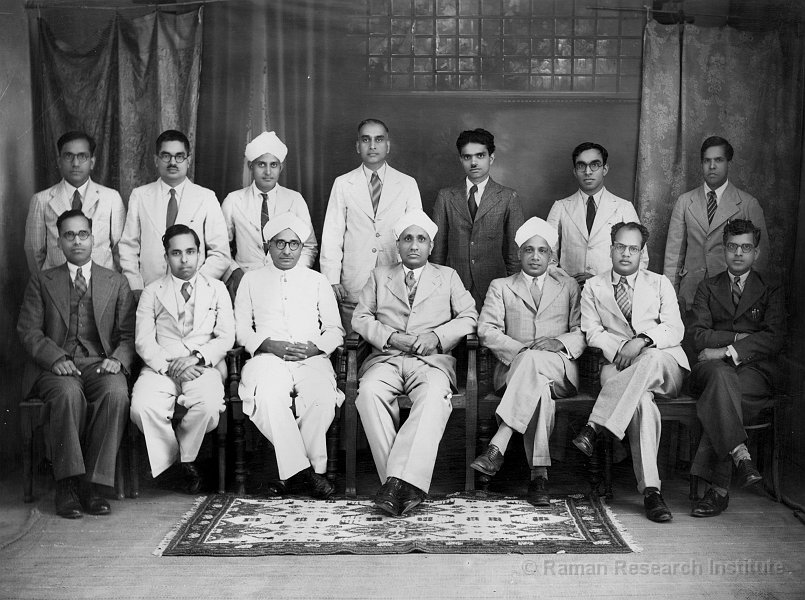
Mathematics
The decimal place-value system with a symbol for zero is one of the most consequential mathematical exports in history, and its mature form is Indian. Symbols marking an empty place appear earlier in several traditions, but Brahmagupta, writing in 628 CE, treated zero as a number in its own right and stated rules for arithmetic with it and with negative quantities. His attempt to extend those rules to division by zero was not correct by modern standards: among other things, he assigned the value zero to zero divided by zero. The system reached Europe through Arabic transmission, which is why the digits are called Arabic numerals there and Hindu-Arabic numerals when someone is being careful.
Aryabhata, writing in 499 CE, gave a value of π accurate to four decimal places and described it as approximate, produced a sine table, and proposed that the apparent daily rotation of the heavens is caused by the earth turning. Bhaskara II, in the twelfth century, worked on indeterminate equations with a sophistication that European mathematics did not reach for centuries.
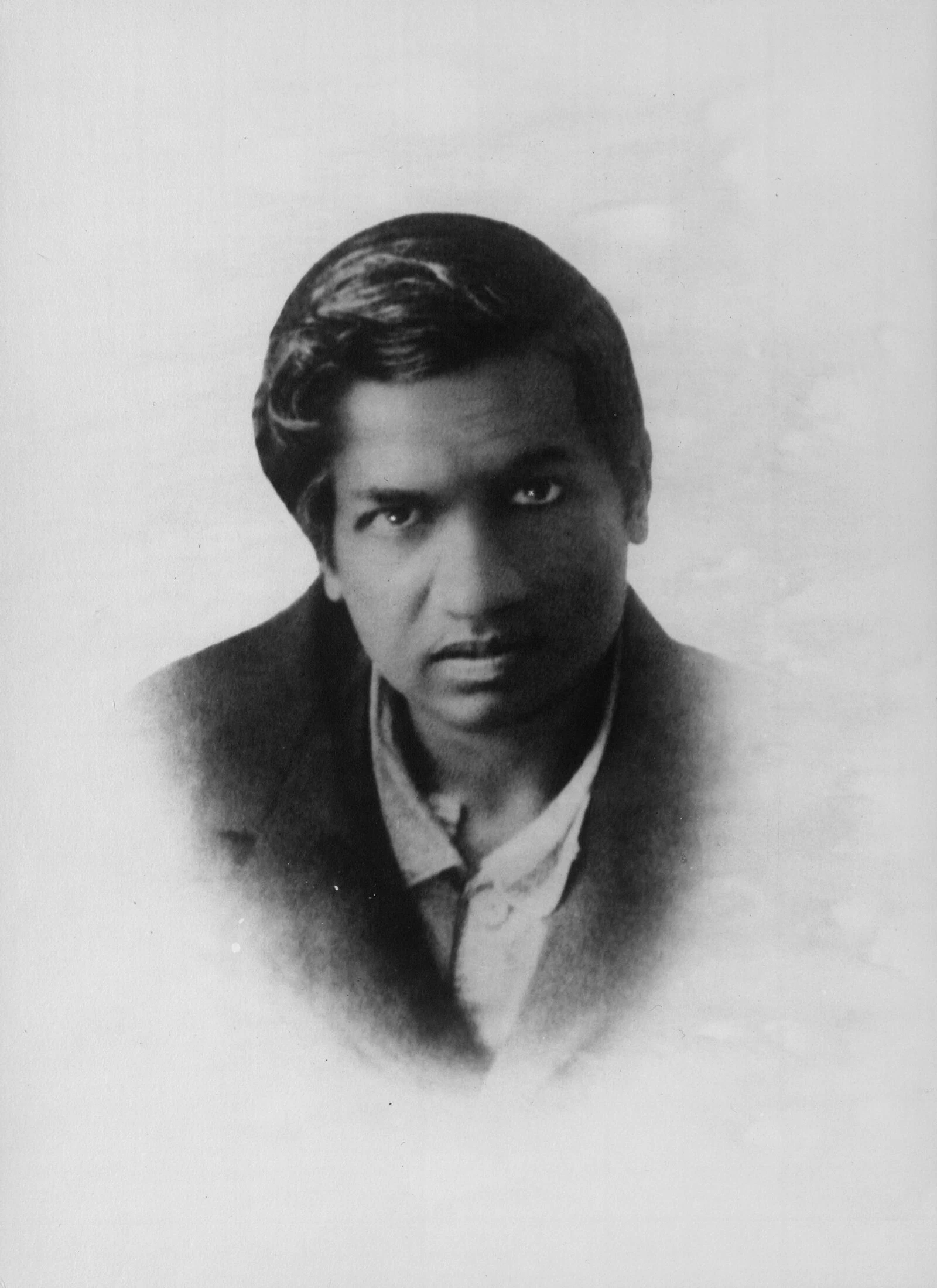
The most striking episode is the Kerala school. From the fourteenth century, Madhava of Sangamagrama and his successors derived infinite series for sine, cosine, and arctangent, including the series for π now generally attributed to Leibniz, roughly two to three centuries before their European rediscovery, together with results that amount to the beginnings of calculus. Whether that work reached Europe through Jesuit intermediaries has been proposed and not demonstrated. What is certain is that a sustained, cumulative mathematical research tradition existed in a Kerala village lineage for two hundred years.
Panini deserves separate mention. His Sanskrit grammar, the Ashtadhyayi, composed sometime around the fifth or fourth century BCE, describes the language through roughly 4,000 ordered rules using metarules, recursion, and a symbolic notation. It is a formal generative system, and twentieth-century linguists and computer scientists recognized it as such; the comparison to a programming language’s grammar is genuinely apt rather than merely flattering.
Medicine
The classical medical tradition is set out in the Charaka Samhita and the Sushruta Samhita, compiled in the early centuries around the turn of the common era from older material. They describe a system built on the balance of bodily humors, extensive pharmacology drawn from plants and minerals, dietetics, and a professional ethics for physicians. The Sushruta text describes surgical instruments and procedures in detail, including reconstructive work on the nose, which drew the attention of European surgeons who encountered the technique in India in the late eighteenth century.
Ayurveda remains widely practiced and is supported by a dedicated government ministry alongside yoga, Unani medicine inherited from the Islamic world, Siddha in the Tamil country, and homeopathy. Historical importance and present clinical evidence are separate questions, and conflating them, which official enthusiasm sometimes does, damages the credibility of the genuine history. The serious position is that these traditions are of major historical and pharmacological interest, that specific claims require the same evidence as any other, and that most have not been tested to that standard.
Science under colonial rule
Modern scientific institutions in India were built by the colonial state for its own purposes, and Indians later used them for their own purposes. The Survey of India mapped the subcontinent, the Geological Survey found what could be extracted, the botanical gardens served plantation agriculture, and the medical services worked primarily on the diseases that threatened the army and the ports. This was science as an instrument of rule, and it was also real science that trained real scientists.
Indians built parallel institutions where they could. The Indian Association for the Cultivation of Science was founded in Calcutta in 1876 by Mahendralal Sircar as an independent research body. The Indian Institute of Science opened in Bangalore in 1909, funded by the Tatas.
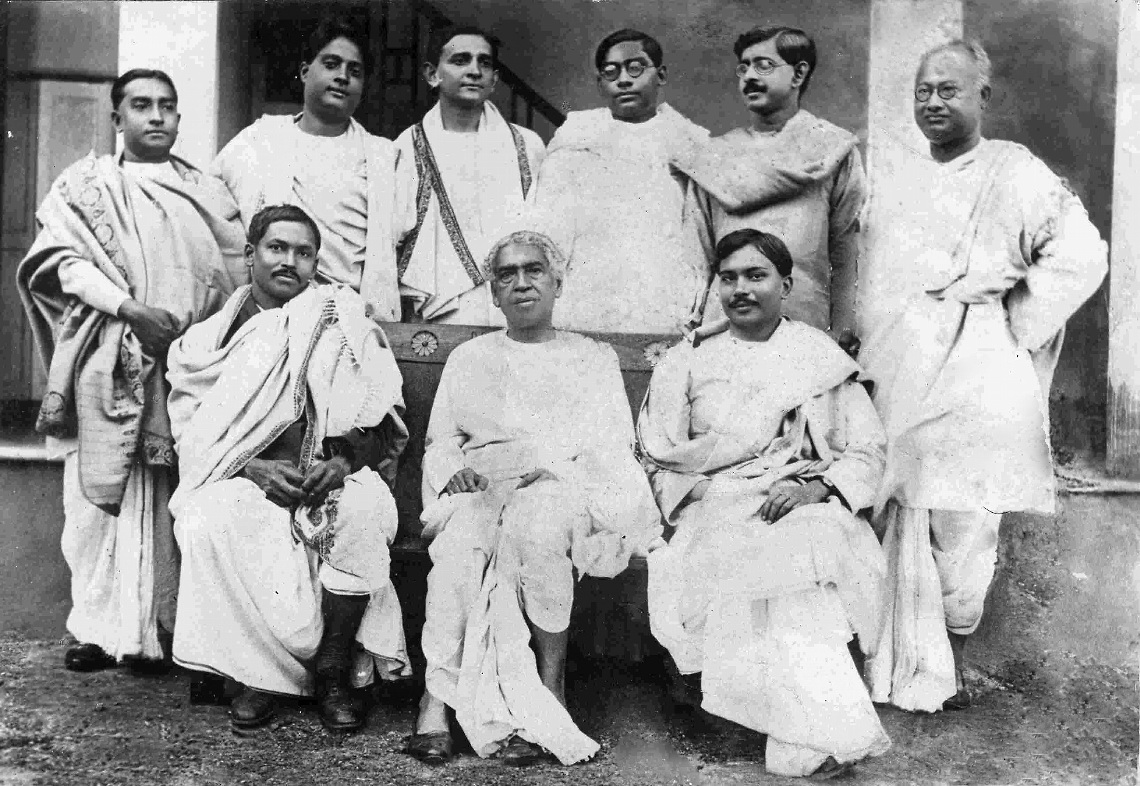
The generation that emerged is remarkable given the constraints. Jagadish Chandra Bose worked on millimeter-wave radio and then on plant physiology, and published on wireless signaling contemporaneously with Marconi’s work. Srinivasa Ramanujan, largely self-taught and working from a Madras clerkship, sent G.H. Hardy results in 1913 that Hardy judged had to be true because no one would have had the imagination to invent them. His notebooks are still being worked through. C.V. Raman won the Nobel Prize in Physics in 1930 for the scattering effect that carries his name, work done in Calcutta with modest equipment. Meghnad Saha’s ionization equation underpinned stellar astrophysics. Satyendra Nath Bose’s 1924 paper, which Einstein translated and extended, produced Bose-Einstein statistics and gave the boson its name.
The national project
Nehru’s government treated science as constitutive of independence rather than ancillary to it. The institutional buildout was large: the Council of Scientific and Industrial Research laboratories, the Atomic Energy Commission under Homi Bhabha from 1948, the space program under Vikram Sarabhai from the 1960s, the Indian Institutes of Technology, beginning with Kharagpur in 1951, and national laboratories in agriculture, defense, and metallurgy. The constitutional duty to develop a scientific temper emerged later, with the 42nd Amendment adding Article 51A(h) in 1976.
The results are genuinely mixed and worth stating in both directions.
Agriculture. The Green Revolution from the mid-1960s, combining imported high-yielding wheat and rice varieties, irrigation, fertilizer, and guaranteed procurement, ended India’s dependence on imported grain, making its foreign policy less vulnerable. M.S. Swaminathan’s role in adapting the varieties and the policy was central. The costs, concentrated in particular crops and regions, were groundwater depletion, soil degradation, and widening inequality between irrigated and rainfed areas.
Pharmaceuticals. The Patents Act of 1970 recognized patents on manufacturing processes but not on the products themselves, allowing Indian firms to legally reverse-engineer patented drugs and sell them at a fraction of the originator’s price. The industry that grew on that basis became the world’s largest supplier of generic medicines, and its antiretroviral pricing in the early 2000s was decisive in making HIV treatment affordable across Africa. India amended the law in 2005 to comply with the TRIPS agreement, while retaining provisions against patenting trivial modifications of known substances, a clause upheld by the Supreme Court against Novartis in 2013. The Serum Institute of India is the world’s largest vaccine manufacturer by volume of doses.
Space. The Indian Space Research Organisation built launch capability, remote-sensing, and communications satellites with an emphasis on developmental applications, and did so cheaply. Chandrayaan-1 in 2008 carried a NASA instrument whose data confirmed the presence of water molecules on the lunar surface. The Mars Orbiter Mission reached Mars orbit in 2014 on India’s first Mars mission, making India the first Asian country to do so; ESA’s Mars Express had already entered Mars orbit on that agency’s first planetary mission in 2003. Chandrayaan-3 landed in the lunar south-polar region in 2023, the first successful soft landing there.
Nuclear. The atomic energy program delivered a weapons capability, tested in 1974 and again in 1998, and a civilian power sector that has consistently fallen far short of its own projections.
The constraint
The weaknesses are as structural as the strengths. Public spending on research and development has remained well under one percent of GDP for decades, low for a country with these ambitions, and private research spending is thin outside pharmaceuticals and software. Elite institutions coexist with a university system that is chronically underfunded, and much of the country’s undergraduate teaching happens in colleges with no research culture at all. Bureaucratic control over laboratories, seniority-based promotion, and the pull of foreign postgraduate study have been repeatedly diagnosed in official reports for 50 years.
Public health is the sharpest illustration. A country that manufactures vaccines for the world has struggled to fund primary health centers, and the gap between India’s biomedical production capacity and its health indicators is the clearest evidence that scientific capability and public benefit are separate achievements.
Ancient priority claims are the least interesting part of this history, and the political appetite for them has grown in proportion to their irrelevance. The record that matters is the harder one: whether a laboratory founded this decade will still be doing serious work in forty years.