
Adivasi India
Not one culture
The largest concentrations run through a central belt from Rajasthan and Gujarat across Madhya Pradesh, Maharashtra, Chhattisgarh, Jharkhand, and Odisha into West Bengal, with other communities across the south, the Himalayas, the islands, and the Northeast. Bhils, Gonds, Santals, Mundas, Oraons, Todas, Khasis, Garos, Nagas, Mizos, Bodos, and hundreds of others do not share one language, religion, political system, or historical experience.
Some speak Indo-Aryan or Dravidian languages; others speak Munda languages in the Austroasiatic family or languages usually grouped as Tibeto-Burman. Some communities were long integrated into agrarian kingdoms and markets. Others maintained greater political autonomy in the hills and forests. A category built for administration can reveal a shared pattern of dispossession without turning that diversity into a single civilization outside “mainstream” India.
Forest, land, and colonial rule
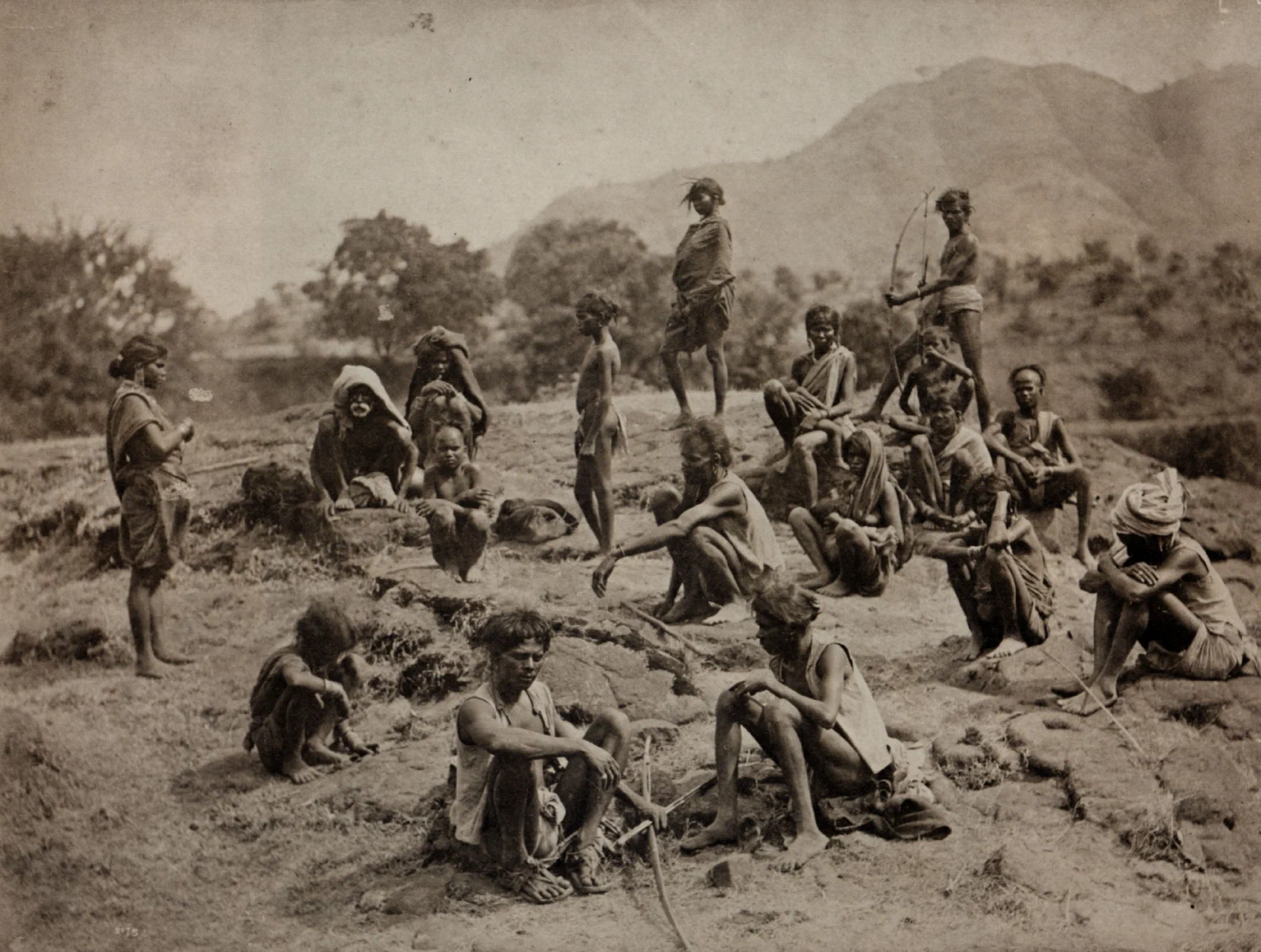
Colonial government transformed forests into state property and timber reserves. Customary shifting cultivation, grazing, hunting, and gathering became offenses or were licensed as privileges within land communities understood as their own. Revenue systems, moneylenders, landlords, contractors, missionaries, and commercial forestry altered the local authority together.
Resistance was frequent: the Kol uprising of 1831–32, the Santal rebellion of 1855–56, Birsa Munda’s ulgulan in the 1890s, Bhil movements in the west, and many conflicts too local to enter national histories. These were not all nationalist revolts; some were pre-nationalist. They defended land, political authority, religious practice, and moral economies against different combinations of outsiders and the colonial state.
The label “tribe” itself came through this encounter. Colonial anthropology sorted communities into supposedly evolutionary types and sometimes romanticized them as isolated primitives while the forest and revenue departments took control of their resources. Independent India rejected the racial theory more decisively than it rejected the administrative machinery.
Protection and autonomy
The Constitution created reservations in legislatures, education, and public employment for Scheduled Tribes. The Fifth Schedule provides a special administrative framework for designated tribal areas in most of the country; the Sixth Schedule gives autonomous district and regional councils stronger legislative and judicial authority in parts of the Northeast. The two systems reflect different histories and offer very different degrees of self-government.
Later laws tried to move authority downward. The Provisions of the Panchayats (Extension to the Scheduled Areas) Act of 1996 recognizes the gram sabha, the village assembly, as central to local decision-making in Scheduled Areas. The Forest Rights Act of 2006 recognizes individual and community rights that forest law had denied. Their importance lies partly in what implementation reveals: a right on paper must still survive incomplete records, bureaucratic resistance, competing conservation rules, and pressure for land.
Development, displacement, and conflict
The central Adivasi belt contains forests, coal, iron ore, bauxite, and major river valleys. Mines, dams, steel plants, wildlife reserves, and military facilities, therefore, fall disproportionately on Adivasi land. Projects can provide roads, schools, electricity, and employment; they can also acquire common land, compensate only formal titleholders, and leave communities with cash that cannot replace a forest, watershed, or local economy.
This is the setting in which the Maoist insurgency took hold across parts of central and eastern India. Armed groups have recruited through real grievances and have also coerced and killed Adivasi civilians; security forces have committed abuses while treating whole districts as a counterinsurgency problem. Describing the region only through Maoism repeats the error of seeing Adivasi society only when the state notices a threat, not when it closes a school, grants a mining lease, or rejects a forest claim.
Religion and counting
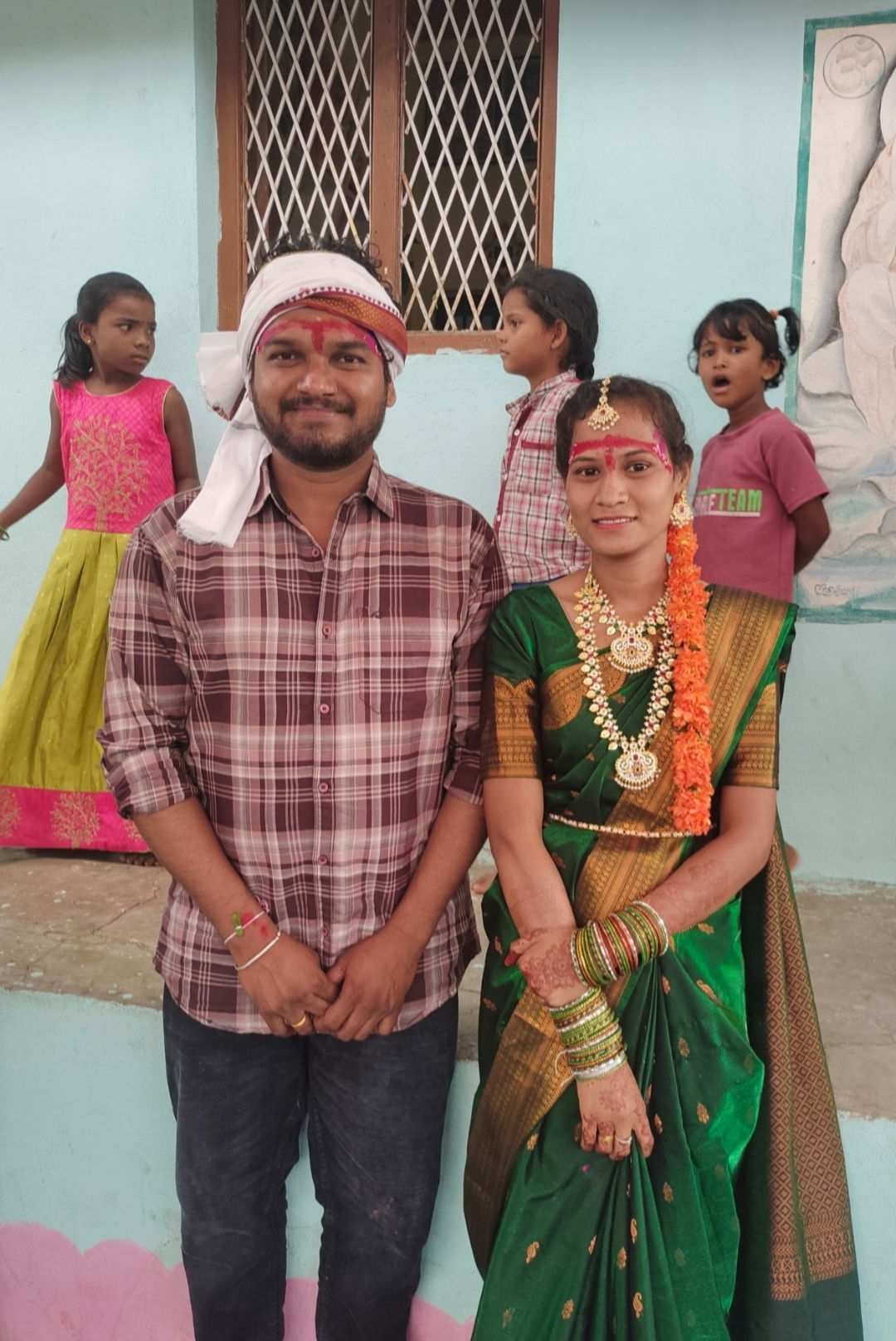
Adivasi religious life includes ancestor and village-deity traditions, sacred groves, festivals tied to cultivation and forest cycles, and movements with their own scriptures and reformers. It also includes Hindu, Christian, Buddhist, and other affiliations, often combined with older practices rather than replacing them cleanly. Sarna is the best-known demand for a distinct census code, especially in Jharkhand and neighboring regions.
The census has generally required religious identities to be fitted into large named categories or an “Other Religions and Persuasions” remainder. That makes apparently simple demographic claims political: counting a community as Hindu, Christian, or Sarna can change how conversion, minority rights, and national identity are argued about. The 2027 census will intensify the question by enumerating caste more broadly while still having to decide how tribe, caste, and religion relate on the form.
Representation without folklore
Adivasi people are often made to stand for one of two fantasies: an untouched ecological wisdom or a population waiting to be developed into modernity. Both deny the political present. Adivasi writers, lawyers, elected representatives, scholars, artists, church organizations, women’s groups, village assemblies, and movements disagree over mining, conversion, reservations, customary authority, and relations with the state. That disagreement is evidence of public life, not of lost authenticity.