
Caste
The word “caste” isn’t Indian. It comes from the Portuguese casta, “breed” or “lineage,” applied by sixteenth-century European traders to a system they didn’t fully understand. The Sanskrit term is varna, literally “color,” though by the time it’s used in the sense of social classification, its meaning has already stretched to cover quality, category, and status as much as anything to do with pigment.
Vedic origins
The earliest reference to a fourfold social order appears in the Rigveda’s Purusha Sukta, a late hymn describing society as emerging from the body of a cosmic being, Purusha, at the moment of creation: Brahmins (priests, scholars, teachers) from the mouth, Kshatriyas (warriors and rulers) from the arms, Vaishyas (merchants, traders, agriculturalists) from the thighs, and Shudras (laborers and service providers) from the feet. The hierarchy is embedded in the anatomy itself: mouth above arms above thighs above feet.
Whether this hymn describes an already-existing social order or was composed to justify and formalize one still taking shape is a matter of genuine debate among historians. The Purusha Sukta is one of the latest additions to the Rigveda, suggesting that the fourfold division wasn’t present from the beginning of Vedic society but crystallized later as Vedic communities settled and their social and religious life became more stratified and institutionalized. Some scholars read the hymn less as a description of contemporary practice and more as a piece of religious ideology: a story told to make an emerging hierarchy look cosmically ordained rather than socially constructed.
Texts from the later Vedic and early historic periods identify groups such as Chandalas outside the four-varna scheme. Still, later societies treated many regional communities as “untouchable,” and the restrictions imposed on them developed over a long period rather than appearing as a single fixed fifth category from the beginning. Work involving death, animal remains, waste, leather, or sanitation was often stigmatized, and exclusion could extend to temples, wells, schools, and residential space, though its form varied by place and time. Gandhi renamed these communities Harijan (“children of God”) in the twentieth century, a coinage many of the people it described rejected as condescending. The preferred political term today is Dalit, “broken” or “crushed,” adopted by many of the communities themselves.
From here, varna becomes the theoretical scaffolding against which Indian society is discussed for roughly the next three thousand years, even as what it meant in daily practice changed enormously.
The jati/varna distinction
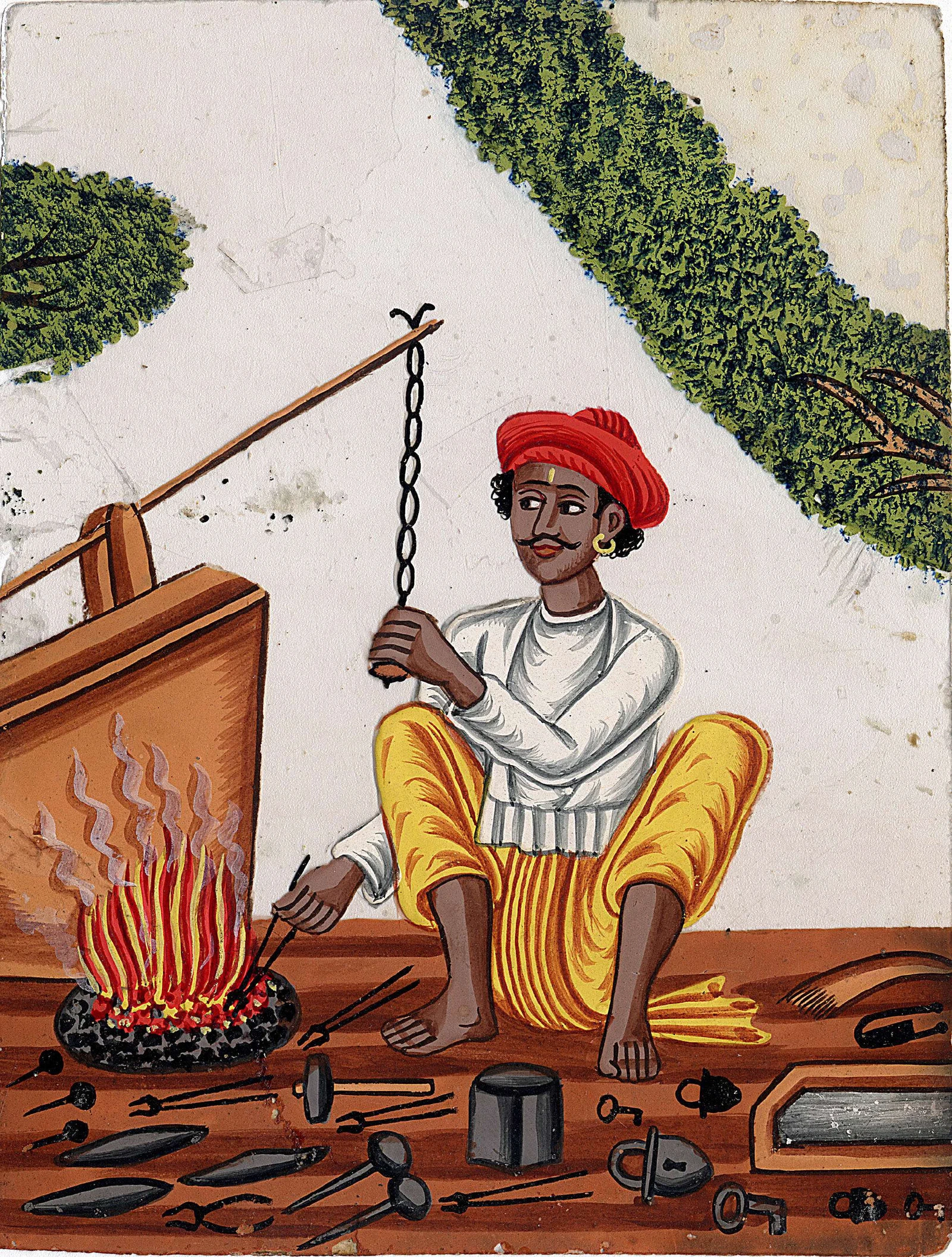
Varna is a theory: four broad categories, cosmically sanctioned, remarkably stable in name across three millennia of texts. Jati is practice: thousands of much more specific, local, endogamous communities, each tied to a particular occupation, region, language, or set of customs, and each one the thing that actually governed a person’s daily social life, meaning who they could marry, eat a meal with, or work alongside.
The two systems relate, but not cleanly. Many jatis were loosely mapped onto a varna: a particular weaving community was understood as broadly Shudra, a particular priestly lineage as Brahmin, but the mapping was often contested, regionally inconsistent, and open to negotiation or reinterpretation. Other communities placed themselves outside the fourfold scheme or did not organize themselves through it at all. Varna offered a shared vocabulary across much of the subcontinent; jati was the actual unit of social organization, and by some estimates, there were several thousand distinct jatis by the medieval period, far more granular and locally specific than the four-varna model could describe.
This distinction matters because it’s easy to flatten “the caste system” into the four-varna hierarchy alone, when in practice most people’s lived experience of caste operated at the jati level, a level with its own internal hierarchies, its own histories, and often only a loose or symbolic connection to which of the four varna categories it was said to belong to.
The Mahabharata itself preserves a strand of internal argument against treating any of this as fixed: if different colors indicate different castes, then all castes are mixed castes. The tension between caste as a clean theoretical division of labor and caste as a rigid inherited hierarchy runs through the tradition from quite early on, not just as a later corruption of an originally fluid system.
Colonial-era hardening
The centuries of Turkic, Afghan, and Mughal rule following the Delhi Sultanate’s founding in 1206 didn’t dismantle caste. Muslim rulers largely governed through existing local structures and elites, and caste continued to organize Hindu social life much as before; a parallel status hierarchy also developed among Indian Muslim communities in some regions, indicating that caste-like stratification wasn’t exclusively a Hindu phenomenon, even if its origins were.
The more consequential shift came under British colonial administration, driven by a specific bureaucratic need. The colonial state increasingly recorded caste in the decennial censuses that began in 1871–72. Classification was not uniform from census to census, but the 1901 census under H.H. Risley made an especially explicit attempt to arrange communities by social precedence. Communities petitioned to be reclassified upward, effectively litigating rank through the colonial state. The censuses did not create caste, but they gave locally contested identities a new, countable, government-recorded form.
Colonial administrators extended this logic elsewhere. Recruitment into the British Indian Army leaned heavily on theories of “martial races,” certain communities deemed inherently suited to soldiering and others not; civil service and land revenue administration relied on caste and community categories in ways that entrenched rather than eroded them.
Historians differ on exactly how much this colonial codification changed caste, rather than simply documenting a rigidity that was already there. Nicholas Dirks pushes the strong version, that caste as we know it is substantially a colonial artifact, and Susan Bayly pushes back, arguing for deeper precolonial roots. But there’s broad agreement on the narrower point: the census, and colonial law more generally, gave caste a new kind of bureaucratic permanence, a fixed, countable, government-recorded identity, rather than the more locally negotiated and regionally variable thing it had often been before.
The post-independence legal picture
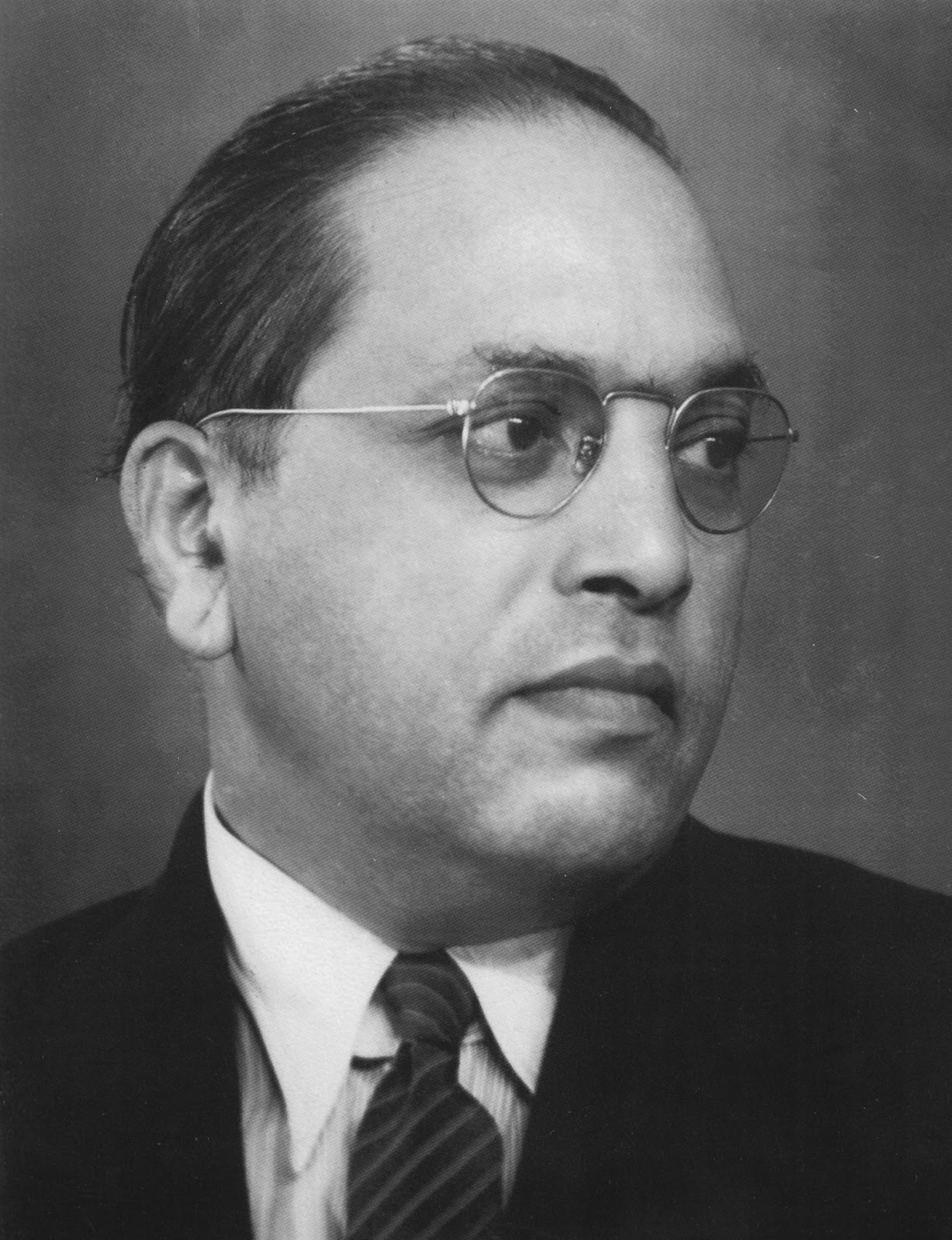
India’s Constitution, which came into force in 1950, abolished untouchability outright (Article 17), reserved legislative seats for Scheduled Castes and Scheduled Tribes, and authorized affirmative action in public employment. The First Amendment in 1951 added Article 15(4), expressly enabling special provisions for socially and educationally backward classes and for Scheduled Castes and Scheduled Tribes, including in education. Together with later laws and policies, these provisions built the reservation system: a structural attempt to redress disadvantage through law, rather than merely outlaw discrimination and leave existing inequality in place.
The system has been extended and contested repeatedly since. The most significant expansion came in 1990, when the government moved to implement the Mandal Commission’s recommendation to extend quotas to Other Backward Classes, a much larger population than SCs and STs. It triggered major protests and a national political realignment around caste-based reservation that continues to shape Indian electoral politics today. The Supreme Court settled the resulting challenge in Indra Sawhney (1992), upholding the Mandal recommendations while capping total reservations at 50%.
That cap held for nearly three decades. A 2019 constitutional amendment created a 10% quota for economically weaker sections, the first constitutionally authorized reservation based solely on economic disadvantage and excluding groups already covered by the existing reservation categories. The Court upheld it in 2022.
And the instrument that started all of this is being deliberately restarted. The sixteenth census, delayed from 2021, will enumerate caste beyond the Scheduled Castes and Scheduled Tribes for the first time since Independence. Population enumeration is scheduled for February 2027 with a reference date of 1 March, and it will be India’s first digital census. The colonial censuses fixed caste into a countable, government-recorded identity and, in the process, hardened it. The 2027 census reactivates that instrument, this time explicitly as a tool of redistribution, the argument being that you cannot target disadvantage you refuse to measure.
So caste today occupies an unusual position: formally illegal to discriminate against, formally protected against through affirmative government policy, and in practice still a significant factor in marriage patterns, social networks, and, through the reservation system itself, electoral politics. The legal picture changed completely in 1950. The social picture changed more slowly and unevenly, and by most accounts is still changing. Whether an instrument that entrenched caste in the nineteenth century can dismantle it in the twenty-first is the open question. Nobody knows. The experiment starts in 2027.