
Festivals
There is no single Indian festival calendar; for the same reason, there is no single Indian cuisine. What there is instead is several kinds of time running simultaneously, and an annual public negotiation over space, noise, money, and precedence that mostly holds.
Several calendars at once
At least four systems date Indian festivals. Most Hindu festivals follow a lunisolar calendar, in which months track the moon and are periodically corrected against the solar year by inserting an extra month, so the dates move within a season but do not drift out of it. A smaller set is purely solar and therefore lands on nearly the same Gregorian date each year, which is why Pongal, Baisakhi, and Bihu cluster in mid-January and mid-April. Islamic festivals follow a purely lunar calendar with no correction, so they move backward through the seasons by roughly eleven days a year. Christian festivals and the state’s own calendar follow the Gregorian.
Regional systems disagree further. Some regions begin the month at the new moon and others at the full moon, so that the same festival can carry different month names in different places. Different regional New Year’s fall in different months. The practical instrument for resolving all of this is the panchanga, the regional almanac that reconciles lunar days, solar transitions, festival dates, and auspicious times, and which is still consulted for weddings and openings by people who would not describe themselves as especially religious.
The upshot is that the annual sequence never quite repeats, and no two regions run the same year.
The big ones
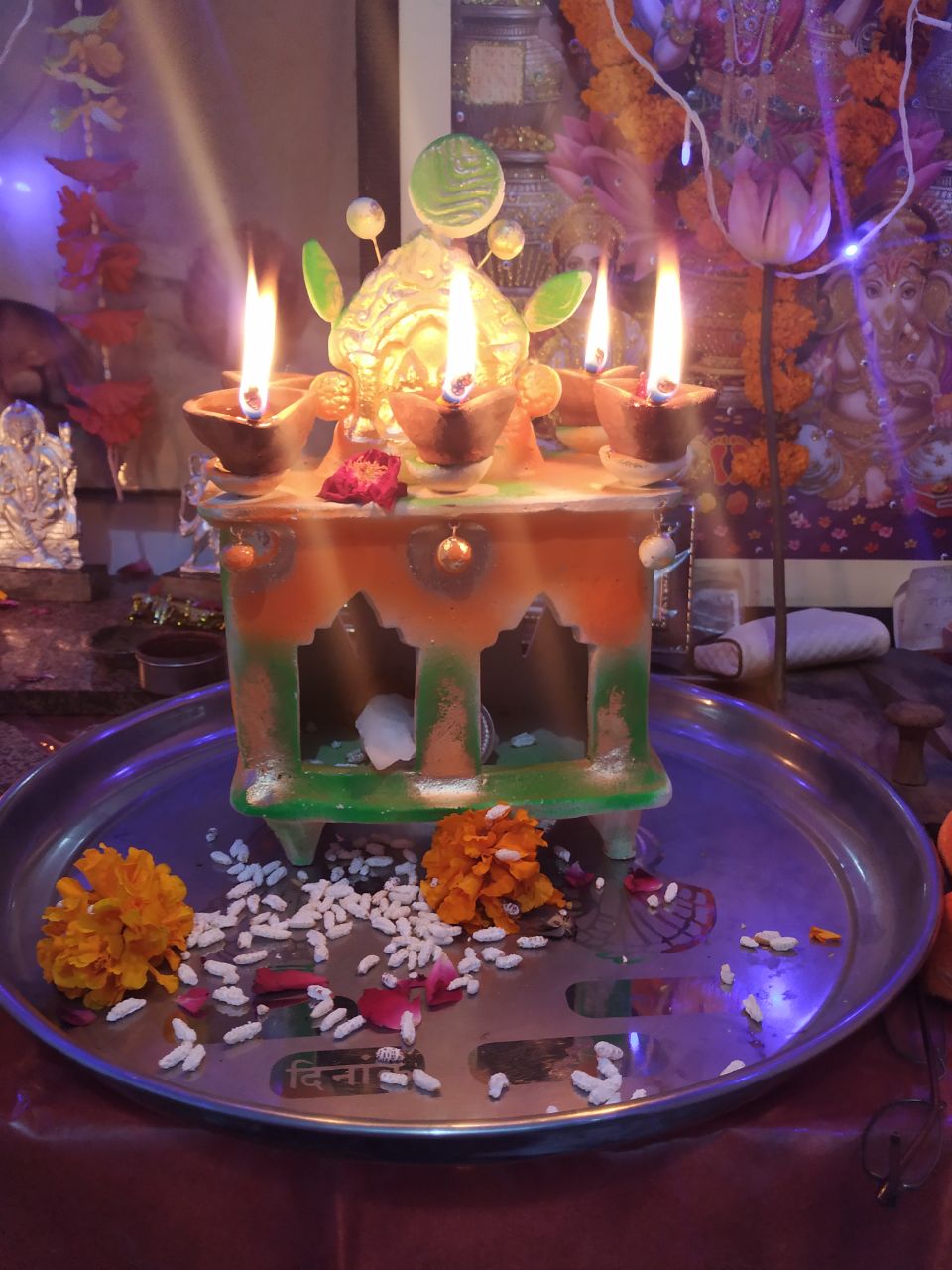
Diwali is the most widely observed, and it is not one festival. It gathers Lakshmi worship, the return of Rama in much of the north, Krishna’s defeat of Narakasura in much of the south, the start of a business year in several mercantile communities, and household rituals across several days. Jains mark Mahavira’s liberation at the same time; Sikhs observe Bandi Chhor Divas, commemorating Guru Hargobind’s release from imprisonment. It is a shared occasion carrying different content, which is the general pattern rather than an exception.
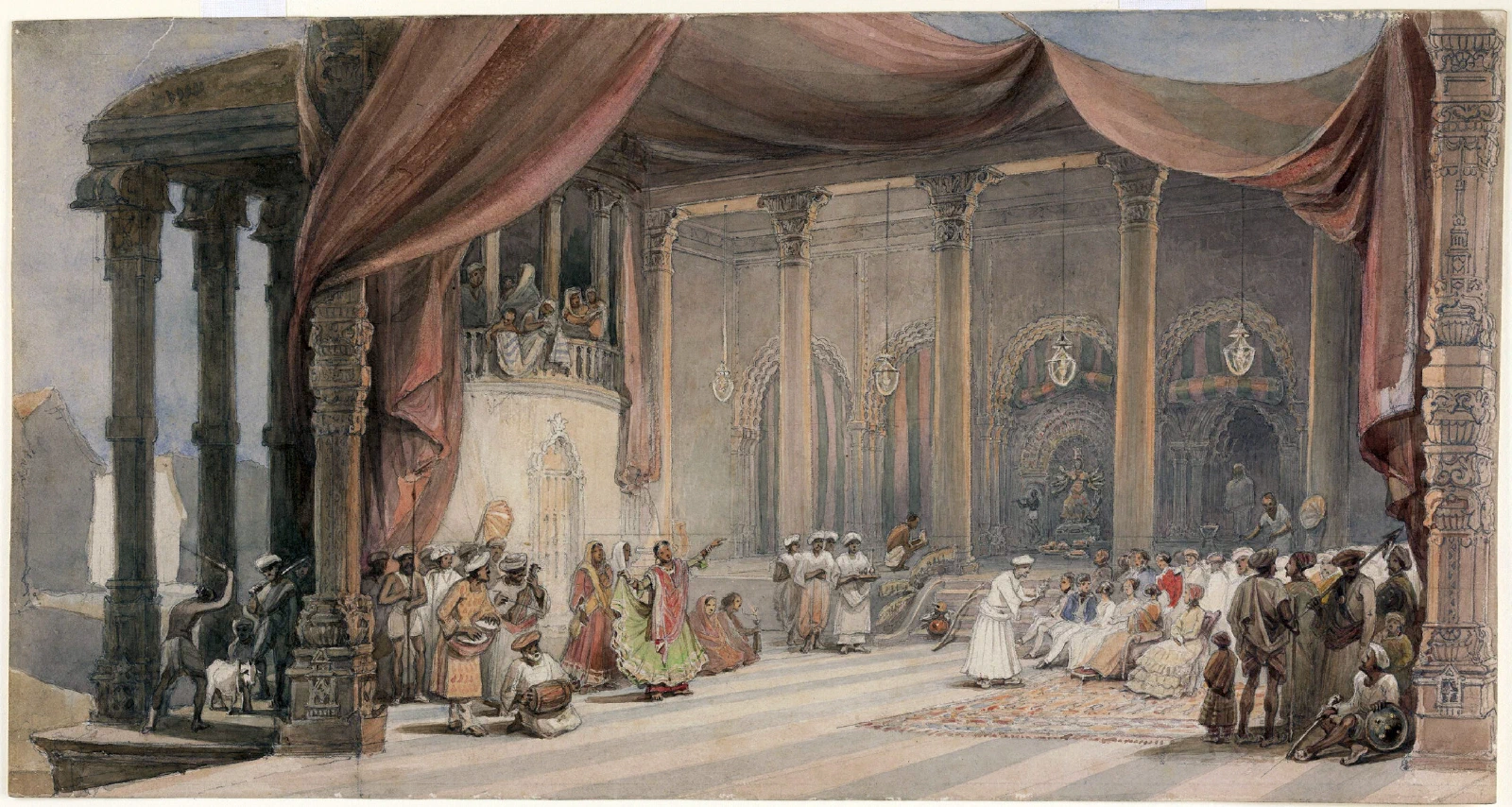
Durga Puja turns Bengal, and Kolkata above all, into a temporary open-air art exhibition. Neighborhood committees commission pandals, elaborate temporary pavilions, from designers who compete for attention, and the whole city moves through them for several days before the images are immersed. UNESCO inscribed it on its List of Intangible Cultural Heritage in 2021. It is simultaneously devotional, artistic, ferociously competitive, and heavily sponsored.
Holi marks spring with colored powder, bonfires, and a licensed inversion of ordinary conduct. The inversion has limits that are not always observed, and the festival’s reputation for harassment is a real and much-discussed problem rather than a squeamish invention.
Navratri is a nine-night festival of goddess worship, observed through fasting and devotion in some regions and through all-night garba and dandiya raas dancing in Gujarat, which UNESCO added to its list in 2023. Ganesh Chaturthi is the Maharashtrian case worth knowing in detail: a domestic observance that Bal Gangadhar Tilak deliberately reorganized in the 1890s into a large public festival, partly to build a nationalist public that colonial restrictions on political assembly could not easily suppress. It worked, and it is a clean demonstration that a “traditional” public festival can have a dateable political origin.
Onam in Kerala gathers harvest, homecoming, the feast, boat races, and the memory of the demon-king Mahabali. It is observed across religious communities as a regional rather than sectarian occasion. Pongal in Tamil Nadu, Baisakhi in Punjab, Bihu in Assam, and Makar Sankranti across much of the country mark solar transitions and harvests.
Eid al-Fitr and Eid al-Adha, Muharram with its processions and Shia mourning observances, Christmas, especially in Goa, Kerala, and the Northeast, Losar in the Buddhist Himalaya, Navroz among Parsis, Mahavir Jayanti and Paryushana among Jains, and Guru Nanak Jayanti among Sikhs all belong to the same lived calendar, alongside countless village, temple, shrine, church, and monastery observances that no national list records.
The Kumbh Mela, rotating among four river sites on an astronomically determined cycle, produces one of the largest gatherings of people anywhere on earth, requiring a temporary city with its own water, sanitation, policing, and transport built and dismantled on schedule. UNESCO added it to its list of intangible cultural heritage in 2017.
What festivals actually do
They organize the economy. Diwali is the retail peak of the Indian year; festival-related spending shapes household credit, gold buying concentrates on specific auspicious days, and seasonal labor moves with the calendar. They organize travel: the annual return to a hometown is, for millions of migrant workers, the only time they see their families. They organize neighborhoods through committees that collect subscriptions, book performers, negotiate with police, and accumulate real local power.
They also organize conflict. Processions passing places of worship, loudspeaker volume and timing, immersion sites, road closures, and the use of public land are all negotiated annually, sometimes in court, and occasionally they are the proximate trigger for violence. Colonial administrators recorded and, in some cases, entrenched these disputes; independent India inherited them along with a body of case law about what a procession may do and where.
Money and politics change the observances themselves. Sponsorship enlarges a celebration while shifting control toward whoever paid. Political parties fund and appear at neighborhood pandals. Environmental regulation, over firecracker use during Diwali in cities with severe winter air pollution, over idol immersion in rivers, and over noise limits, has generated its own long-running arguments in which public health, religious freedom, and cultural resentment are genuinely tangled rather than trivially separable.
Migration completes the circuit. A Gujarati garba or a Bengali puja in a foreign city becomes a general “Indian” event there, then returns home with new expectations about scale and production. The calendar is not a survival from the past. It is continuously rebuilt, and the fact that negotiations mostly succeed in a country this plural is among its more underrated features.