
Food
There is no Indian cuisine. There are dozens, and they are organized less usefully by state than by grain, cooking fat, ecology, religion, and caste. The single most important thing to know about the food is that a great deal of what looks ancient in it is not.
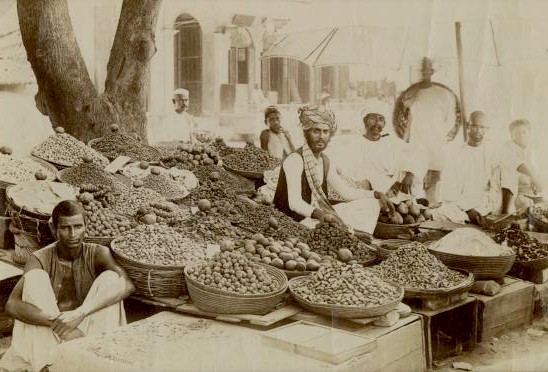
The real map
Wheat and dairy dominate much of the north and northwest: flatbreads, ghee and butter, paneer, yogurt. Rice and coconut run down both coasts, with fish along them. The East cooks rice with mustard oil and freshwater fish, and takes fermentation and bitterness seriously. The semi-arid interior of the Deccan and Rajasthan built its food on millets, sorghum, and pulses, because that is what grows without reliable rain. The Northeast is different again: fermented bamboo shoots, fermented soybeans, smoked and dried meat and fish, minimal spices, and a set of techniques closer to upland Southeast Asia than to Delhi.
Within any of those, community matters more than geography. In one Gujarati town, a Jain household, a Muslim household, and a Dalit household will cook differently, and the differences are not incidental variations on a shared local cuisine but distinct systems with their own prohibitions and techniques.
The word “curry” describes none of this. It is an English catchall, probably from the Tamil kari, used by colonial cooks and later exported worldwide as a bottled spice mixture. In an Indian kitchen, there is a category called curry, and the standard question about whether a curry is authentic is about something invented to answer it.
What arrived, and when
Chilies are not indigenous. From the sixteenth century onward, Portuguese and other trade networks carried them from the Americas to India, along with crops such as potatoes, tomatoes, peanuts, cashews, papaya, guava, and pineapple; the timing and route varied by crop. Before chilies, heat came mainly from black pepper and long pepper. This means that food many people picture as timelessly Indian, chili-hot and cooked with potatoes or tomatoes, took its present form in the early modern period.
Earlier layers arrived the same way. Wheat and barley came with West Asian agriculture into the northwest. Central Asian and Persian influence brought the tandoor’s descendants, pilafs, dried-fruit and nut cookery, and the meat-and-rice dishes that became Mughlai and Awadhi cuisine, of which the various biryanis are the most hotly debated survivors. Arab traders shaped Malabar’s food. The Portuguese left vinegar-and-garlic braising in Goa, where vindaloo originated, and the technique still carries the name of the Portuguese dish it derived from. Tea, now the default Indian drink, was a colonial plantation crop promoted to Indians as a domestic market in the twentieth century.
The direction of travel was never one-way. Indian pepper drove Roman trade deficits, Indian sugar-refining gave several languages their word for sugar, and Indian cloth and spices financed Indian Ocean commerce for centuries before Europeans arrived to buy into it.
Vegetarianism, and the numbers
Vegetarian traditions in India are real, old, and doctrinally serious, particularly in Jainism and in several Vaishnava and Brahmin communities. They are also regionally concentrated rather than national. Survey estimates put the vegetarian share of the population somewhere between a fifth and a third, which makes India both the least meat-eating large country on earth and a country where most people eat meat.
Those surveys are known to be unreliable in a specific direction. Researchers have argued that respondents under-report meat, especially beef, consumption because of social status and, increasingly, political risk. What people say they eat is a claim about who they are. In a caste system where dietary restriction has long marked rank, upward mobility has often meant adopting vegetarianism rather than acquiring a taste for it.
Beef is the sharpest case. Cow slaughter is restricted or banned in most states under laws of varying severity, with the constitution’s directive principles cited in support. At the same time, beef remains legal in Kerala, West Bengal, and much of the Northeast. Enforcement has been accompanied since the mid-2010s by vigilante violence, with Muslims and Dalits, the communities most likely to trade in cattle, handle carcasses, or eat beef, bearing nearly all of it. Food here is not a metaphor for identity politics; it is the venue.
Grain policy on the plate
The Green Revolution from the mid-1960s greatly increased wheat and rice production, reduced dependence on imported grain, and strengthened India’s protection against severe food shortages. It did so by concentrating research, irrigation, fertilizer, credit, and guaranteed procurement on those two crops. The public distribution system then delivered them at subsidized prices nationwide.
The dietary consequence was a long decline in millet and sorghum consumption, including in regions where those grains were the traditional staple, better suited to the local rainfall, and more nutritious in several respects. Policy did not intend that outcome; it followed from what the state bought. Millets have since been rehabilitated in official enthusiasm, with 2023 declared an International Year of Millets at India’s proposal, and reintroduced into some state distribution systems.
Meanwhile, the state feeds people on an extraordinary scale. Subsidized grain reaches a large majority of the population, and the mid-day meal scheme in government schools is among the largest school feeding programs anywhere. State programs, especially Tamil Nadu’s, preceded a national centrally sponsored scheme launched in 1995; a Supreme Court order in 2001 required cooked meals rather than dry grain across government and government-aided primary schools. Where it works, it improves attendance and nutrition at once. Where caste intervenes, and there have been many documented cases of children being seated separately or refusing food cooked by a Dalit cook, it reproduces the hierarchy it was meant to bypass.
Malnutrition remains an unresolved problem. India’s economic growth has not translated into commensurate improvements in child stunting and anemia, and the gap between the country’s grain surpluses and its nutrition indicators is one of the more damning facts about Indian development.
Eating out
Restaurant culture, as most Indians experience it, is not fine dining. It is the dhaba on a highway, the Udupi restaurant that spread South Indian food across the country, the Irani cafés of Bombay and Hyderabad run by Zoroastrian immigrants, the street-food economies of Delhi and Mumbai and Kolkata, and Mumbai’s dabbawalas, who move home-cooked lunches across the city daily with an accuracy that has attracted repeated and slightly overwrought management-school attention.
Indian food abroad went through its own transformation. Restaurants in Britain, many run by Sylheti migrants from what is now Bangladesh, created a menu that exists nowhere in India, including chicken tikka masala, which is a genuinely British dish. That food is not fake. It is a diaspora cuisine with its own history, and treating it as a degraded copy misunderstands what happens when people cook in a new place with different ingredients for different customers.