
Rivers & Water
Indian rivers supply drinking water, irrigation, transport, fish, sand, electricity, sewage disposal, and religious life, frequently in the same stretch of water on the same day. That is why there is no purely technical water policy here, and why every proposal to fix a river runs into someone for whom it is a different kind of object.
Two kinds of rivers
Himalayan rivers, the Indus, the Ganga, the Brahmaputra, and their tributaries, are fed by rain, snowmelt, and ice, which is why they flow all year. They are also young, energetic, and heavily loaded with sediment, and they built the plain they run across. The Kosi in Bihar has shifted its course across a wide fan of territory within recorded history, which is why it is called the sorrow of Bihar. The Ganga and Brahmaputra join in Bangladesh to form the world’s largest delta, whose seaward fringe is the mangrove forest of the Sundarbans.
Peninsular rivers run over old, hard rock and depend almost entirely on seasonal rain, so they swell and shrink dramatically. The Godavari, Krishna, Kaveri, and Mahanadi flow east into the Bay of Bengal across the plateau’s tilt. The Narmada and Tapi are the exceptions that run west into the Arabian Sea, along fault-guided valleys, and the Narmada has long served as a cultural boundary between north and south.
The practical difference is reliability. A Himalayan river can be dammed for a year-round supply. A peninsular river offers a large volume for a few months and very little afterward, which is why the Deccan is covered in tanks, check dams, and reservoirs, and why its agriculture leans so heavily on groundwater.
Rivers as international boundaries
River basins ignore political boundaries, and the Partition cut the Indus system in half.
The Indus Waters Treaty, signed in 1960 after nearly a decade of World Bank–brokered negotiation, allocated the three eastern rivers, the Ravi, Beas, and Sutlej, to India. The three western rivers, the Indus, Jhelum, and Chenab, were allocated to Pakistan, while permitting India limited non-consumptive use of the western rivers, including run-of-the-river hydropower under specified design constraints. The treaty was long cited as one of the more durable water-sharing arrangements anywhere, having survived three wars. That ended in April 2025, when India announced it would hold the treaty in abeyance following an attack on tourists at Pahalgam; the arbitration court constituted under the treaty subsequently held that it contains no provision for unilateral suspension, and India rejected that finding. Its older technical disputes, over the design of Indian hydropower projects on the western rivers, had already run through the treaty’s own machinery for decades.
To the east, the Ganges Water Treaty of 1996 governs sharing with Bangladesh at the Farakka Barrage, built by India in the 1970s to flush silt from the Hooghly and preserve the port of Kolkata, and resented downstream ever since for reducing dry-season flow. The Teesta remains unresolved, blocked more by West Bengal’s objections than by the two national governments.
The Brahmaputra rises in Tibet as the Yarlung Tsangpo, which flows through Chinese territory. Chinese dam construction on that river is closely watched in India, with concern about both flows and the lack of a comprehensive data-sharing agreement.
Rivers as domestic disputes
Interstate water conflict is a permanent feature of Indian federalism, adjudicated through tribunals established under 1956 legislation, and the tribunals have been slow enough that the disputes outlive them.
The Kaveri dispute between Karnataka upstream and Tamil Nadu downstream is the most bitter. A tribunal was constituted in 1990, delivered its final award in 2007, and the Supreme Court modified the allocation in 2018, ordering the appointment of a management authority. In deficit years, releasing water becomes politically impossible for a Karnataka government and withholding it becomes politically impossible for a Tamil Nadu one, and the result has repeatedly been riots, bus burnings, and attacks on people from the other state.
The Krishna and Godavari have their own tribunals and their own long-running arguments, sharpened by the division of Andhra Pradesh in 2014. Punjab and Haryana have fought over the Sutlej-Yamuna Link canal since the 1980s, through legislation, litigation, and a Punjab law terminating its water-sharing agreements that the Supreme Court later held invalid.
The largest proposal on the table, the interlinking of rivers, would transfer water from surplus basins to deficit basins through a network of canals and reservoirs. The first link, connecting the Ken and Betwa rivers, was cleared in 2021. Critics argue that basin surpluses are computed on contested assumptions, that the ecological and displacement costs are severe, that the scheme cuts through a tiger reserve, and that the money would achieve more if spent on local storage, efficiency, and cropping choices. The argument has been running since the nineteenth century and shows no sign of resolving.
Dams
Independent India built dams on a very large scale and understood them as national projects. Nehru called them the temples of modern India at Bhakra, and the Bhakra-Nangal, Hirakud, and Damodar Valley schemes delivered irrigation, flood moderation, and power that the country genuinely needed.
They also displaced a very large number of people, disproportionately Adivasi and rural poor, with compensation that was frequently inadequate, delayed, or never delivered. The Narmada projects, and the Sardar Sarovar dam in particular, were subject to several public arguments: the Narmada Bachao Andolan led by Medha Patkar and others forced an unprecedented independent review, the World Bank withdrew from the project in 1993, and the Supreme Court eventually allowed construction to proceed in 2000 with conditions on resettlement. The dam was completed. The resettlement record remains disputed.
The broader reckoning is that large dams delivered real benefits and imposed those benefits’ costs on people with the least capacity to refuse them, and that studies consistently underestimated the sediment, fisheries, and downstream flow consequences. Himalayan hydropower raises the additional problem of development in a seismically active, landslide-prone, warming range.
Groundwater, which is the real story
While arguments over rivers continue, most of the water India actually uses now comes from underground sources. India extracts more groundwater than any other country, and the majority of its irrigation and most of its drinking water come from wells rather than canals.
The mechanism is straightforward and hard to stop. Cheap drilling and pumps made a private well accessible to individual farmers; free or heavily subsidized electricity for agricultural pumping, offered by state governments and politically almost impossible to withdraw, removed the marginal cost of extraction; and no effective regulation limits how much any landholder pumps from an aquifer shared with neighbors. Water tables in Punjab, Haryana, western Uttar Pradesh, and parts of the Deccan have fallen for decades, and satellite gravity measurements have tracked the loss across northwest India.
The consequences are compound. Deeper wells cost more, favoring larger farmers and pushing smaller ones into debt. Falling tables concentrate fluoride, arsenic, and salinity in some regions, with serious health effects, and the arsenic contamination of the Ganga-Brahmaputra plain aquifers is among the largest mass poisonings anywhere. Because groundwater is invisible, private, and unmetered, it generates none of the political theatre that surface water does, which is precisely why it is the harder problem.
Pollution and the legal river
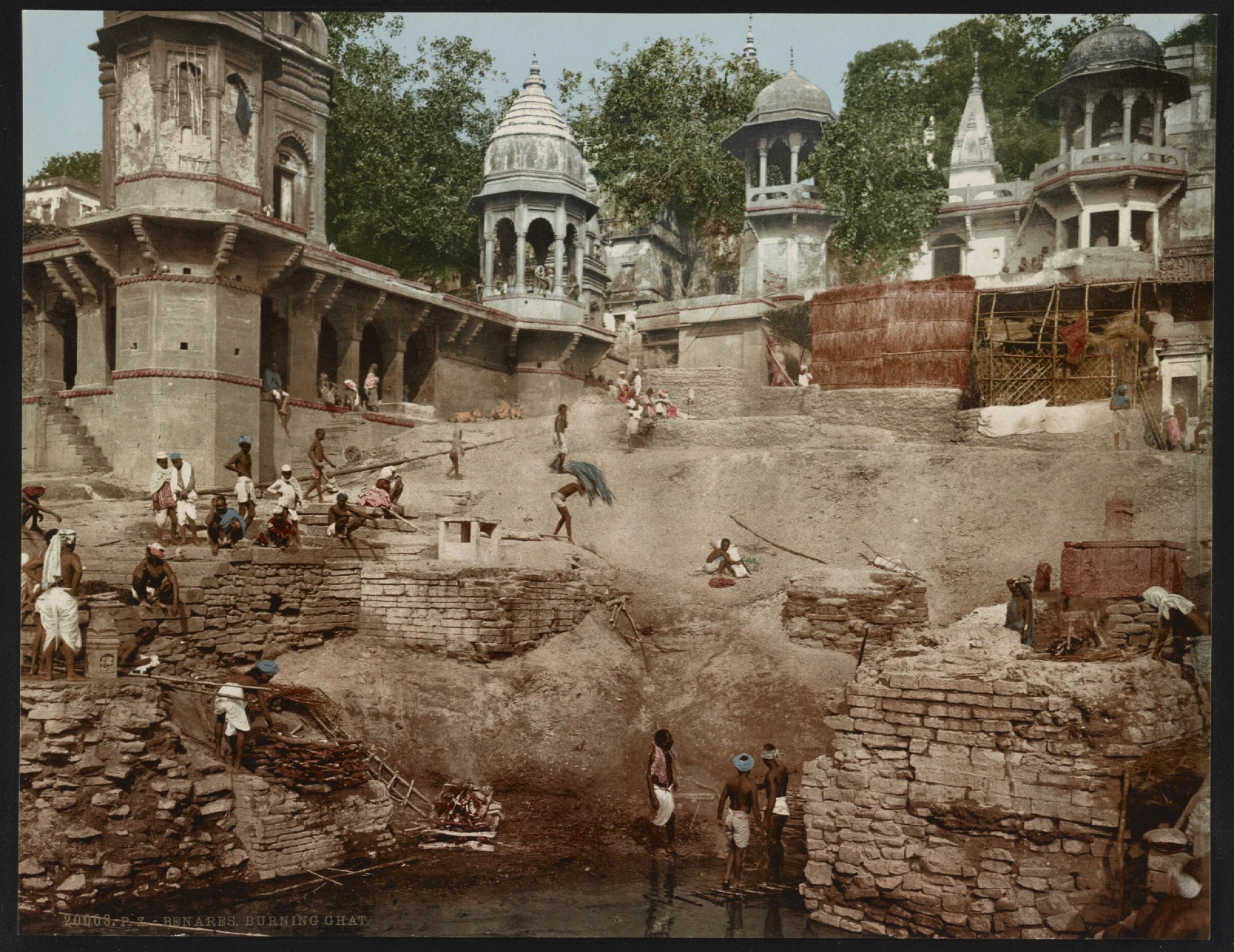
The Ganga has been the subject of official cleanup programs since the Ganga Action Plan of 1986 and, more recently and with more money, Namami Gange Programme from 2014. Untreated sewage remains the dominant load, ahead of industrial effluent, and the core difficulty is unglamorous: sewerage networks and treatment plants have to be built, connected, powered, and maintained in hundreds of towns, and treatment capacity that exists on paper often does not run. The Yamuna through Delhi is worse, effectively an anoxic drain for much of its urban course.
The judiciary has repeatedly intervened through the Supreme Court and the National Green Tribunal, established in 2010, ordering closures, relocations, and timelines. In 2017, the Uttarakhand High Court went further. It declared the Ganga and Yamuna legal persons with the rights of a living entity, a striking move that the Supreme Court stayed shortly afterward.
Sand mining is the least discussed and most immediately destructive extraction. Construction demand for river sand supports a large illegal industry that undermines bridges, lowers water tables, destroys riverbed habitat, and has produced repeated violence against officials and journalists who interfere with it.