
The Freedom Movement
The independence movement took sixty years, and the version taught in most classrooms compresses it into one man with a spinning wheel. Gandhi is central and not sufficient. The movement also contained constitutional lawyers, revolutionary bombers, peasant unions, a competing anti-caste politics that regarded the Congress with justified suspicion, and an army raised to fight the British in the field.
Petitioning, 1885–1905
The Indian National Congress was founded in 1885, with the encouragement of a retired British official, and its early members were lawyers, journalists, and professionals who believed the empire could be argued into reforming itself. They met annually, passed resolutions, and asked for more Indians in the civil service and more representation in the legislative councils. They were loyalists.
Their most effective weapon was economic analysis rather than protest. Dadabhai Naoroji’s drain-of-wealth argument and R.C. Dutt’s economic history made the case that Britain was systematically extracting resources from India, and they made it in the language and with the statistics of the British administration itself. That framework outlasted the moderates who produced it.
From petition to agitation, 1905–1919
The partition of Bengal in 1905, justified administratively and widely understood as an attempt to split a politically troublesome province along religious lines, sparked the first mass campaign. The Swadeshi movement combined a boycott of British goods with promotion of Indian manufacture, and it worked well enough that the British reversed the partition in 1911.
It also split the Congress. The moderates wanted continued constitutional pressure; the militants around Tilak, Lajpat Rai, and Bipin Chandra Pal wanted confrontation. Separately, revolutionary groups in Bengal, Maharashtra, and Punjab turned to assassination and bomb-making, and the Ghadar Party, formed among Punjabi migrants on the American West Coast in 1913, attempted to organize a mutiny in the Indian Army during the First World War.
The Muslim League was founded in 1906. In 1909, the Morley-Minto reforms introduced separate electorates, under which Muslim voters elected Muslim representatives from reserved constituencies. It was presented as minority protection and it institutionalized religion as a political category, with consequences that ran directly to 1947.
Over a million Indians served in the First World War, and the expectation of political reward was explicit. What arrived instead in 1919 was a pair of measures that arrived together and canceled each other out: the Montagu-Chelmsford reforms, which gave Indians limited provincial authority, and the Rowlatt Act, which extended wartime emergency detention powers into peacetime.
Jallianwala Bagh
On 13 April 1919, at an enclosed public ground in Amritsar, Brigadier-General Reginald Dyer marched troops through the main narrow entrance, positioned them across the most usable route out, and ordered them to fire without warning until the ammunition was nearly exhausted. The ground had high walls and several narrow passages, leaving the gathering of several thousand with little means of escape. The official inquiry put the dead at 379; Indian estimates were several times higher. Dyer testified afterward that he had intended to produce a moral effect throughout Punjab, and was not asked to leave the army so much as relieved of command; a fund raised for him in Britain collected a substantial sum.
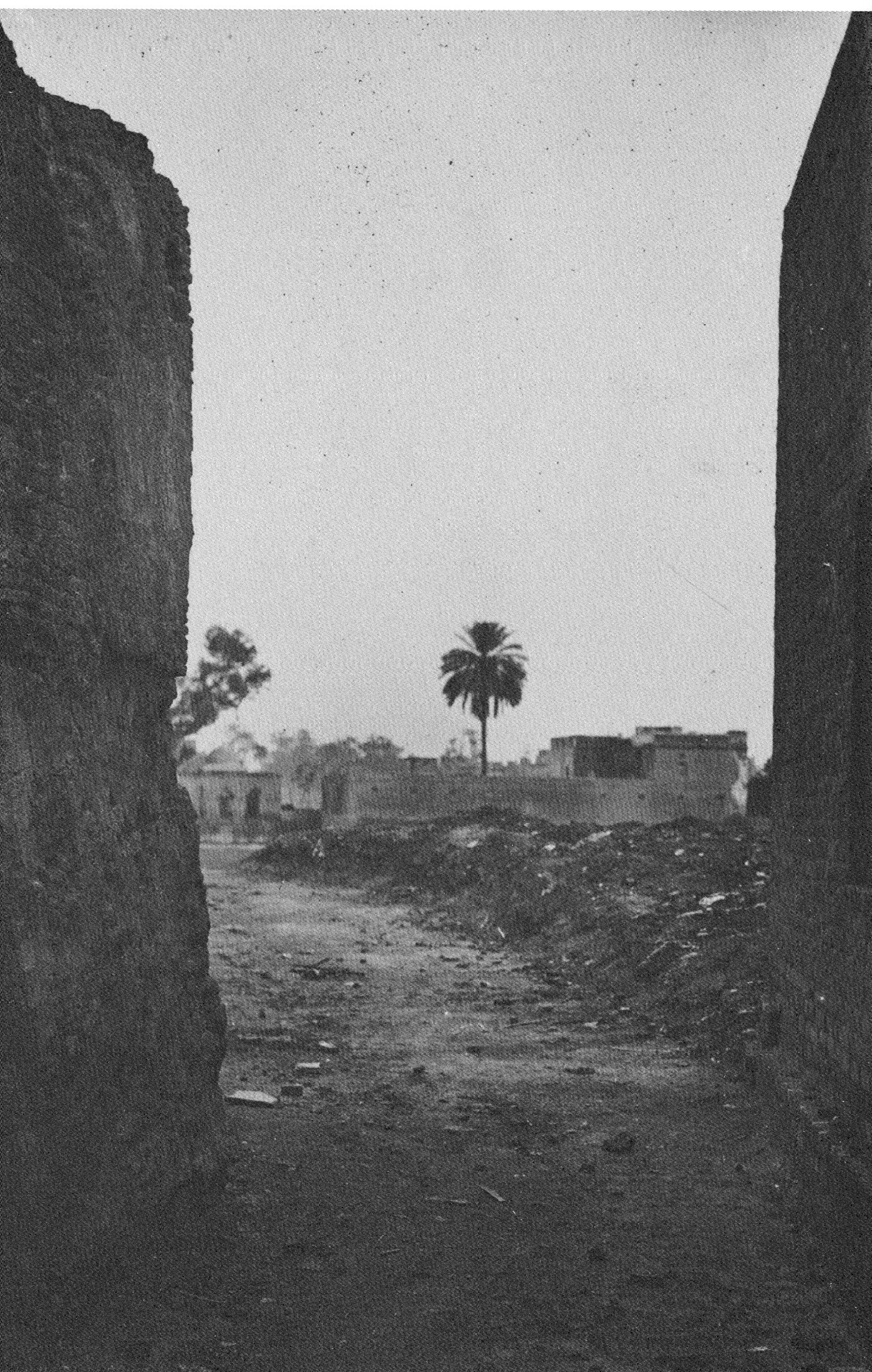
Whatever remained of the belief that the empire could be reasoned with did not survive it. Tagore returned his knighthood. It is the hinge of the whole period.
Gandhi
Gandhi returned to India in 1915 at forty-five, after two decades in South Africa organizing against racial legislation, and spent his first year traveling the country on his mentor Gokhale’s advice before saying anything much. His early campaigns were local and specific: indigo cultivators in Champaran in 1917, peasants facing revenue demands in Kheda, mill workers in Ahmedabad.
What he brought to the national movement was a method and an organizational form. Satyagraha was not passive resistance; it was deliberate, public, disciplined lawbreaking that accepted the punishment, designed to make enforcement more costly to the ruler than concession. And he rebuilt the Congress from an annual conference of notables into a mass organization with linguistic provincial committees, paid membership, and village-level presence
Non-Cooperation, launched in 1920, called on Indians to withdraw from British schools, courts, councils, titles, and goods, and was combined with the Khilafat campaign in an alliance with Muslim leaders. It reached a scale no one had seen before. Gandhi called it off in February 1922 after a crowd at Chauri Chaura burned a police station with police officers inside, a decision that infuriated much of the movement and established what he actually meant by non-violence: a constraint on his own side, enforced against its own momentum.
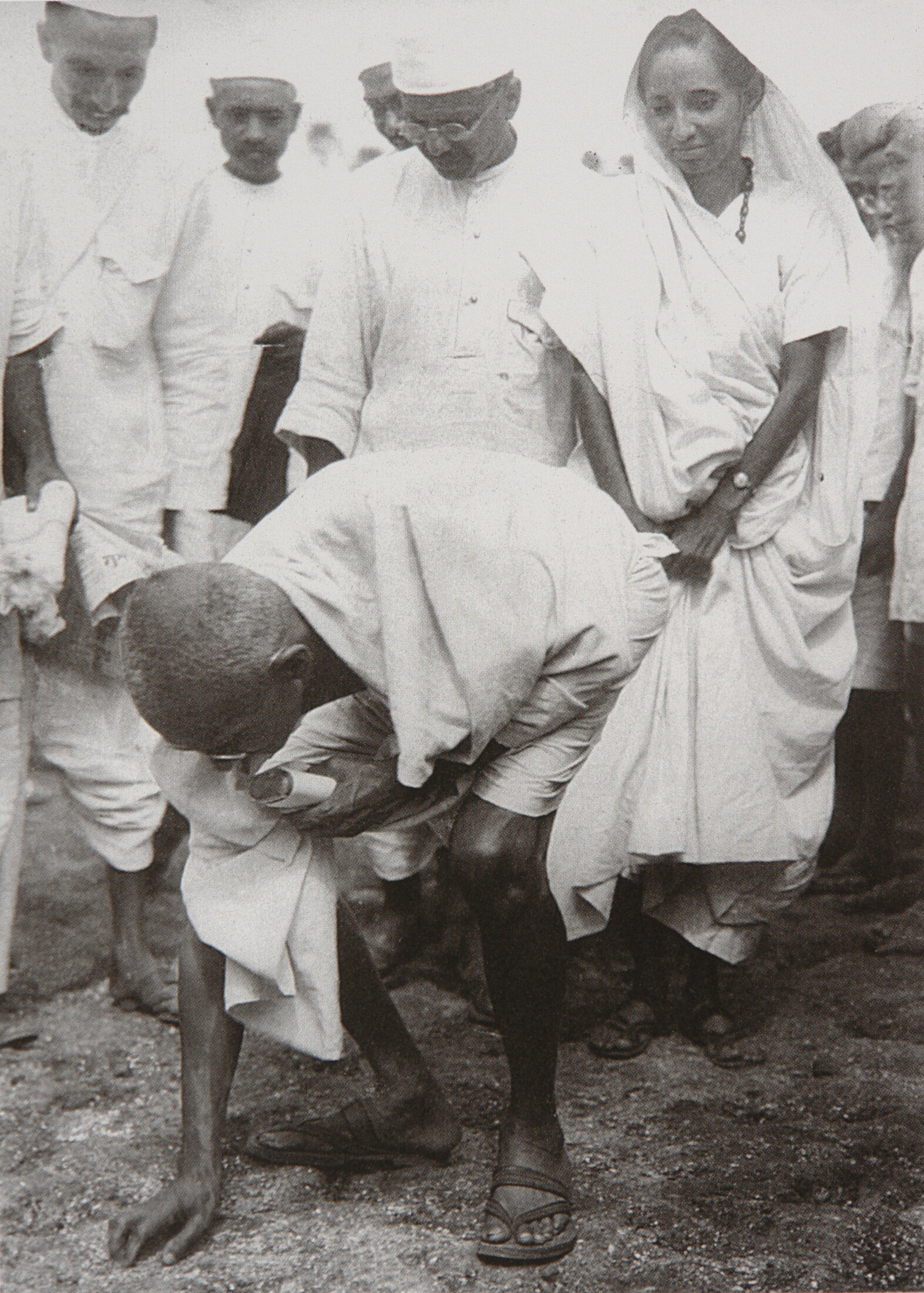
The Salt March in 1930 was the method at its most precise. The salt tax was small, universally paid, and indefensible; walking 240 miles to the sea to make salt illegally was legible to an illiterate villager and to a foreign newspaper reader alike. Mass civil disobedience followed, tens of thousands were jailed, and women participated in public political action on a scale not seen before. The Indian National Congress had already declared purna swaraj (complete independence) at its Lahore Session in December 1929. It designated 26 January 1930 as Independence Day (Purna Swaraj Day). To honor that declaration, the Constitution of India came into force on 26 January 1950, a date now celebrated as Republic Day.
The other movements
Treating the freedom movement as the Congress’s biography leaves out most of the people in it.
Ambedkar and the anti-caste movement pursued an independent line, on the argument that transferring power to an Indian elite would not by itself emancipate the communities at the bottom of the caste order. When the British proposed separate electorates for the Depressed Classes in 1932, Gandhi fasted against it, holding that it would permanently divide Hindu society. The resulting Poona Pact replaced separate electorates with a larger number of reserved seats within the general electorate. Ambedkar signed under duress and later said so, and the argument between the two men over whether caste can be reformed from within or must be abolished remains unfinished.
The revolutionaries never accepted non-violence. Bhagat Singh and his associates threw a bomb into the Legislative Assembly in 1929, deliberately designed to injure nobody, in order to get a trial and a platform; his execution in 1931 at twenty-three made him a martyr whose popularity rivaled Gandhi’s. Chandra Shekhar Azad, the Chittagong raid by Surya Sen, and Bengal’s revolutionary networks belong to the same current.
Peasants and workers organized on their own account: tenant movements in the United Provinces, the Bardoli revenue satyagraha, communist and socialist trade unions, the Tebhaga sharecroppers’ movement in Bengal, and the Telangana armed peasant struggle against Hyderabad’s landlords. Their demands were about rent, wages, and land rather than the flag.
Women moved from auxiliary to participant across this period, through Sarojini Naidu, Kamaladevi Chattopadhyay, Aruna Asaf Ali, and the very large numbers who courted arrest in 1930 and 1942.
The war, and the end
The 1935 Government of India Act granted provincial autonomy, and the 1937 elections gave Congress ministries in most provinces and the Muslim League very little, a result that hardened Jinnah’s judgment that constitutional safeguards would not protect a minority.
In 1939, the Viceroy declared India at war without consulting a single Indian, and the Congress ministries resigned. The Cripps Mission of 1942 offered post-war dominion status with a provincial opt-out, which Congress rejected and which conceded the principle of partition in advance. Quit India, launched in August 1942, was met with the immediate arrest of the entire Congress leadership for the duration of the war; the movement continued without them, and was suppressed with considerable force.
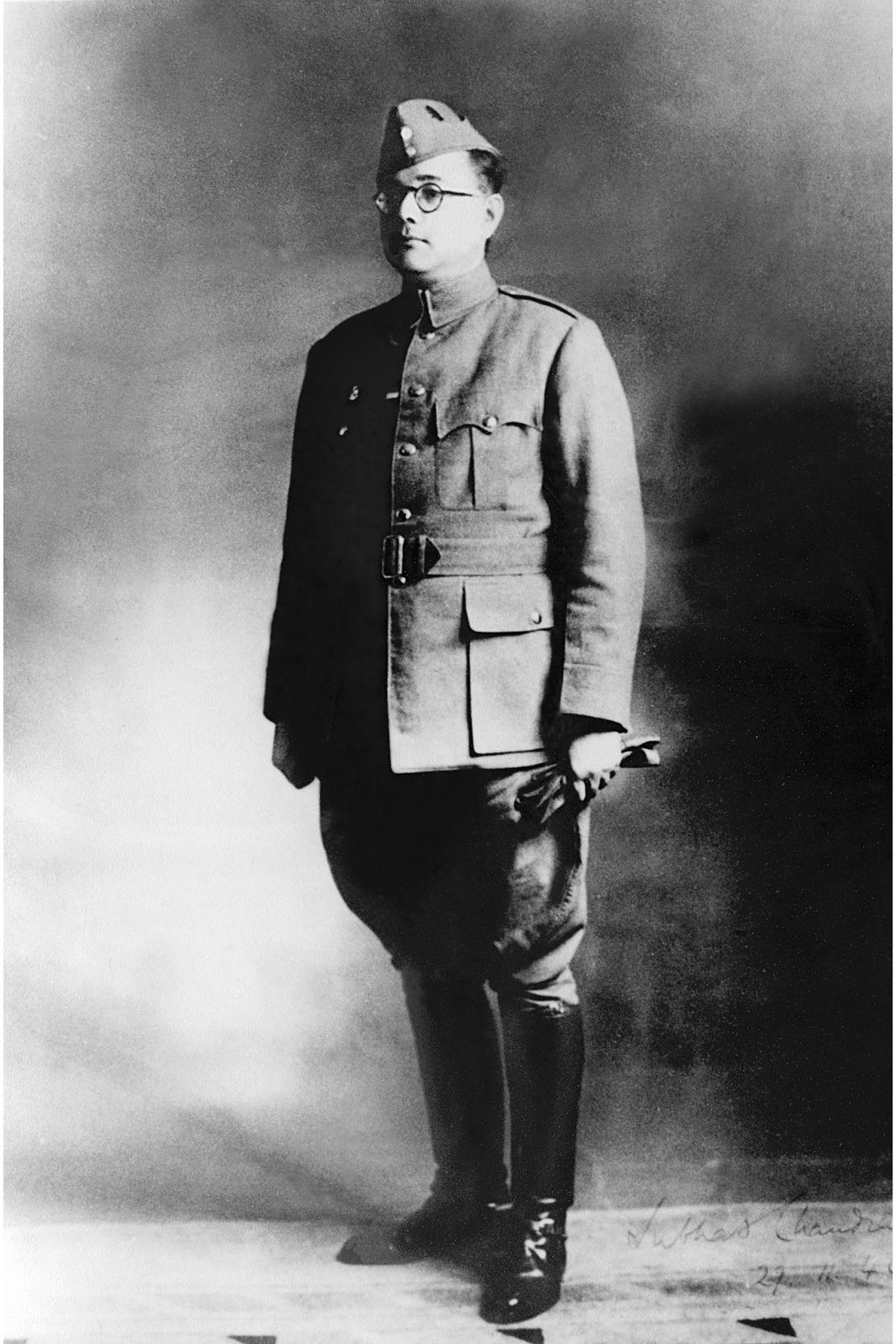
Subhas Chandra Bose took the opposite route. Twice elected Congress president and forced out after clashing with Gandhi, he escaped house arrest in 1941, reached Germany and then Japan, and took command of the Indian National Army formed largely from Indian prisoners of war, declaring a provisional government of free India in 1943. Militarily, the INA achieved little. Politically, it made the loyalty of Indian troops a public question, and its post-war trials generated support across otherwise divided political camps.
Why they left
The standard account credits non-violence alone, and it has been substantially revised.
The Bengal famine of 1943 killed around three million people amid wartime inflation, the loss of Burmese rice imports, disrupted transport and interprovincial trade, procurement failures, and an administration that denied or minimized the scale of the crisis. It destroyed what remained of the claim that British rule was competent or benevolent.
The INA trials at the Red Fort in 1945 and 1946 were a catastrophic misjudgment. Prosecuting Indian officers for fighting the British produced a defense campaign that united Congress, the League, and the communists, and mass demonstrations in support of men who had taken up arms against the Crown.
The Royal Indian Navy mutiny of February 1946 spread across dozens of ships and shore establishments, with some sympathy actions in the air force and police. It alarmed British officials because the Raj depended on Indian personnel, but historians disagree over how decisive it was. The armed forces as a whole did not mutiny, and the civilian administration continued to function.
Add a Britain exhausted and heavily indebted after the war, a new Labor government without the appetite to hold India indefinitely by force, mass politics that had made rule without consent increasingly costly, and uncertainty about the long-term reliability of the coercive apparatus, and the decision to leave follows. What did not follow was the speed: the timetable was advanced by ten months, and Partition happened at that pace.
None of this diminishes Gandhi. Non-cooperation, the Salt March, and Quit India made the rule without Indian consent politically and morally untenable. The narrower point is that wartime exhaustion, mass nationalism, the INA trials, and unrest in parts of the armed forces all belong in the explanation; ranking one as the single final cause goes beyond the evidence.