
Early Medieval India
The centuries between Harsha’s death and the Delhi Sultanate were once treated as an interval: after the classical empires, before a new imperial order. That framing hides the period’s substance. Political power became more regional, cultivation expanded, landed intermediaries multiplied, monumental temples reshaped settlements, Buddhist and Jain institutions linked courts to long-distance networks, and literary languages acquired new public authority. There was no single center from which all of this radiated.
After Harsha, not after civilization
Harsha ruled much of northern India from Kannauj in the early seventh century, but his power did not pass intact to a successor. From the eighth through tenth centuries, three major dynasties repeatedly contested influence in the north. The Gurjara-Pratiharas ruled from bases in western and central India and eventually held Kannauj. The Palas began in Bengal and Bihar, with strong patronage of Buddhist institutions. The Rashtrakutas, based in the Deccan, campaigned both north and south. Textbooks call this the “tripartite struggle” for Kannauj.
The phrase is useful only if it does not turn two centuries into one permanent war. All three powers rose, contracted, made subordinate alliances, and governed regions far from Kannauj. Control of the old imperial city offered prestige and access to the Ganga plain, but there was no final victor. Their inscriptions describe universal conquest because royal praise stated an ideal of sovereignty, not because any one ruler continuously administered the subcontinent.
Around them were many other political worlds: the Karkotas and later Utpala and Lohara rulers in Kashmir; the Bhauma-Karas and Somavamshis in Odisha; the Kamarupa kingdoms in the Brahmaputra valley; the Chahamanas, Paramaras, Chandelas, and Kalachuris in the north and center; and the Eastern Chalukyas in the lower Godavari region. In the peninsula, the Pallavas, Pandyas, Chalukyas, Rashtrakutas, and Cholas left histories that would develop further in South India. A dynasty’s name marked a court and lineage, not a homogeneous people filling a fixed modern state.
Land, records, and delegated power
Thousands of copper-plate charters and stone inscriptions record grants of land, revenue, or privileges. Rulers gave villages or fields to Brahmins, temples, monasteries, officials, and military subordinates. A charter might exempt a recipient from specified taxes, transfer the right to collect dues, identify boundaries, or direct residents and local officers to recognize the grant. Such documents let historians see claims to authority at a scale that court chronicles rarely provide.
The grants could encourage the clearing and cultivation of new land, establish learned or ritual specialists, and connect a court to local society. They could also move revenue and judicial rights away from direct royal control. Historians once described this broadly as “Indian feudalism”: trade and towns declined, land replaced cash payment, and power fragmented among intermediaries. Later research found far more regional variation, continuing coin use and commerce in some areas, and evidence that agrarian growth itself created new markets. The debate remains useful because it asks who controlled surplus and labor, but no single label can settle the answer for the entire subcontinent.
Land was not simply an empty resource bestowed by a king. Grants could absorb forest, pasture, water, and settlements already used by cultivators, pastoralists, hunters, and communities not named in elite records. Terms such as samanta also changed over time: a subordinate chief might serve a king, retain a local base, and later claim independent sovereignty. The state consequently appeared less as an unbroken chain of command than as a layered system of rights negotiated among courts, landed groups, local assemblies, and religious institutions.
Temple, monastery, and settlement
A great temple was a ritual center, but also an employer, landholder, storehouse, patron of artisans and performance, destination for pilgrims, and stage for royal display. Endowments supported lamps, food offerings, festivals, recitation, gardens, waterworks, and maintenance. The people who supplied grain, oil, cloth, metal, music, and labor were part of the institution’s history as surely as kings and sculptors were.
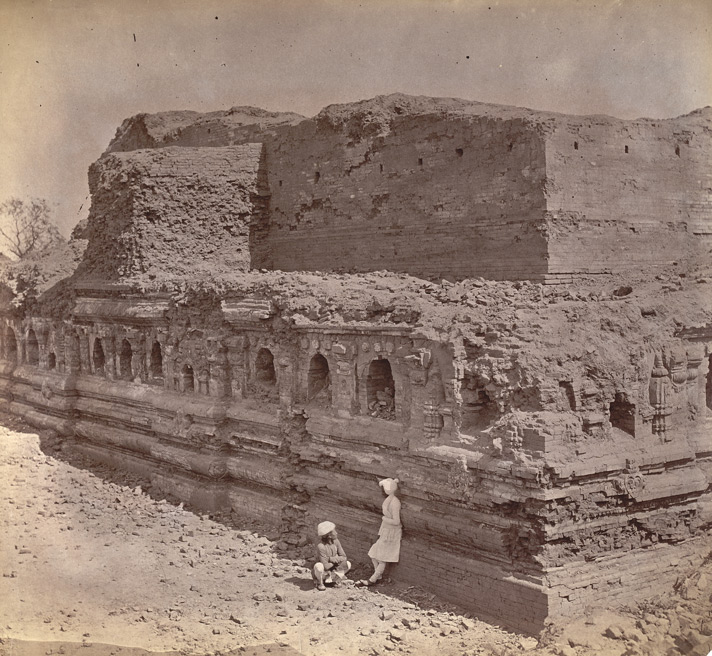
Monasteries could be similarly embedded. Under Pala and related patronage, Nalanda, Vikramashila, Somapura, Odantapuri, and other Buddhist establishments formed an eastern network of study, ritual, manuscript production, and travel. Nalanda had begun centuries earlier and did not belong to one dynasty; teachers and students arrived from other parts of Asia. Buddhism was declining in some regions while remaining intellectually and institutionally powerful in others. Jain communities likewise sustained learning, pilgrimage, mercantile networks, and temple building, particularly in western and southern India.
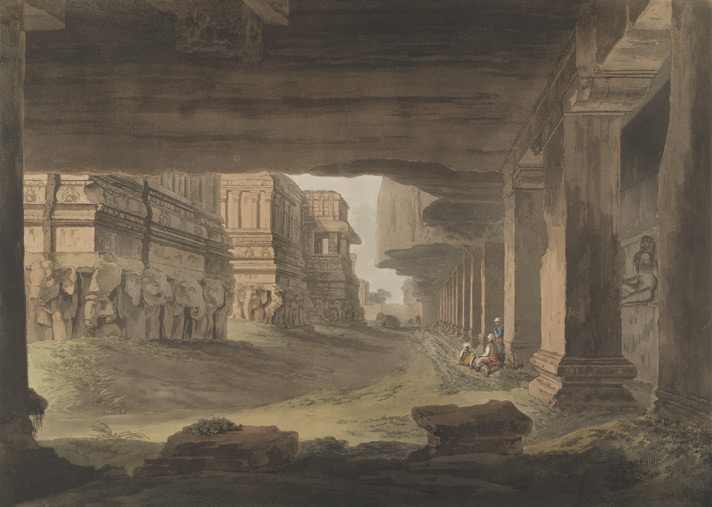
The surviving monument can be misleading. Stone temples endure better than houses, fields, workshops, and temporary shrines, so the archive overrepresents elite investment. Even within a temple, one royal inscription may conceal many later additions and gifts. Architectural style also crosses dynastic borders: builders adapted forms through movement, imitation, competition, and local practice rather than expressing a timeless regional essence.
Languages of a larger political world
Sanskrit remained the most widely shared language of formal praise, political theory, learned debate, and many inscriptions. Courts from different religious and linguistic settings used it to place a ruler within a recognizable grammar of kingship. That transregional sphere, sometimes called the Sanskrit cosmopolis, did not require a single empire or ethnicity.
At the same time, other languages took on expanding literary and public roles. Tamil already possessed an old literary tradition. Kannada inscriptions and courtly works proliferated under the Rashtrakutas and their contemporaries; the ninth-century Kavirajamarga reflected on poetics and a Kannada-speaking cultural geography. Telugu inscriptional use grew before the emergence of its major courtly literature in the eleventh century. Apabhramsha, Prakrits, and emerging regional vernaculars circulated alongside Sanskrit rather than replacing it in one sudden transition.
Language choice was political, but it did not neatly align with the language spoken at home. A ruler might commission Sanskrit praise, issue practical records in a regional language, patronize Jain or Buddhist authors, and support a temple using another liturgical tradition. Multilingualism was ordinary. Later claims that each dynasty naturally represented one modern linguistic nation project a much newer map backward in time.
Trade across land and sea
During this period, people were not sealed off in self-sufficient villages. Arab and Persian merchants frequented ports on the western coast; ships connected the peninsula and Sri Lanka to Southeast Asia and China. Horses from West and Central Asia were valuable military imports. Textiles, pepper, aromatics, metal goods, precious materials, and ceramics moved through ports and inland markets. Merchant bodies recorded in southern inscriptions funded temples, negotiated protection, and operated across regions, though their exact organization and reach changed over time.
Political fragmentation could obstruct movement, but it could also create competing courts eager to protect routes and ports. The Rashtrakutas’ Deccan base linked northern and southern campaigns; the Palas faced toward the Bay of Bengal and Buddhist Asia; Chola expeditions and commercial networks would later project power across the sea. The coasts and islands page places these exchanges in their physical setting.
A transition without a civilizational cliff
By the eleventh and twelfth centuries, the three great contesting dynasties had given way to other regional powers. Raids led by Mahmud of Ghazni struck wealthy cities and temples in the northwest and north between 1000 and 1027; they caused destruction and removed wealth but did not create a state across the Ganga plain. Late in the twelfth century, victories by Muhammad of Ghor and his commanders established a more durable conquest regime in north India. Qutb al-Din Aibak’s accession in 1206 conventionally marks the beginning of the Delhi Sultanate.
That date is a period boundary, not a civilizational wall. New military elites and Persianate court forms profoundly changed politics, while local landed power, temple economies, languages, and agrarian institutions continued and adapted. Nor did Islam first enter India through conquest in the north: merchants and communities had long been present on the western coast, and Sindh had come under Arab rule in the eighth century. The next period is best understood as a reconfiguration of an already connected and politically varied landscape.
Early medieval India matters because many institutions later mistaken for ancient and unchanging were being made, extended, or reworked in these centuries. Regional political identities, major pilgrimage centers, landed rights, literary languages, and networks of sacred and commercial geography all have histories. Calling the period a gap makes those histories disappear.