
Mauryas, Kushans & Guptas
Between roughly 600 BCE and 650 CE, northern India produced its first cities since the Indus, its first empire, its most quoted emperor, and the classical culture that later Indian traditions would treat as their reference point. It also fostered the habit of describing one part of that span as a golden age, a claim about the nineteenth and twentieth centuries as much as about the fourth and fifth.
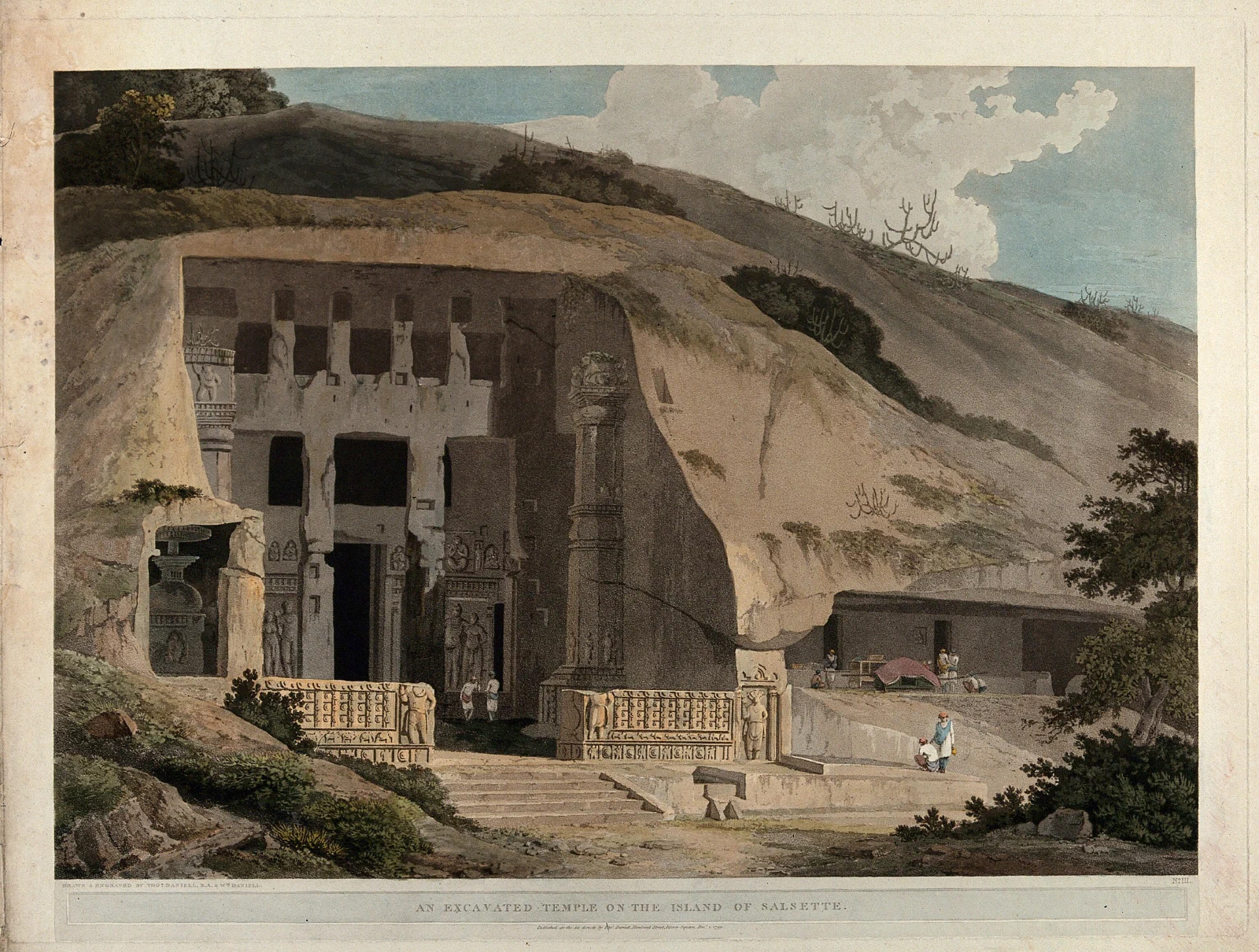
The second urbanization
Cities reappeared in the Ganga plain from around the sixth century BCE, some fifteen hundred years after the Indus cities were abandoned. Iron tools, the clearing of dense forests, wet-rice cultivation, agricultural surplus, coinage, and long-distance trade routes came together to support a new urban world.
Its political units were the mahajanapadas, conventionally sixteen, a mix of monarchies and gana-sangha oligarchic republics governed by assemblies of clan heads. The republics matter to any honest account of Indian political history because they show that monarchy was not the only available form; they were also aristocratic rather than democratic in any modern sense, and the monarchies absorbed them over the following two centuries.
This is the world in which the Buddha and Mahavira taught. Both came from that milieu, both worked in the cities and along the trade routes, and both rejected Vedic ritual authority. Urbanization, merchant wealth, and the appeal of teachings that offered liberation without Brahmin mediation are connected rather than coincidental.
Magadha, in what is now Bihar, won the competition, helped by fertile land, iron ore, elephants, and a run of ruthless rulers. Its capital moved from Rajagriha to Pataliputra, near modern Patna, which remained the center of northern Indian power for about a thousand years.
Persians and Greeks
Invaders drew the northwest into other worlds. Darius I of Persia annexed the Indus valley around 518 BCE, and it became one of the Achaemenid empire’s wealthiest provinces; Persian administrative practice, the Aramaic script, and coinage entered the region through that connection.
Alexander crossed the Indus in 327 BCE, defeated the ruler the Greeks called Porus at the Hydaspes, and turned back at the Beas when his army refused to go further. His impact on India is routinely overstated in European accounts and understated in nationalist ones: he governed nothing here for long, but the Hellenistic states that followed in Bactria and the northwest created a durable channel through which art, astronomy, and coinage moved in both directions.
The Mauryas
Chandragupta Maurya took Magadha around 321 BCE and built the first empire to cover most of the subcontinent. Tradition associates him with the strategist Chanakya, also called Kautilya, to whom the Arthashastra is attributed; that text is a genuinely remarkable manual of statecraft, entirely unsentimental about power, though its final form is probably later than Chandragupta. He fought Seleucus, Alexander’s successor in the east, to a settlement around 305 BCE that gave him territory and gave Seleucus five hundred war elephants. Megasthenes arrived as a Seleucid ambassador and wrote the earliest detailed Greek account of Mauryan India, whose fragments survive, though Greek references to India long predated him.
Ashoka, Chandragupta’s grandson, reigned from around 268 BCE and is the most documented figure of ancient India because he documented himself. After the conquest of Kalinga, whose casualties he records with what reads as genuine revulsion, he adopted and promoted dhamma and had edicts inscribed on rocks and polished sandstone pillars across his territory, in Prakrit, and at the northwestern margin in Greek and Aramaic.
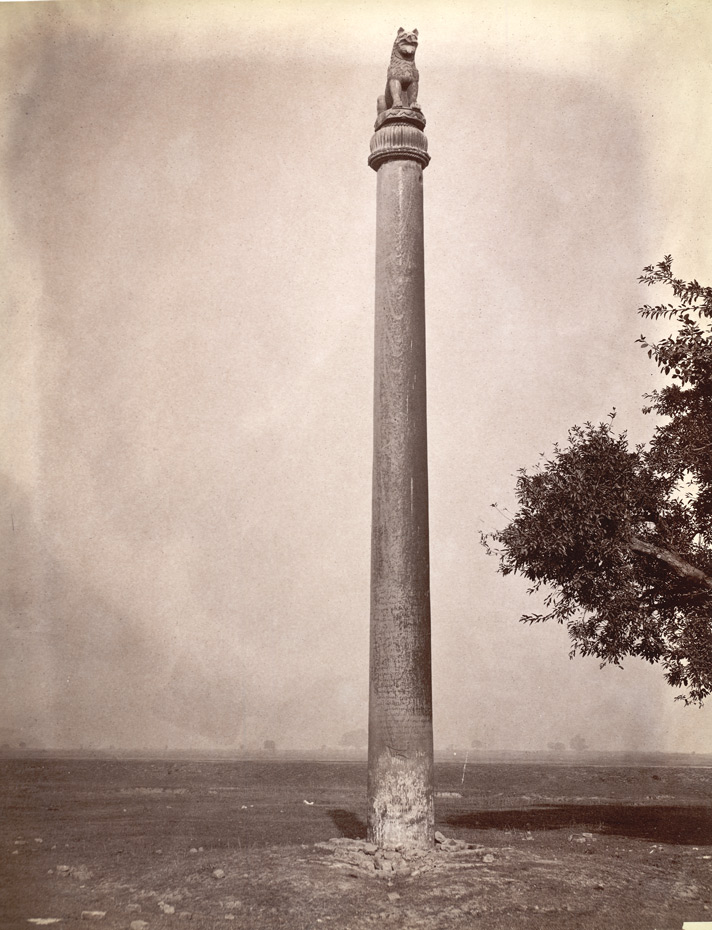
The edicts form an unusually extensive surviving corpus of royal self-description. They urge non-violence, restraint in speech, care for animals, provision of medical treatment and shade trees along roads, respect for parents and ascetics, and explicitly warn against disparaging other people’s religious sects because doing so damages one’s own. Ashoka sent envoys to Hellenistic kings and missions to Sri Lanka, where the Theravada tradition took root and preserved the Pali canon.
Over time, Ashoka’s inscriptions ceased to be understood, and his historical identity faded. However, Buddhist texts composed and preserved in both South Asia and Sri Lanka retained different memories of him.
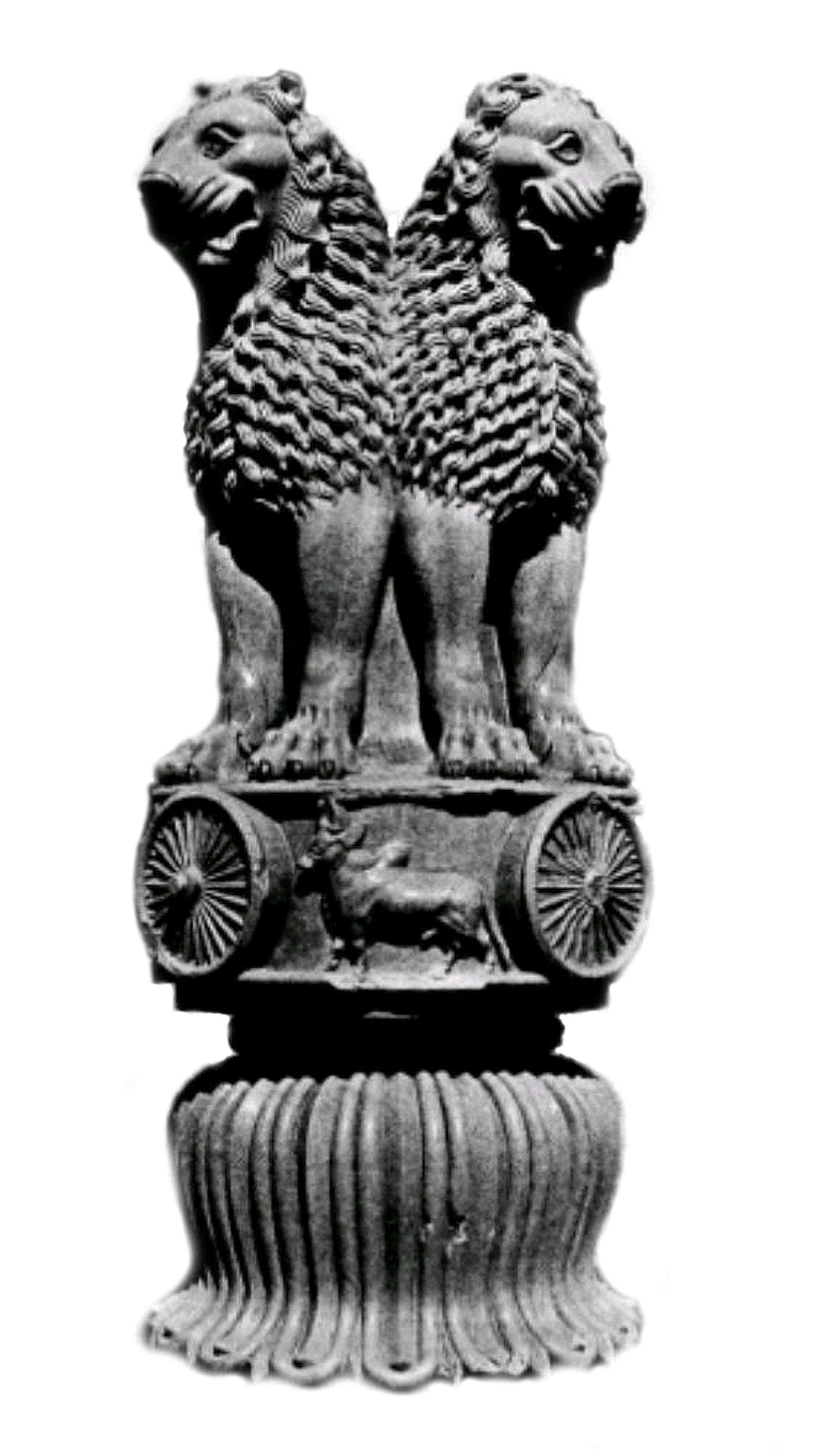
James Prinsep deciphered the Brahmi script in 1837, allowing historians to identify the long-forgotten emperor behind the inscriptions. An emperor who had largely vanished from historical memory was restored to Indian history through the work of a colonial mint official studying coins and inscriptions in Calcutta. Independent India later adopted Ashoka’s lion capital as its state emblem and the Ashoka Chakra from his pillars as the centerpiece of its national flag.
The empire did not long outlast him; it broke up after 185 BCE.
The centuries in between
The five hundred years after the Mauryas are often skipped, and they are among the most productive. The northwest saw successive incursions and states: Indo-Greek kings, of whom Menander appears in a Buddhist dialogue as the questioner Milinda; Scythian Sakas; Indo-Parthians; and then the Kushans, whose empire under Kanishka in roughly the second century CE linked northern India to Central Asia and the Silk Road.
Kushan patronage produced the Gandhara school, where Hellenistic drapery and modeling met Indian iconography, and where the Buddha was first depicted in human form, at about the same time as, and in a different manner from, the school at Mathura. Buddhism traveled the trade routes north and east through this corridor into Central Asia and China.
In the Deccan, the Satavahanas ruled for several centuries and patronized the rock-cut Buddhist monasteries of the western Ghats. Trade with the Roman world ran heavily through southern ports. Sanskrit, Prakrit, and Tamil literature all took recognizable form in this period.
The Guptas
The Gupta dynasty rose from Magadha in the early fourth century CE. Samudragupta campaigned widely, and Chandragupta II, ruling around 400 CE, presided over the period usually treated as the classical high point. The Chinese Buddhist pilgrim Faxian traveled across the empire at that time and left an account describing a prosperous and well-ordered country.
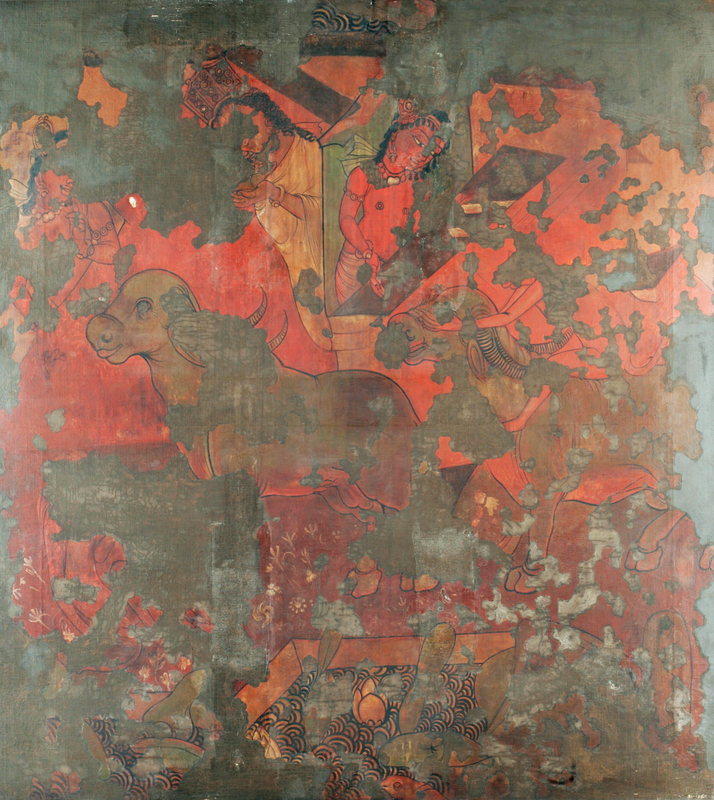
The achievements are real. Kalidasa’s poetry and drama set the standard for Sanskrit literature. Aryabhata’s astronomical and mathematical work appeared in 499 CE. Mathematicians of this era consolidated the decimal place-value system. Temple architecture in stone took its early durable forms; the painting at Ajanta reached its finest phase under Vakataka patronage in the neighboring Deccan; and the university at Nalanda was established.
The “golden age” label deserves more skepticism than it usually gets. It was enthusiastically applied by nineteenth- and twentieth-century historians, some of whom sought an indigenous classical era to set against Greece and Rome and against colonial claims that India had no history worth the name. The period also saw Brahmanical norms consolidated in the Dharmashastra literature, caste distinctions hardened in law, and, according to several historians, a narrowing of women’s property and ritual rights compared with earlier centuries. Prosperity for a court élite and a good century for Sanskrit poetry are not the same thing as a golden age for everyone in it.
Gupta power broke under pressure from the Hunas in the late fifth and sixth centuries, and the empire had fragmented by around 550. Harsha, ruling from Kanauj in the first half of the seventh century, assembled the last large northern empire of the era; the pilgrim Xuanzang spent years in his territory and wrote the most detailed surviving account of seventh-century India. After Harsha’s death, the north broke into the regional kingdoms whose three-cornered contest for Kanauj occupied the following centuries. At the same time, the political and cultural center of gravity shifted decisively toward the south.