
The South
Indian history is conventionally told from the Gangetic plain outward, with the south appearing when a northern power reaches it. Reversed, the story looks different: an older, continuous literary tradition, deeper maritime connections, more durable temple institutions, and a naval expedition across the Bay of Bengal with no northern equivalent.
The Sangam age and the Roman trade
The earliest layer is Tamil. The Sangam corpus, composed across roughly the last centuries BCE and the first centuries CE, gives a picture of three ruling lineages, the Cheras on the Malabar coast, the Cholas on the Kaveri delta, and the Pandyas around Madurai, alongside chieftains, bards, and a landscape-based poetics in which five ecological zones each carry their own emotional register.
It also gives a picture of trade, and the archaeology confirms it. Roman gold and silver coin hoards turn up across the south in quantity. The Periplus of the Erythraean Sea, a Greek merchant’s handbook of the first century CE, lists the ports and what they sold. Excavations at Arikamedu near Puducherry yielded Mediterranean amphorae and Roman tableware. Pliny the Elder complained about the volume of Roman coin draining east to pay for pepper and luxuries, an early recorded complaint about a trade deficit with India.
The mechanism was the monsoon. Once Mediterranean sailors understood the seasonal reversal of the winds, they could cross the Arabian Sea directly instead of coasting, and Malabar pepper reached Rome on a predictable schedule.
Keeladi, and archaeology as politics
How far back southern urbanism extends is an open, actively contested question, and the site at the center of it is Keeladi, on the Vaigai near Madurai. Excavations since 2014 have recovered roughly twenty thousand artifacts, along with brick structures, Tamil-Brahmi inscribed potsherds, and industrial-scale evidence of weaving and bead-making. Carbon dates reaching back to around the sixth century BCE would place urban settlement and literacy in the Tamil country several centuries earlier than the standard chronology allows.
That would matter on its own. It matters more because it bears on whether the Gangetic second urbanization was the source from which everything else followed, or one of two urban worlds developing in parallel.
Keeladi is also a political fight. The Archaeological Survey of India submitted its excavation report for the first two seasons in 2023. After many disputes over its stratigraphy and date ranges, it was released only in July 2026, after years of demands for publication. Release did not end the argument: the Union government and Tamil Nadu still differ over how far the evidence pushes back urbanism and writing here, and over what level of confidence the excavated layers actually support. Archaeology and identity politics are happening simultaneously, which is worth knowing before reading anything about it, in either direction.
Pallavas, Chalukyas, Rashtrakutas
From the sixth century, three powers contested the peninsula: the Pallavas from Kanchipuram, the Chalukyas of Badami in the Deccan, and later the Rashtrakutas. Their wars were chronic, and their buildings were extraordinary.
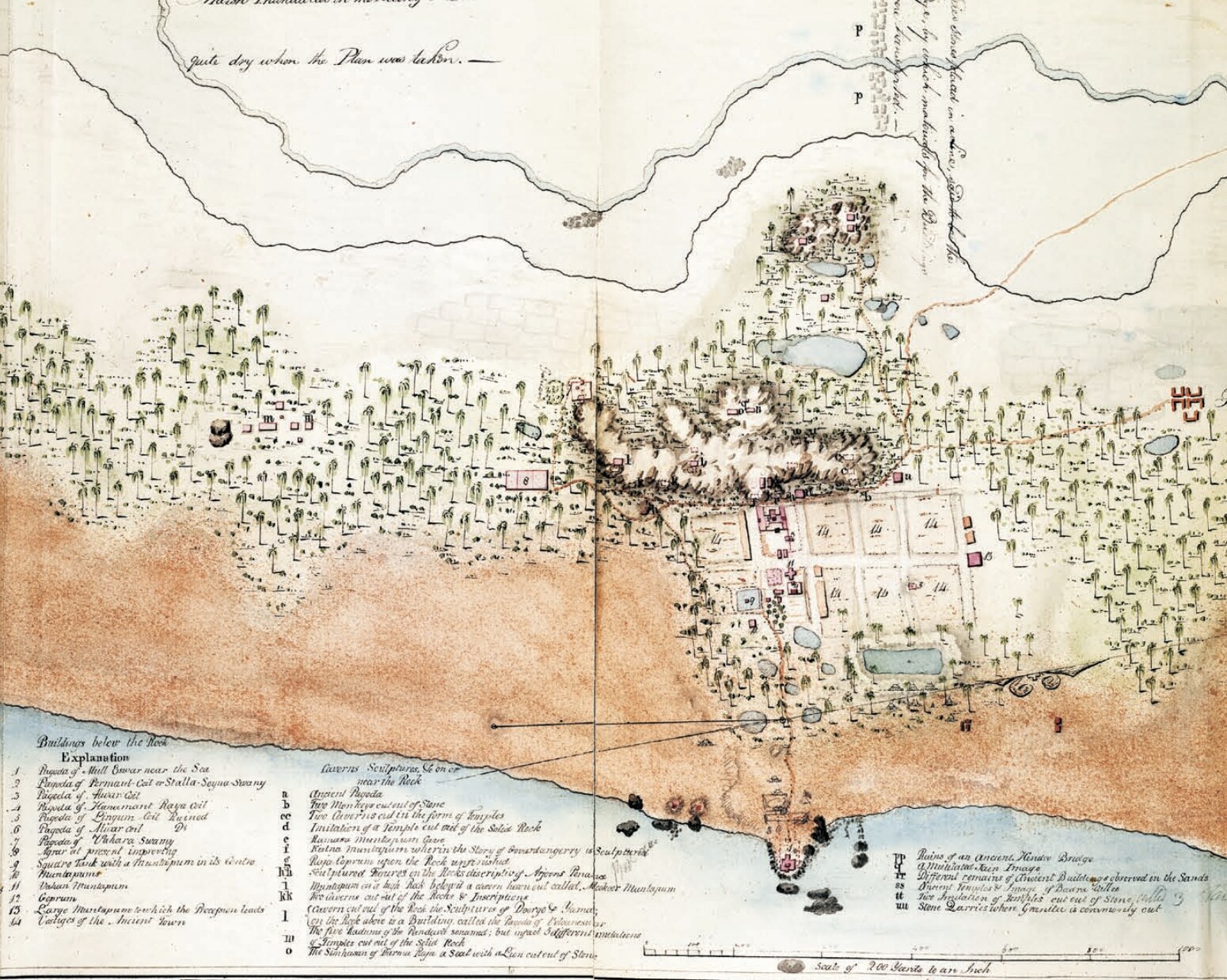
The Pallavas made the transition from rock-cut to structural stone temple, visible in sequence at Mahabalipuram, where monolithic shrines carved from granite outcrops stand near a structural shore temple, and where an enormous relief usually called the Descent of the Ganges covers a rock face with gods, sages, animals, and a cat performing an ascetic’s penance in front of a group of mice. The Chalukyas built at Badami, Aihole, and Pattadakal, experimenting with northern and southern temple forms side by side. Under the Rashtrakuta ruler Krishna I in the eighth century, workers at Ellora cut the Kailasa temple downward out of the rock face, courtyards, towers, and elephants, entirely by removal.
This is also the period of the Tamil bhakti movement. The Alvars, devoted to Vishnu, and the Nayanars, devoted to Shiva, composed vernacular devotional poetry from roughly the sixth to the ninth centuries, addressed the deity directly and personally, and included among their number people from a range of castes and several women. That movement, which spread north over the following centuries, is one of the South’s largest exports.
The Cholas
The Cholas revived in the ninth century and by the late tenth century had built one of the most powerful states in the subcontinent. Rajaraja I, ruling from 985, and his son Rajendra I extended control over the Tamil country, much of the Deccan, parts of Sri Lanka, and the Maldives.
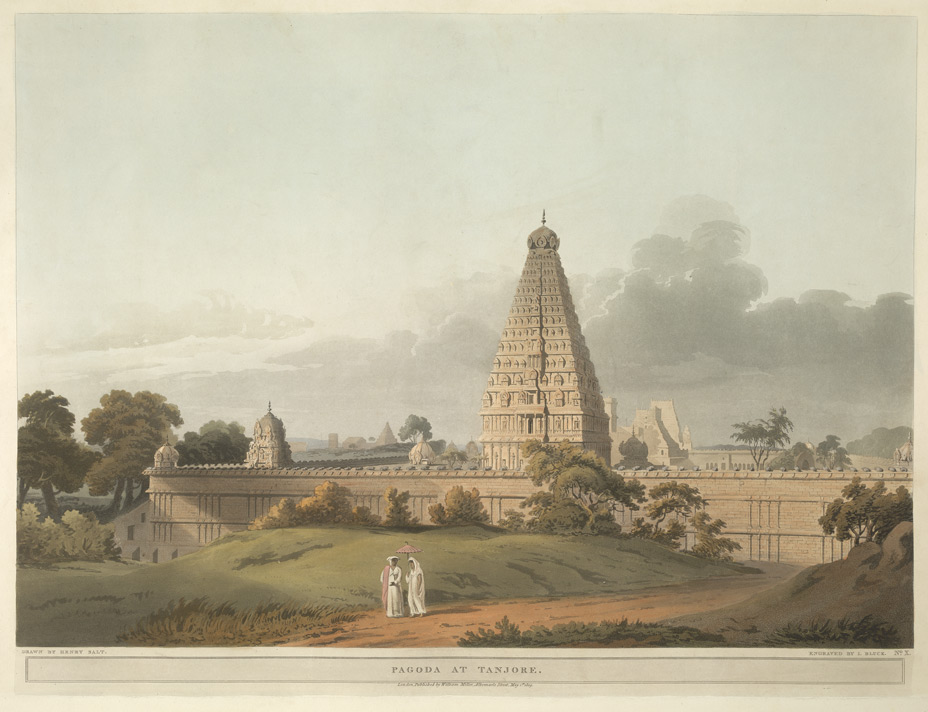
Rajaraja’s temple at Thanjavur, completed around 1010, was among the largest and tallest temples of its time, with a tower rising to more than 60 meters and an inscription program recording the endowments in detail. Rajendra built a new capital at Gangaikonda Cholapuram, “the city of the Chola who took the Ganges,” to commemorate a campaign north to the Ganga from which he brought back river water.
Two Chola achievements are less visible and more interesting.
The first is overseas power. Around 1025, Rajendra sent a naval expedition across the Bay of Bengal against Srivijaya, the maritime power controlling the straits of Malacca, and raided a series of ports. Whatever its precise motive, possibly leverage over the routes to China, it was an exceptional premodern transoceanic campaign launched from India and reflects a state that thought in terms of sea lanes.
The second is local government. Inscriptions on the walls of a temple at Uttaramerur set out in remarkable detail the rules for constituting a village assembly: eligibility requirements including property, age, and knowledge of the Vedas, disqualifications for those who had failed to account for public funds, selection of committees by lot from ticketed names, and fixed terms. Whether these procedures ran as written across the Chola country is debatable, but they were inscribed on stone in the tenth century.
Chola temples were also large-scale economic institutions, holding land, employing hundreds, lending, and redistributing, and the bronze-casting workshops that served them produced the Nataraja images that are the most recognizable objects in Indian art.
Chola power declined through the thirteenth century as the Pandyas revived and the Hoysalas and Kakatiyas rose in the Deccan.
The northern shock and Vijayanagara
Between 1310 and 1323, armies of the Delhi Sultanate under Alauddin Khalji and then Muhammad bin Tughlaq campaigned deep into the peninsula, sacking Devagiri, Warangal, Dwarasamudra, and Madurai, extracting enormous quantities of treasure, and destroying the Kakatiya and Hoysala states. Tughlaq’s brief attempt to move his capital south to Daulatabad indicates how seriously Delhi took the Deccan.
Out of that disruption came Vijayanagara, founded in 1336 by Harihara and Bukka on the banks of the Tungabhadra. For two centuries, it was the dominant southern power. Under Krishnadevaraya, ruling from 1509 to 1529, it reached its height: a large standing army with imported horses and Portuguese gunners, an irrigation system feeding a dry landscape, patronage of Telugu, Kannada, Tamil, and Sanskrit literature, and a capital that foreign visitors described as one of the largest and richest cities in the world. Persian and Portuguese travelers, including Abdur Razzaq and Domingo Paes, left detailed accounts.
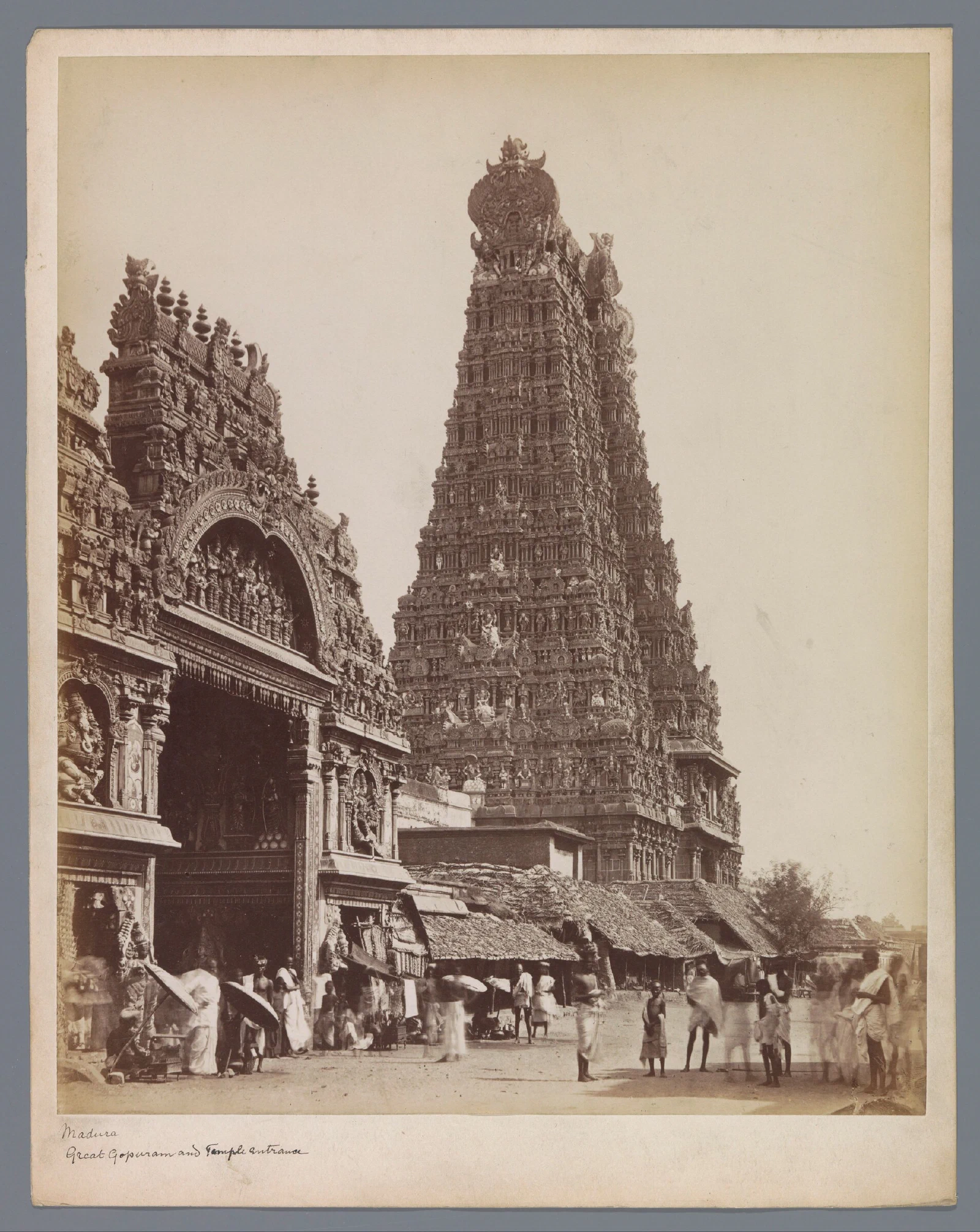
The temple architecture of the period pushed visual weight outward to enormous gopuram gateway towers, which is why south Indian temple complexes look the way they do today, and why the boundary is often taller than the sanctum.
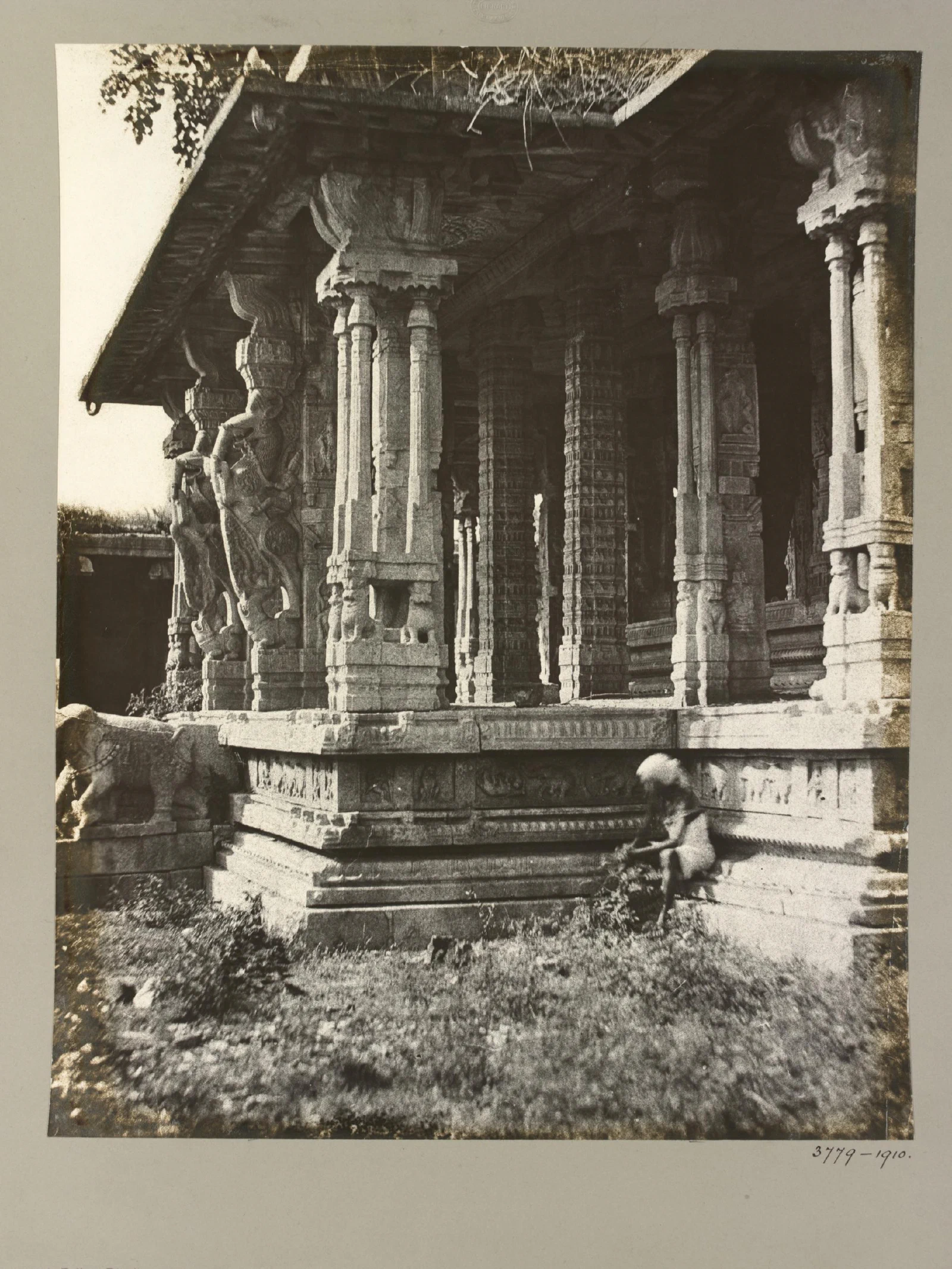
Vijayanagara was broken at the Battle of Talikota in 1565 by a coalition of the Deccan sultanates, and the capital was systematically sacked over the course of months. Its ruins at Hampi cover an extraordinary area of boulder-strewn landscape. The dynasty continued in reduced form until 1646, and its successor Nayaka states at Madurai, Thanjavur, and Gingee thereafter governed much of the far south.
The Deccan sultanates and the coast
The Deccan had its own Islamic political tradition, independent of Delhi. The Bahmani sultanate broke away in 1347 and eventually split into five successor states: Ahmadnagar, Bijapur, Golconda, Bidar, and Berar. They fought one another, and four joined the coalition against Vijayanagara at Talikota. Deccan rivals absorbed Berar and Bidar; the Mughals later annexed Ahmadnagar, Bijapur, and Golconda. Their culture was distinctive: Persian, Arabic, Marathi, and Dakhni, an early southern form of Urdu, all in use; Shia and Sunni patronage; painting and architecture that owed as much to Iran and the Ottoman world as to north India. Golconda’s diamond trade supplied the stones that made the region’s name in Europe.
On the coast, the Zamorin of Calicut presided over a pepper trade linking Arab, Chinese, Gujarati, and Jewish merchants, and Vasco da Gama arrived there in 1498, the beginning of the European commercial presence that eventually became rule.
The South was never simply a periphery waiting for northern history to arrive. It generated its own states, its own maritime reach, its own literatures, and its own long argument with Sanskrit, and the political consequences of that separate development are still legible in Indian federalism.