
Sultanate & Mughals
For six hundred years, the dominant political tradition in northern India was Persianate and Muslim-ruled, and the arguments about that period are now conducted so loudly that the period itself often disappears. What follows is mostly administration, revenue, and succession, which is what empires are actually made of.
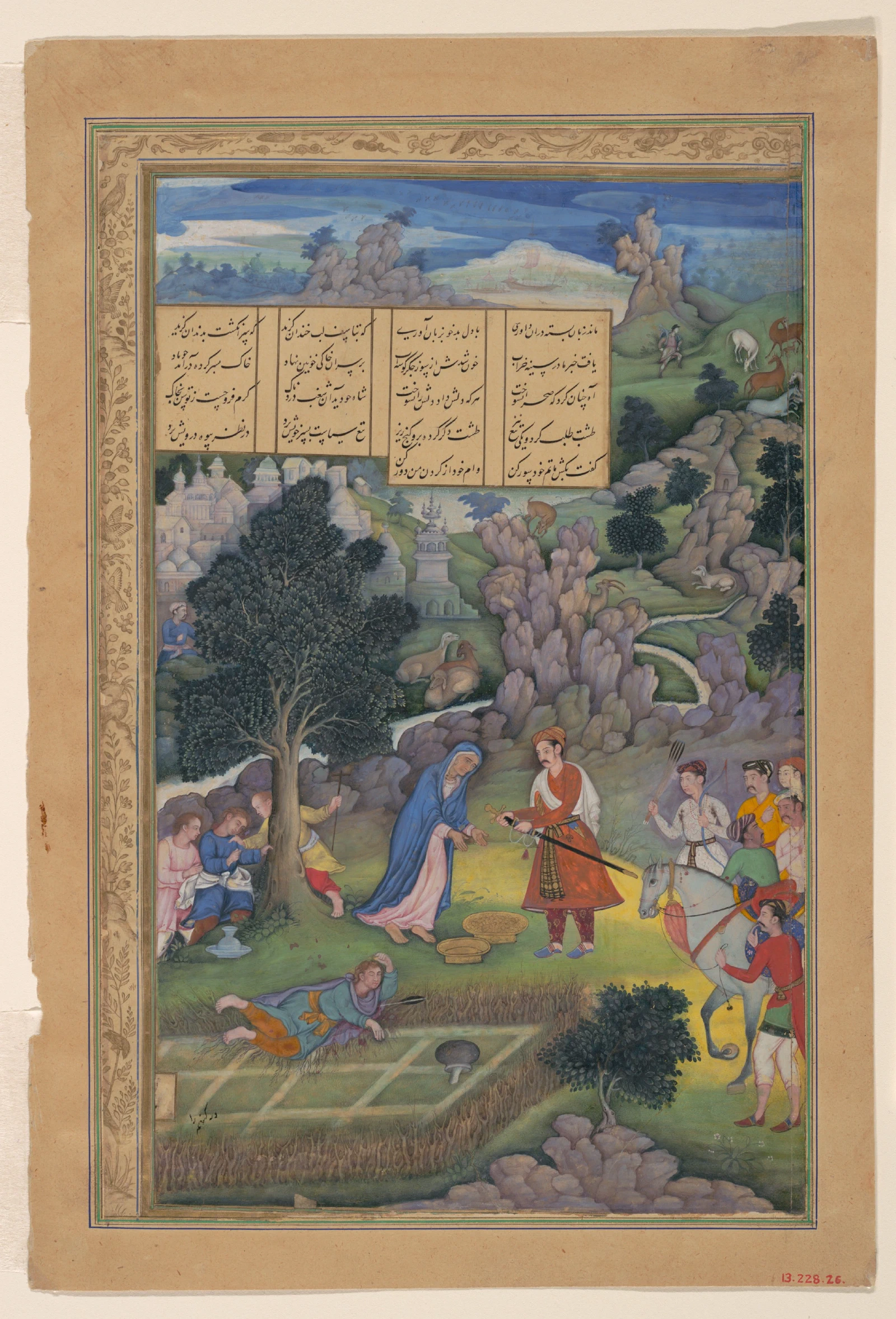
The Sultanate
Raids by Mahmud of Ghazni in the early eleventh century were destructive and extractive but established no lasting rule. Territorial conquest came under Muhammad of Ghor, whose victory at the second battle of Tarain in 1192 opened the Gangetic plain; his general, Qutb al-Din Aibak, took Delhi and, in 1206, founded what became the Delhi Sultanate.
Five dynasties ruled over three centuries, conventionally known as the Mamluk or Slave dynasty, the Khaljis, the Tughlaqs, the Sayyids, and the Lodis. Some features recur.
Slave elites. The early sultans were themselves of slave-soldier origin, a Central Asian and Middle Eastern institution in which military enslaved people were trained, promoted, and could inherit power. It produced competent rulers and chronic succession violence. Iltutmish nominated his daughter Raziyya, who ruled from 1236 to 1240 and remains the only woman to have ruled from the throne of Delhi; she was deposed and killed.
The Mongol frontier. The Sultanate’s most consequential achievement was surviving the Mongols, who destroyed Baghdad and much of the Islamic East. Alauddin Khalji, ruling from 1296, repelled repeated invasions, and did so by building a large standing army financed through heavy revenue demand and famously enforced price controls in Delhi’s markets. India’s insulation from the Mongol devastation is a major reason why refugee scholars, artists, and administrators flowed into it.
Overreach. Muhammad bin Tughlaq, ruling from 1325, attempted to move his capital to Daulatabad in the Deccan and to issue a token currency of base metal. Both failed, expensively. His reign is also when Sultanate armies reached the far south, breaking the existing states there and indirectly laying the foundations for Vijayanagara.
Timur’s sack of Delhi in 1398 effectively ended the Sultanate as a major power, though the Lodis held on until 1526. The more important development was fragmentation: independent sultanates in Bengal, Gujarat, Malwa, Jaunpur, Kashmir, and the Deccan, each developing its own regional architecture, vernacular literature, and religious and political mix. The regional sultanates matter more to the cultural history than Delhi does.
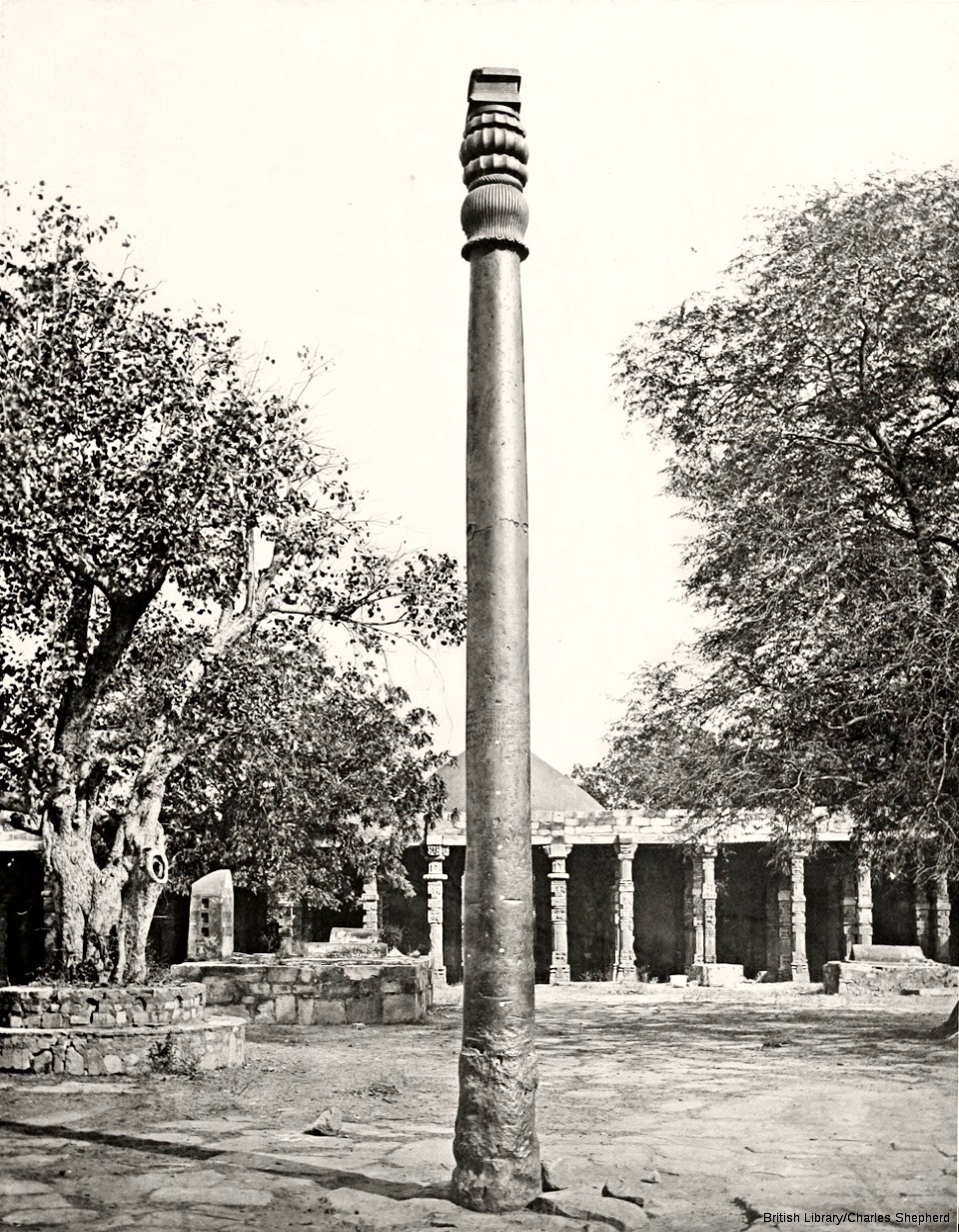
This is also the era in which Persian became the language of administration and high culture, and in which Indo-Persian culture was produced rather than imported: Amir Khusrau, writing in Delhi around 1300, composed in Persian and is associated with Hindavi verse and with musical innovation, and the Chishti Sufi shrines became institutions with mass followings across religious lines.
The Mughals
Babur, a Timurid prince from Central Asia, defeated the last Lodi sultan at Panipat in 1526 using field artillery and mobile cavalry tactics. His memoir, the Baburnama, is one of the great autobiographies of the period. He was notably unimpressed with the country he had just conquered.
His son, Humayun, lost the empire to Sher Shah Suri, an Afghan ruler whose five years from 1540 produced influential administrative reforms: a revenue assessment based on measurement, improvements to the trunk road across northern India with rest houses, and a standardized silver coin, the rupiya, from which the modern rupee descends. The restored Mughals retained and further developed parts of that administrative inheritance. Humayun recovered Delhi shortly before dying in a fall down his library stairs.
Akbar, ruling from 1556 to 1605, built the empire that lasted. The machinery mattered most: the mansabdari system, in which officials held numerical ranks determining pay and the cavalry they maintained, creating a service nobility rather than a hereditary landed one; and a revenue settlement developed with Todar Mal, based on measured land, assessed productivity, and averaged prices, which made income predictable.
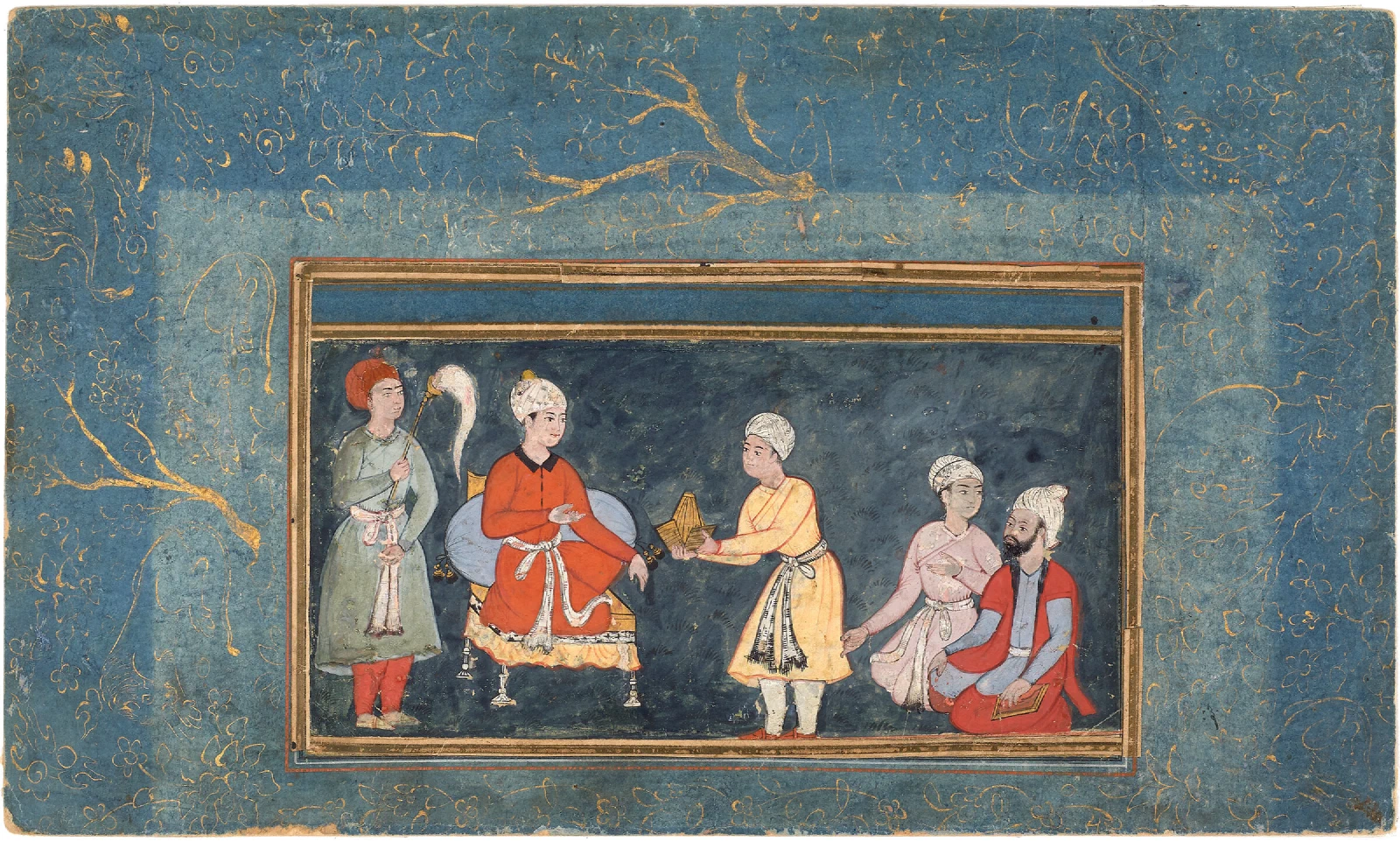
The political settlement mattered as much. Akbar allied with Rajput houses through marriage and service, abolished the pilgrimage tax and then the jizya levied on non-Muslims, and brought Hindus into senior positions. He convened debates at Fatehpur Sikri among Muslim, Hindu, Jain, Zoroastrian, and Jesuit scholars, sponsored a translation bureau that produced Persian versions of the Mahabharata and Ramayana, and formulated an ideal of sulh-i kull, universal peace or civility. His personal cult, sometimes called the Din-i Ilahi, attracted a handful of courtiers and later attracted considerable commentary. Orthodox scholars objected at the time, which is a useful corrective to any assumption that this was uncontested.
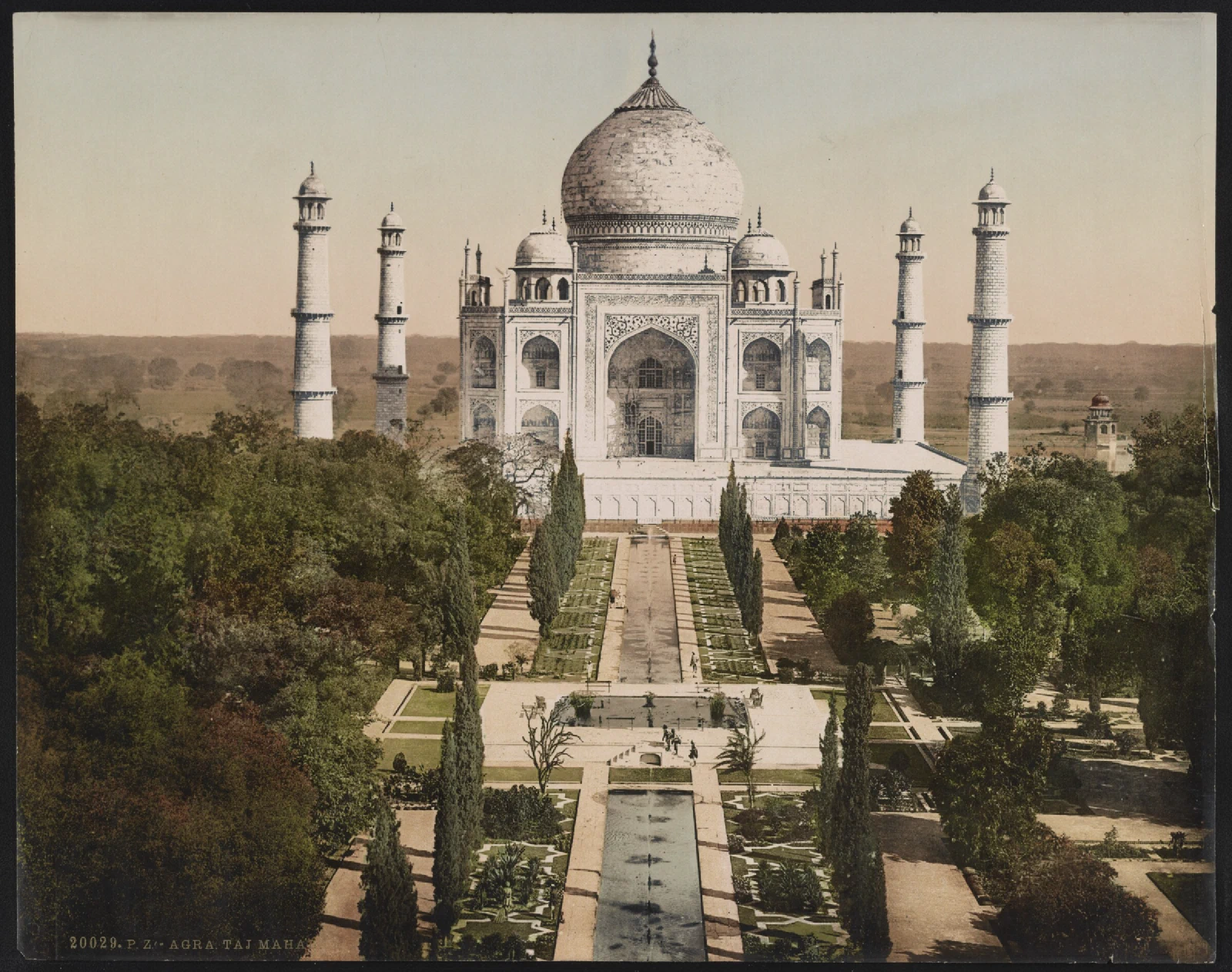
Jahangir and Shah Jahan presided over the empire’s cultural height. Nur Jahan, Jahangir’s wife, exercised unusual political authority, issuing coins in her own name. Shah Jahan built the Taj Mahal between 1632 and 1653 and moved the capital to a new walled city at Shahjahanabad in Delhi. Mughal painting, textiles, and jewelry of this period were among the most refined objects being produced anywhere.
Aurangzeb, who took the throne in 1658 after imprisoning his father and killing his brothers, ruled for nearly 50 years and extended the empire to its greatest territorial extent, absorbing the Deccan sultanates. He also reimposed the jizya in 1679, patronized a major compilation of Islamic jurisprudence, restricted court music and painting, and ordered the destruction of certain temples, including at Kashi and Mathura, in circumstances historians read variously as religious policy, punishment of political disloyalty, or both.
He is the most contested figure in Indian history, and the argument is not really about him. The polemical account makes him a fanatic whose bigotry defines Muslim rule; the revisionist account, notably Audrey Truschke’s, emphasizes that he employed more Hindus in senior positions than any predecessor, protected some temples while destroying others, and behaved like an early modern emperor pursuing power. Both sides can cite documents.
An influential handling of the temple question comes from Richard Eaton, who examined recorded cases of temple desecration under Indo-Muslim rule and emphasized their political pattern: royal temples linked to rulers in rebellion or at war were especially vulnerable. In contrast, other temples could receive protection or patronage from the same regimes. That does not prove a single motive for every case, but it is materially different from either “religious fanaticism explains them all” or “they did not happen.” What is less disputed is that the Deccan wars consumed the treasury and the army for a quarter-century, that Aurangzeb died in 1707 with the empire militarily overextended, and that it fragmented rapidly afterward.
The Marathas and the eighteenth century
The most effective challenge came from the Deccan. Shivaji, from a Maratha family in Bijapur service, built a state through fort warfare and mobile raiding, escaped Aurangzeb’s custody at Agra, and had himself crowned in 1674 in a deliberately Hindu ceremony that asserted sovereign legitimacy. After his death, Aurangzeb captured and executed his son Sambhaji in 1689, and the Maratha state, rather than collapsing, dispersed into a resilient guerrilla resistance that the Mughals never suppressed.
Under the Peshwas in the eighteenth century, Maratha power expanded across much of India and collected tribute from vast territories, until a coalition defeat by Ahmad Shah Abdali at the third battle of Panipat in 1761 severely checked it.
Meanwhile, Nadir Shah of Iran sacked Delhi in 1739, massacred much of its population, and left with the Peacock Throne and the Koh-i-Noor. The empire continued nominally for another century, its emperors increasingly the clients of whoever held Delhi.
The eighteenth century was once described as a dark age of decline between Mughal and British rule, a framing that suited the colonial account of itself. Recent scholarship reads it differently: the successor states, Awadh, Bengal, Hyderabad, Mysore, the Maratha confederacy, the Sikh polity in Punjab, were often commercially dynamic, administratively innovative, and militarily modernizing. Regional elites, bankers, and revenue farmers grew in importance. What declined was central authority in Delhi, not the subcontinent’s economy or capacity.
That is the world the East India Company entered, and the reason it could succeed: not a vacuum, but a competitive multi-state system in which a well-financed military entrepreneur with access to European credit and naval power could take a side, and then take over.
The last Mughal emperor, Bahadur Shah Zafar, a poet presiding over almost nothing, was deposed and exiled after the rebellion of 1857, which formally ended the dynasty 650 years after Aibak took Delhi.