
Origins to Independence
From the Indus cities to Partition: a history that follows the ancient and medieval worlds of both north and south, the rise of colonial rule, and the struggle for independence.
This page is the through-line: four thousand years read as one continuous argument rather than a sequence of dynasties. Each stage links to a longer page that does the detail, so what follows is deliberately the shape rather than the substance.
Beginnings, and what ancient DNA changed
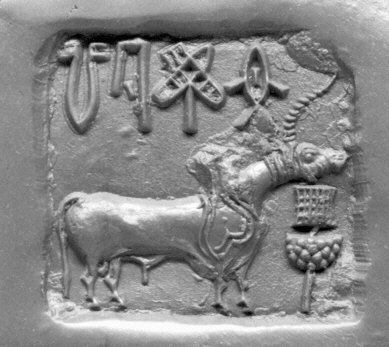
The earliest hard evidence of civilization on the subcontinent comes from the Indus Valley: Mohenjo-daro, Harappa, Rakhigarhi, Dholavira, and a thousand more sites, with the mature urban phase flourishing between roughly 2600 and 1900 BCE across close to a million square kilometers, contemporaneous with Egypt and Sumer. Gridded streets, standardized brick, covered drainage, public water tanks, and a script that remains undeciphered.
What follows is the part where an older, racialized story has been substantially revised. A once-common version of the Aryan Invasion Theory imagined a single conquering wave of light-skinned Indo-European speakers displacing darker inhabitants southward and founding Indian civilization proper. It mapped neatly onto the racial thinking of the nineteenth and early twentieth centuries, and neither archaeology nor genetics supports that simple replacement story.
An ancient genome published in 2019 from a single individual at Rakhigarhi showed no detectable steppe ancestry. A much larger study of ancient and present-day populations found that steppe-derived ancestry entered South Asia in the second millennium BCE, after the mature Indus cities declined, on a timing consistent with the linguistic case for Indo-Aryan arriving from outside. Genetics cannot, by itself, identify a language, and a single Rakhigarhi genome cannot represent every Harappan community. Still, the combined evidence supports migration and mixture rather than racial replacement. Indus-related ancestry remained a major component of the populations that followed.
The Rigveda, composed in early Sanskrit by descendants of these arrivals and their neighbors, dates to roughly 1500–1200 BCE. Over the following centuries, social distinctions among Vedic communities hardened into the structure that became caste.
Two tracks, not one
The rest of this history runs two parallel narratives, because running only the northern one, as most textbooks do and as an earlier version of this page did, misrepresents about a quarter of the country.
In the north, the Gangetic plain consolidated into the sixteen mahajanapadas by the sixth century BCE, with iron, coinage, and cities appearing together. Magadha absorbed its rivals; Chandragupta Maurya took its capital around 321 BCE; and his grandson, Ashoka, built the first subcontinental empire and then spent the rest of his reign publicly regretting how. What followed was not decline so much as multiplicity: Indo-Greeks, Kushans, and the Gandhara Buddha, then the Guptas, and mathematics that kept going after the dynasties stopped.
At the same time, and largely independently, urban society was developing in the far south, and the question of how early is currently being fought over at Keeladi. The Sangam poems, among the earliest substantial bodies of surviving literature in an Indian language other than Sanskrit, belong to that world, as do the Cheras, Cholas, and Pandyas, and a maritime trade with the Roman Mediterranean substantial enough that Roman gold turns up in Tamil Nadu in hoards. The Cholas later ran village assemblies whose committees were selected by lot from eligible candidates, cast the Nataraja, and, in about 1025, sent a naval expedition against Srivijaya in Sumatra, which was straightforwardly a military raid, whatever the more decorous accounts say. Indic religious and artistic influence had been spreading through Southeast Asia for centuries anyway, mostly through trade and Brahmin and Buddhist itinerancy, and its monuments, Angkor, Borobudur, and Prambanan, are among the largest anywhere.
The Persianate world
From the twelfth century, Turkic and Afghan military elites moved into the north, and six centuries of Sultanate and Mughal rule followed. Delhi survived the Mongols, fragmented into regional sultanates that did most of the interesting cultural work, and was reconstituted by Babur in 1526.
The Mughals are usually described as ruling for three centuries. Nominally true, since the last emperor was deposed in 1857. Effective imperial power fragmented rapidly after Aurangzeb died in 1707. The Company defeated an army that included the Mughal emperor at Buxar in 1764, and by 1803, the emperor was a British pensioner in his own palace.
Akbar consolidated through conquest and alliance, abolished the tax on non-Muslims, and convened religious debates that his own clergy found alarming. Aurangzeb reimposed that tax and ordered the destruction of several Hindu temples, and his reign is the one that most shapes how the whole period gets argued about today. Richard Eaton’s influential account situates recorded temple desecrations in their political context, especially attacks on institutions linked to rival rulers, without requiring either the denial of religious motives or an account based solely on doctrine.
Company, Crown, and the end
Portuguese, Dutch, French, and English trading companies established coastal footholds from the sixteenth century. The English East India Company, chartered in 1600, moved from trade to territorial power across the eighteenth century.
It is worth being precise about how, because the compressed version gets it wrong. Plassey in 1757 did not hand the Company Bengal’s revenues; it installed a client nawab and made the Company the kingmaker behind him. The revenues came eight years later, when, after Buxar, the Mughal emperor granted the Company the diwani of Bengal, Bihar, and Orissa in 1765: the legal right to collect and keep the tax revenue of the richest province in India while nominally remaining the emperor’s revenue officer. A trading company acquired a treasury and a standing claim on thirty million people without ever formally becoming a state. Everything that follows runs on that money.
By 1818, the Maratha defeat made the Company paramount. The uprising of 1857 ended with the Crown taking direct control in 1858, abolishing Mughal and Company rule in a single stroke.
The freedom movement was then built over six decades, from a loyalist petitioning society into a mass organization with village-level presence. No single cause explains the British withdrawal. Mass non-cooperation had eroded consent; the Bengal famine of 1943 further destroyed the Raj’s legitimacy; the INA trials and the naval mutiny of 1946 raised fears about the reliability of parts of the armed forces; and a war-exhausted Britain decided to leave, then did so faster than almost anyone wanted.
Independence came on 15 August 1947, together with Partition. Somewhere between ten and twenty million people moved; estimates of the dead range from two hundred thousand to two million. It remains one of the largest forced migrations in human history, and the border it drew is still one of the most militarized in the world.