
Buddhism
Siddhartha Gautama was born in the Himalayan foothills, in what is now Nepal, sometime between the sixth and fourth centuries BCE; the traditional date of 563 BCE is probably too early. He taught across the Gangetic plain and attained awakening at Bodh Gaya in present-day Bihar. His teaching starts with a diagnosis: conditioned existence is marked by dukkha, dissatisfaction or suffering; craving gives it force; cessation is possible; and the eightfold path trains the conduct, attention, and understanding required for release.
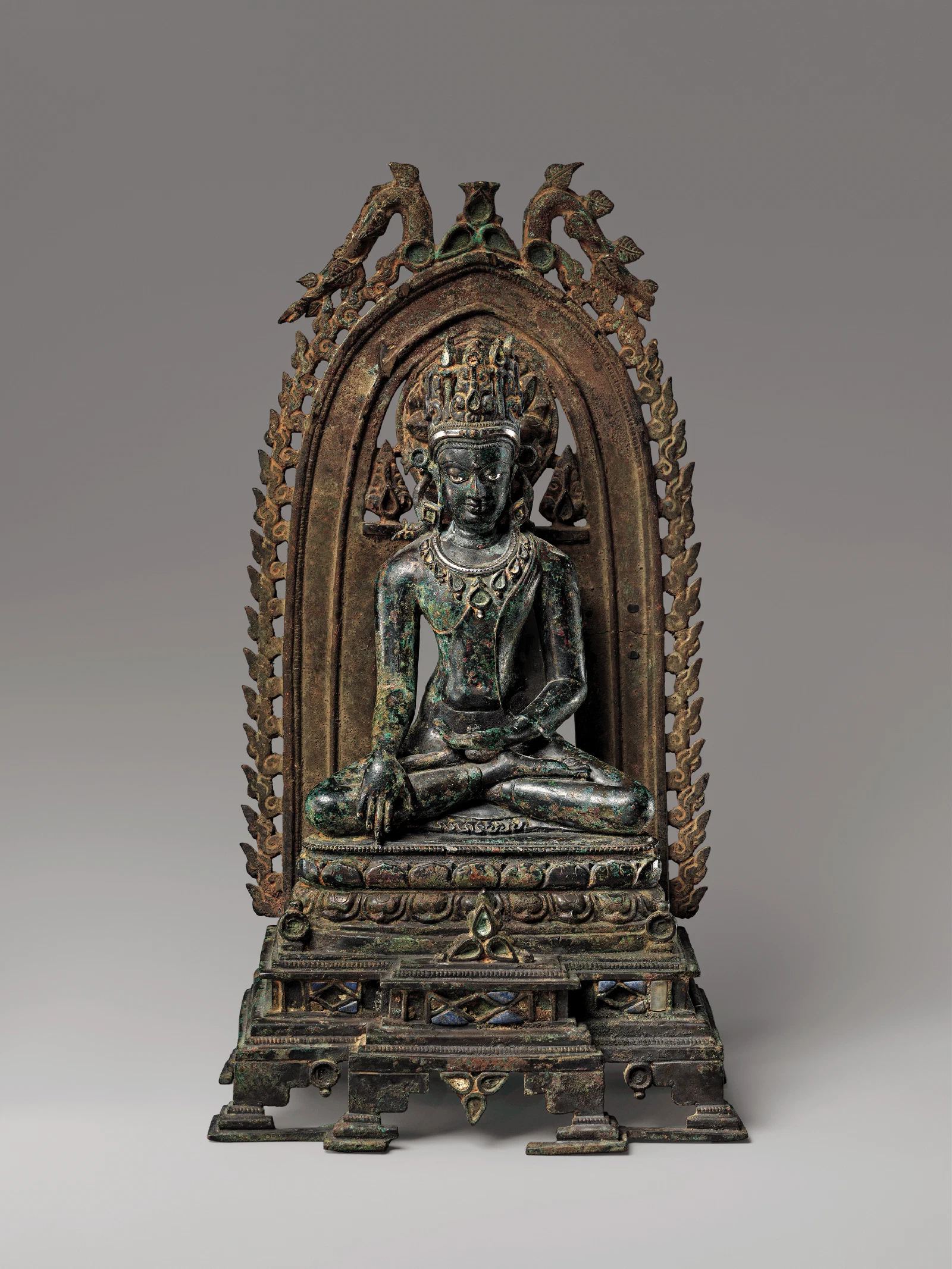
Buddhist communities spread across the subcontinent before and during Ashoka’s reign; his patronage, edicts, monuments, and missions gave the tradition new reach. Over the centuries, Theravada became dominant in Sri Lanka and much of Southeast Asia; Mahayana traditions traveled through Central Asia into China, Korea, and Japan; and Vajrayana moved into the Himalayas and Tibet. Nalanda, established by the fifth century CE, drew students from across Asia and became one of the largest centers of Buddhist learning before its final destruction and abandonment around the beginning of the thirteenth century.
Buddhism then declined across most of the plains over many centuries, rather than vanishing in a single event. Brahmanical traditions adopted and contested Buddhist ideas and sites; changing trade and patronage weakened some monasteries; devotional Hindu institutions became more powerful; and warfare destroyed major centers whose wealth and concentration made them vulnerable. Buddhism persisted in Himalayan regions and in smaller communities elsewhere, but by the late medieval period, it no longer had a large institutional presence across most of India. The old explanation, that one invasion ended the religion, is too neat.
What was actually new
The Buddha taught in a Gangetic world already full of renunciants arguing about liberation, and much of his vocabulary, karma, samsara, and moksha, was shared. What distinguished the path was a particular combination of commitments, not three ideas that appeared nowhere else.
The most distinctive was anatta, non-self: the denial of any permanent, unchanging essence underlying a person. What exists is a bundle of physical and mental processes in continuous causal succession. This directly contradicts the Upanishadic identification of an eternal self with ultimate reality, and it created a problem the tradition has worked on ever since: what exactly is reborn if there is no self? This is answered by pointing to causal continuity rather than to a transmigrating substance.
The path also rejected Vedic authority and the claim that sacrifice or inherited priestly status could secure liberation. Jainism and other shramana movements shared that rejection rather than inventing it independently, and the Buddha did not originate it. The Buddha admitted people of any caste to his community, and the early texts contain sharp satire of Brahmin claims to inherited purity. That is why Buddhism and Jainism are classed as nastika, heterodox, in later Indian philosophical taxonomy: not because they deny gods, whose existence the early texts casually accept while denying them any role in liberation, but because they deny the authority of the Vedas.
The middle way between indulgence and severe asceticism was another defining commitment, separating the Buddha’s community from paths, including the Jain one, that placed greater weight on extreme austerity.
Ashoka
The Mauryan emperor Ashoka, reigning in the third century BCE, was a major reason Buddhism gained reach far beyond its early regional networks. After a war of conquest in Kalinga, whose slaughter he describes with apparent remorse in his own inscriptions, he adopted and promoted dhamma, publishing edicts on rocks and polished stone pillars across his territory in Prakrit and, at the empire’s northwestern edge, in Greek and Aramaic.
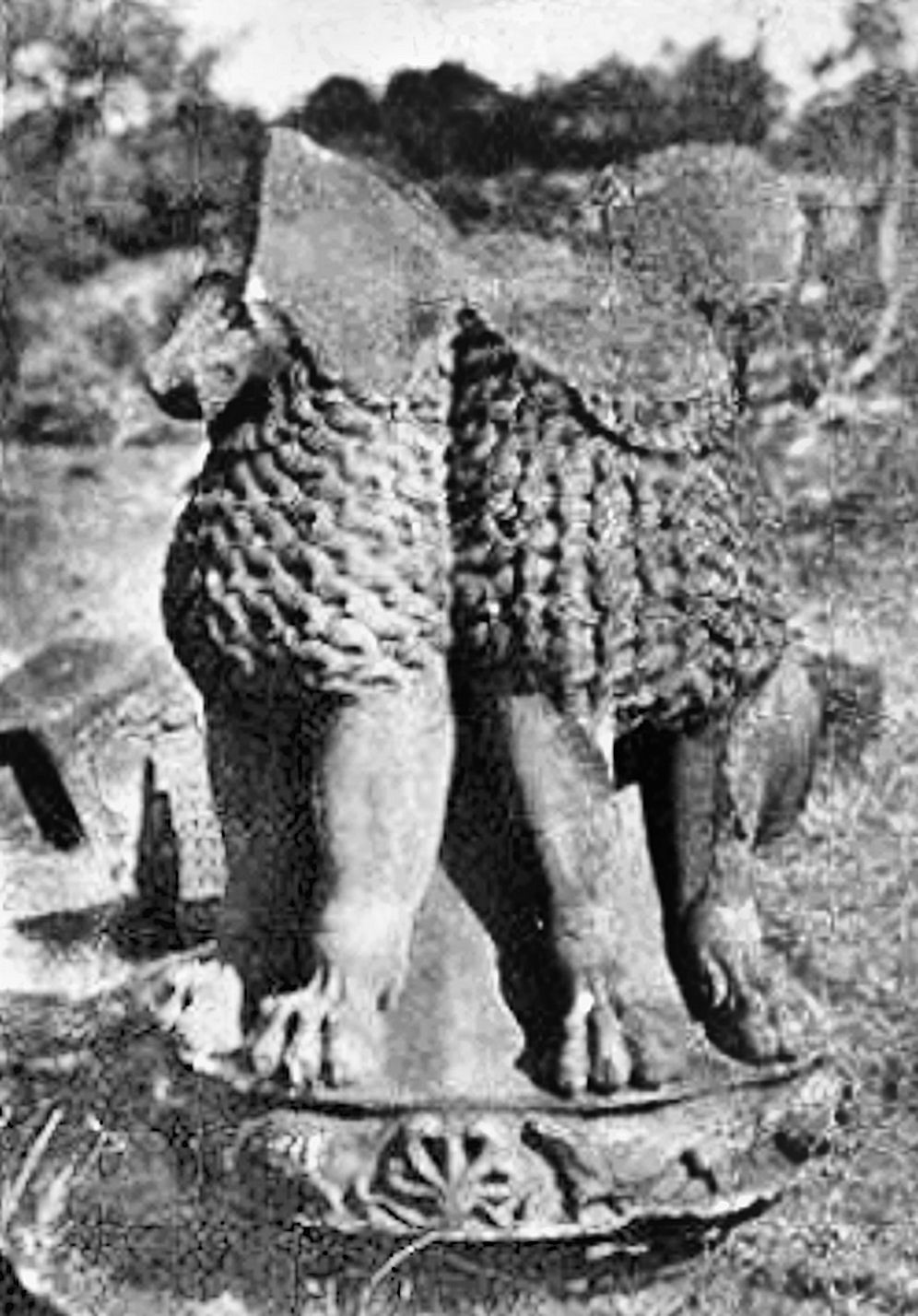
The edicts are among the earliest extensive bodies of decipherable writing from India and give its earliest surviving first-person royal voice. What they advocate is notably non-sectarian: they urge non-violence, restraint in speech, care for animals, respect for elders and ascetics, and, strikingly, honor toward other religious traditions because disparaging another’s sect damages one’s own. Ashoka’s inscriptions name missions to Hellenistic kingdoms; Buddhist chronicles also credit his reign with the mission that established the Theravada lineage in Sri Lanka. His lion capital from Sarnath became the emblem of the Republic of India in 1950, and his wheel sits at the center of the flag.
Nalanda and the philosophical tradition
Buddhism produced several centuries of rigorous philosophy in India. Nagarjuna, probably in the second century CE, developed the Madhyamaka analysis of emptiness, arguing that nothing possesses independent inherent existence. The Yogachara school took up the role of consciousness in constituting experience. Dignaga and Dharmakirti built a formidable tradition of logic and epistemology that non-Buddhist schools had to answer, and much of the sophistication of classical Indian philosophy generally comes from that argument.
The institutional home of this work included the great monastic universities of eastern India: Nalanda, Vikramashila, and Odantapuri. Nalanda drew students from China, Korea, Tibet, and Central Asia; the Chinese pilgrims Xuanzang and Yijing left detailed accounts of studying there in the seventh century, and their travel records remain primary sources for Indian history of the period. Turkic armies destroyed these institutions and their libraries during their campaigns in eastern India around the turn of the thirteenth century.
Why it declined
The disappearance of Buddhism from the land of its origin is a genuine historical puzzle, and the single-cause explanations are all inadequate.
Destruction of the monasteries mattered, but Buddhism was already institutionally weakened across most of the plains before those campaigns, and Hindu and Jain institutions in the same regions survived the same period. The more structural account emphasizes Buddhism’s dependence on monastic institutions supported by royal and mercantile patronage, with a thinner presence in ordinary domestic and life-cycle ritual than its competitors. When patronage shifted, as devotional Hindu movements and temple institutions grew, monasteries had little else to stand on. Brahmanical traditions also absorbed a great deal, adopting vegetarianism, monastic organization, and philosophical positions, and eventually incorporating the Buddha as an avatar of Vishnu, a way of neutralizing a rival rather than honoring one.
Ambedkar, and Buddhism now
Its return is one of the more remarkable stories in modern Indian history. In 1956, B.R. Ambedkar, principal architect of the Constitution and born into an untouchable caste, publicly converted to Buddhism in Nagpur along with several hundred thousand followers, framing it as a deliberate exit from a religion he held to be irredeemably tied to caste. He had spent decades reaching that decision, announcing in 1935 that he had been born a Hindu but would not die one.
His reconstruction, Navayana, is deliberately unorthodox. Ambedkar’s The Buddha and His Dhamma, published after his death, sets aside much of the traditional framework, including a literal reading of karma and rebirth, and presents the Buddha as a social reformer whose teaching is fundamentally about suffering inflicted by human arrangements. Traditional Buddhists have contested that reading, which is precisely what Ambedkar expected and did not much care about.
The movement is why India has several million Buddhists today, concentrated in Maharashtra, and why Indian Buddhism is a religious tradition that carries a directly political argument at its center. The other Buddhist populations are geographically separate: Ladakh, Sikkim, Arunachal Pradesh, and the Himalayan belt maintain long-established Vajrayana traditions, and a substantial Tibetan refugee community has been based in Dharamshala since 1959, making India the institutional center of Tibetan Buddhism in exile.
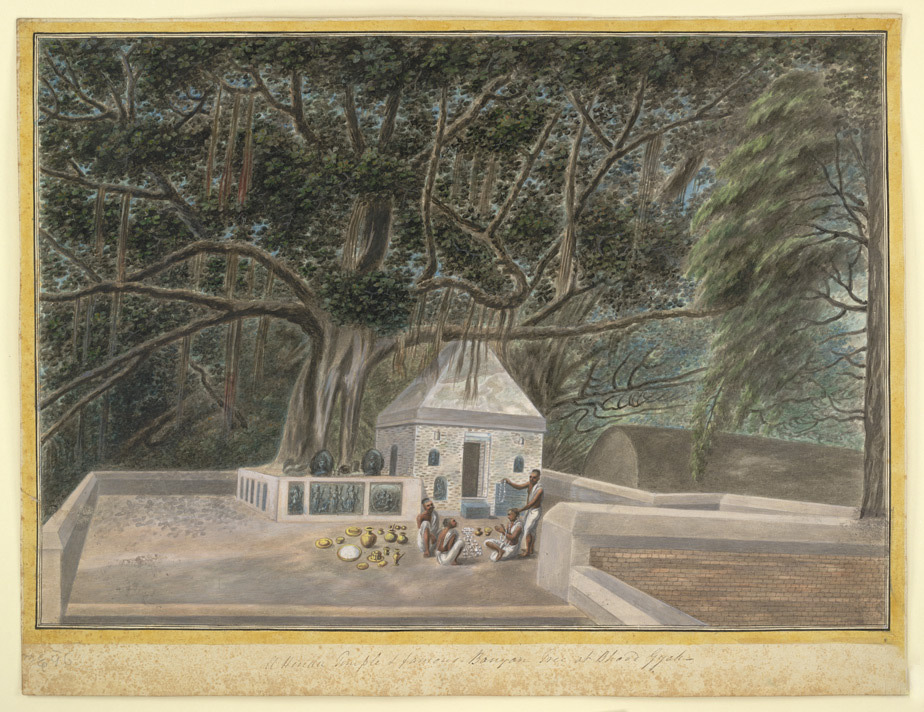
The pilgrimage sites remain: Bodh Gaya, where the awakening happened, Sarnath, where the first teaching was given, and Kushinagar, where the Buddha died, all draw international Buddhist traffic. Bodh Gaya’s temple has been managed since 1949 under a Bihar law that provides for four Hindu and four Buddhist members, with the Gaya district magistrate as chair. A 2013 amendment removed the earlier rule requiring a Hindu chair when the district magistrate was not Hindu. Buddhist organizations continue to protest the equal division and state-controlled arrangement, demanding full Buddhist management.