
Hinduism
Hinduism is not a religion in the sense that Christianity or Islam is a religion, and most of the confusion about it starts with the assumption that it must be. There is no founder, no single scripture, no creed, no church, and no mechanism by which anyone could be declared a heretic. What there is instead is a very old and very large family of traditions that share texts, vocabulary, ritual grammar, and a set of arguments they have been having with each other for three thousand years.
The name itself is external. “Hindu” began as a Persian geographical term for people living beyond the Indus. It became a religious category largely through encounters with Islam and, decisively, through British colonial administration, which needed a box to put people in for census purposes. Traditions that had never regarded themselves as a single thing found themselves counted as one.
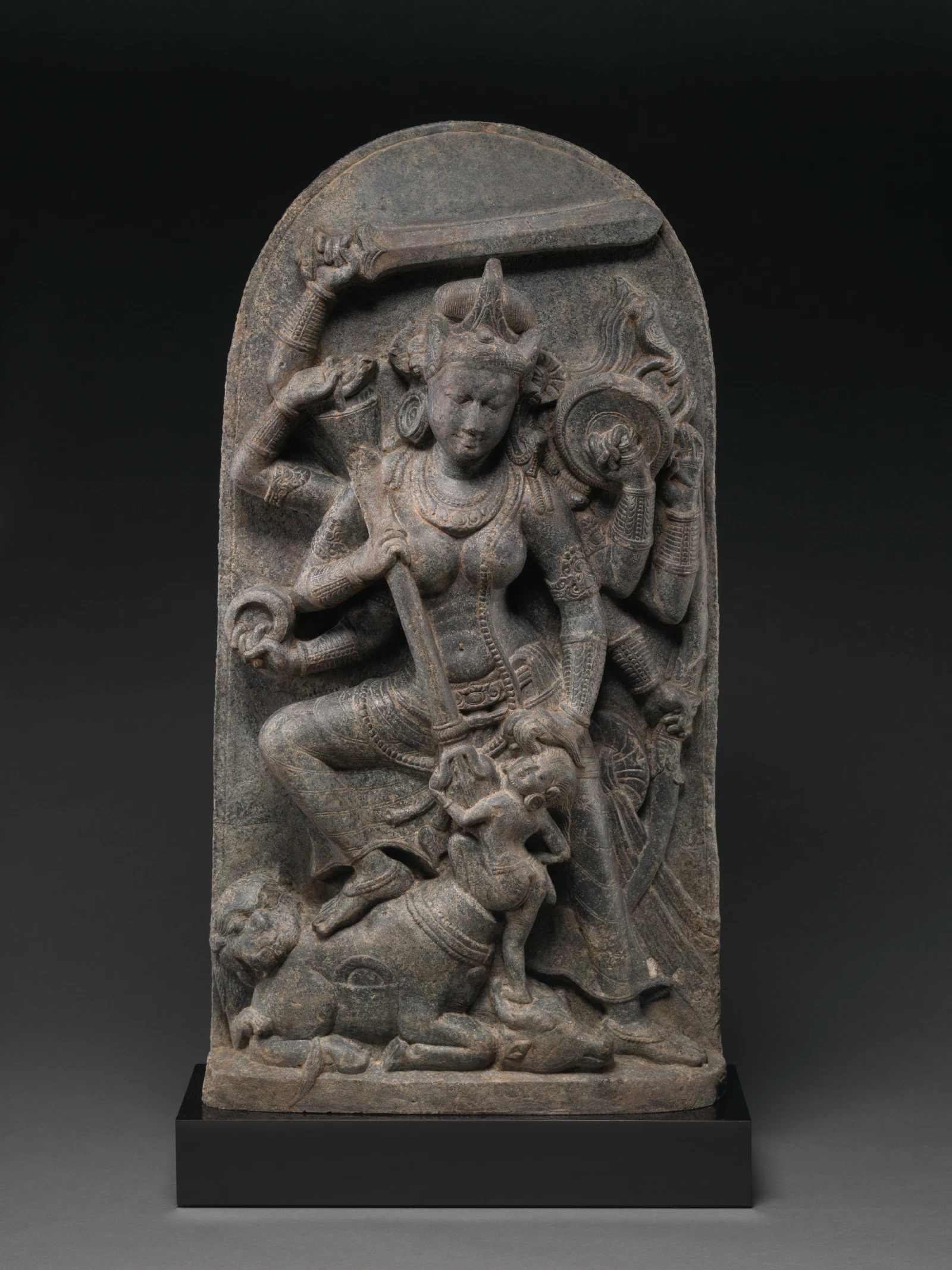
What holds it together. A shared canon that everyone argues over rather than agrees on: the Vedas as nominal authority, the Upanishads as the philosophical core, the epics and Puranas as the actual popular scripture. A shared set of concepts: dharma (duty, order, the right thing given who and where you are), karma, samsara, moksha. A ritual repertoire. And a striking tolerance for metaphysical disagreement: the six orthodox schools, Nyaya, Vaisheshika, Samkhya, Yoga, Mimamsa, and Vedanta, include a rigorous logical realism, an atheistic dualism, and a radical non-dualism holding that the self and ultimate reality are identical and that the world of distinct objects is a misperception. All six are Hindu. They contradict each other extensively.
On “polytheism.” It’s the wrong word, or at least an insufficient one. Most Hindu practice centers on an ishta-devata, a chosen deity, and is functionally monotheistic within that frame; the major theological schools are variously monist, qualified monist, or theist; and the Rigveda itself contains the line that the wise speak of the one in many ways. There are certainly many gods. What that means theologically is the thing under dispute, and has been for millennia.
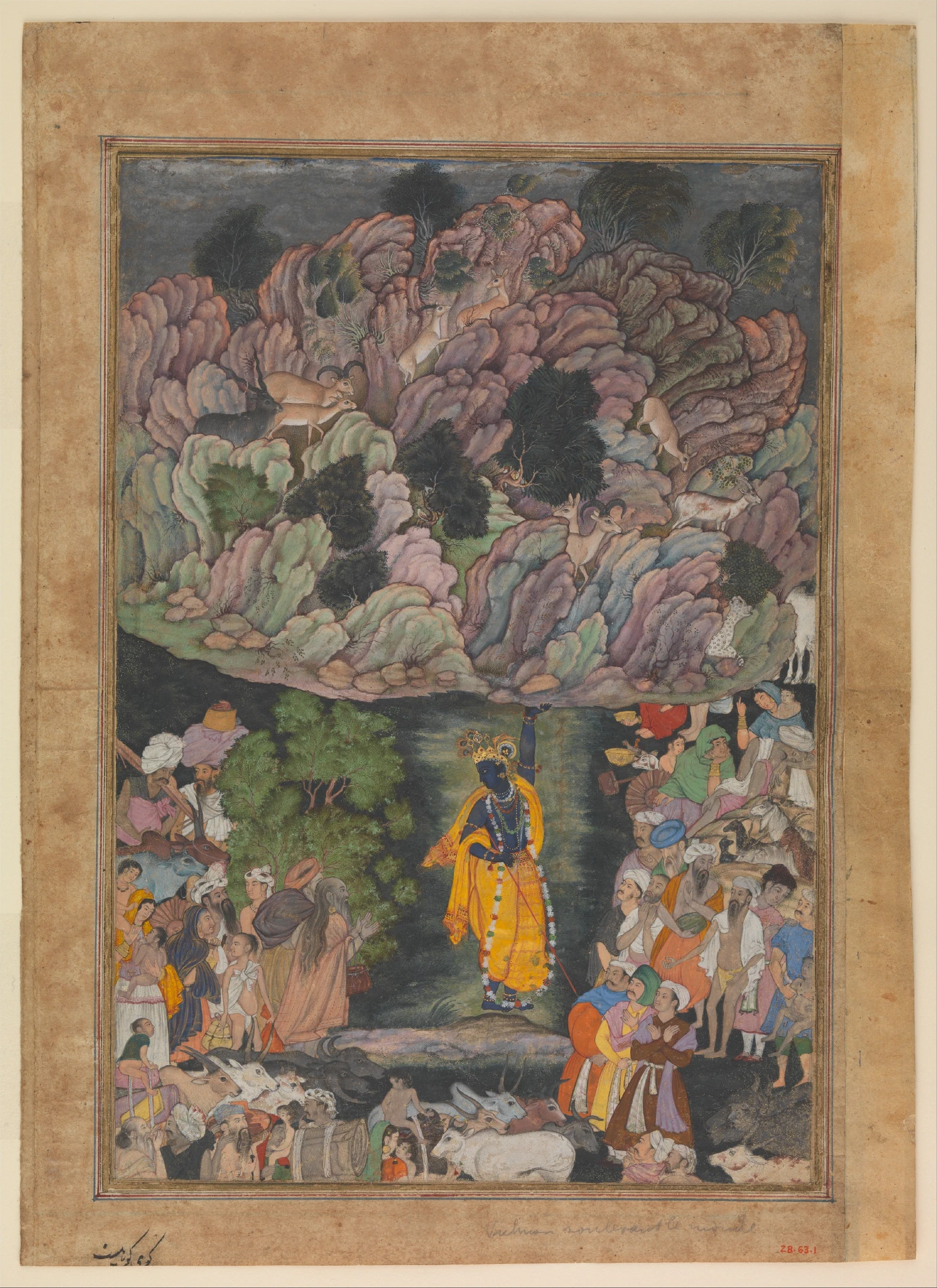
The main streams. Vaishnavism (centered on Vishnu and his avatars, above all Rama and Krishna), Shaivism (Shiva), Shaktism (the Goddess), and Smartism. Then the devotional bhakti movements from roughly the seventh century onward, beginning with the Alvars and Nayanars in the Tamil country and spreading north over the following eight hundred years. These democratized religious access in enormous ways: vernacular languages rather than Sanskrit, a direct relationship with the divine rather than priestly mediation, and poet-saints drawn from every social level, including the very bottom.
What the texts are for. The tradition distinguishes shruti, “that which was heard,” meaning the Vedas and Upanishads, held to be revealed and authorless, from smriti, “that which is remembered,” meaning the epics, the Puranas, and the law books, which are of human composition and carry lesser authority. In practice, the ranking is inverted by use. Almost nobody’s religious life is organized around the Vedas; the Ramayana, the Mahabharata, and the Puranas supply the stories, festivals, and moral vocabulary that people actually live with. Nominal authority and practical authority sit in different places, and everyone involved knows it.
What practice looks like. Hinduism is a religion of practice far more than of belief, and it makes no demand that participants agree about metaphysics. The characteristic act is puja, offering to a deity present in an image, at a household shrine, more often than in a temple. The characteristic experience is darshan, which means seeing and being seen by the deity, and which is why temple architecture organizes everything around a sightline to the sanctum. Food offered and returned as prasada, life-cycle rites from naming to marriage to cremation, vows and fasts undertaken for specific ends, and pilgrimage all matter more to most Hindus than doctrinal position. Priests are ritual specialists, not clergy with pastoral authority over a congregation.
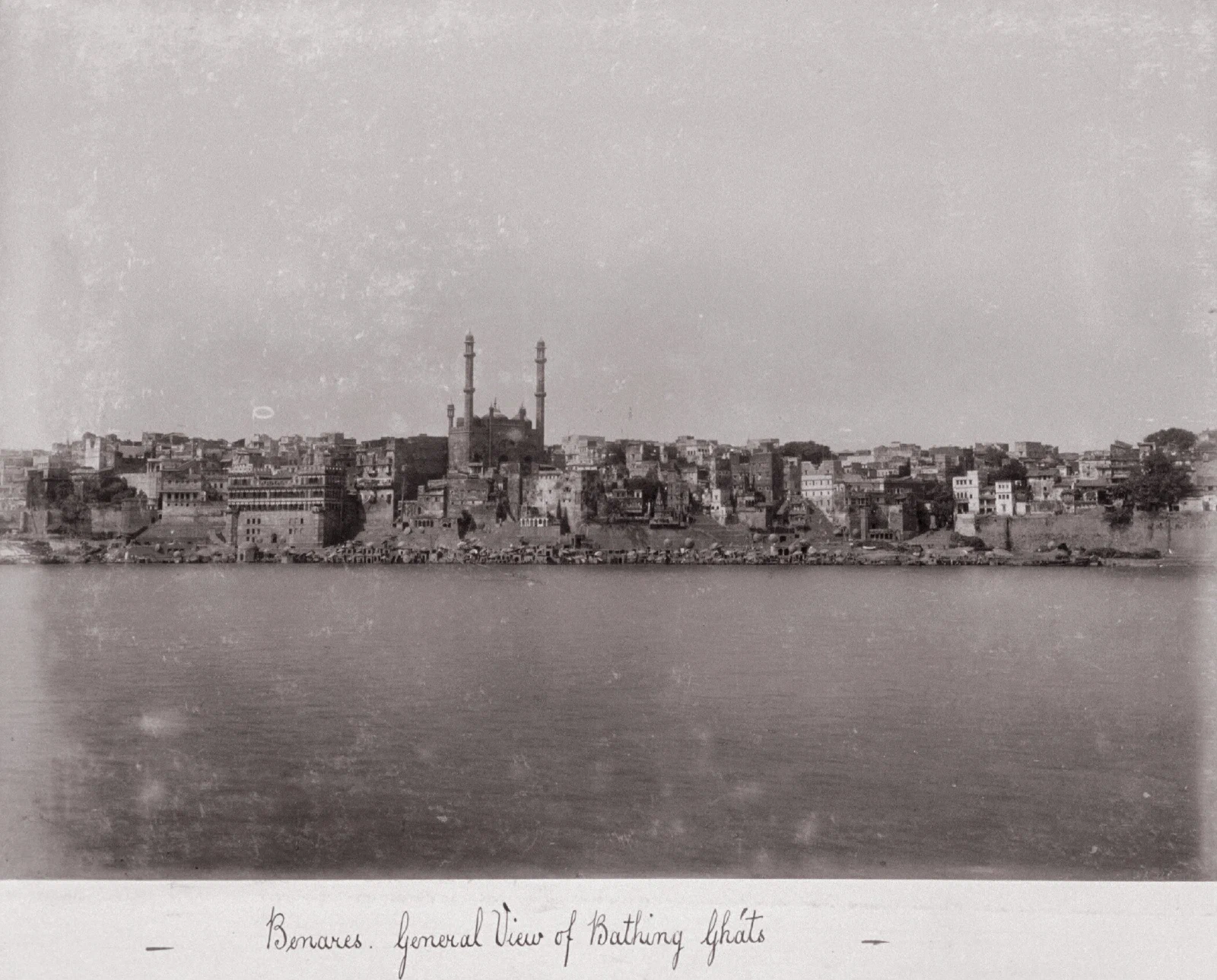
Time and place. Pilgrimage maps the country. The Kumbh Mela draws tens of millions on an astronomically determined cycle; Varanasi, Tirupati, Vaishno Devi, Sabarimala, Puri, and the Himalayan char dham pull continuous traffic; and networks of sites, the jyotirlinga shrines of Shiva and the shakti pitha sites of the Goddess, tie distant regions into single sacred geographies. Diana Eck’s argument that India has been imagined as a country through pilgrimage rather than through politics is worth taking seriously.
The aims of a life. Classical formulations set out four legitimate human ends: dharma, duty and moral order; artha, wealth and power; kama, pleasure and desire; and moksha, liberation. Two features stand out. Prosperity and pleasure are ends in their own right rather than concessions, which is why Sanskrit produced serious treatises on statecraft and erotics alongside its theology. And the scheme is staged across a life through the four ashramas, student, householder, forest-dweller, and renunciant, with the householder supporting everyone else. The tension between the householder’s obligations and the renunciant’s exit runs through the whole tradition and is never resolved.
Reform, from the inside. The nineteenth century produced sustained internal criticism. Rammohan Roy founded the Brahmo Samaj in 1828, rejected image worship, and campaigned against sati, which was outlawed in 1829. Dayananda Saraswati’s Arya Samaj, founded in 1875, called for a return to the Vedas, rejected later accretions, opposed caste by birth, and organized shuddhi rites to bring converts back into the fold. Ramakrishna’s disciple Vivekananda addressed the World’s Parliament of Religions in Chicago in 1893 and founded the Ramakrishna Mission, presenting Vedanta as a universal philosophy and placing monastic service to people in poverty at its center.
The sharper criticism came from outside the reforming elite. Jyotirao Phule in Maharashtra and Periyar in the Tamil country attacked the tradition’s caste structure at its root rather than seeking to purify it, and Narayana Guru in Kerala built temples and institutions for communities excluded from existing ones. Movements to open temples to all castes, notably the Vaikom agitation of 1924 and 1925, led to the Travancore Temple Entry Proclamation of 1936 and, eventually, to Article 25 of the Constitution, which explicitly guarantees Hindu religious institutions to all classes of Hindus.
Hinduism and politics. Since the late nineteenth century, one strand of Hindu thought has developed into Hindutva, a political project defining Indian nationhood in terms of Hindu cultural identity. V.D. Savarkar articulated it in 1923, defining a Hindu as one for whom India is both fatherland and holy land, a criterion that includes Buddhists, Jains, and Sikhs while placing Muslims and Christians outside. The Rashtriya Swayamsevak Sangh was founded in 1925 and built an organizational network of affiliates that now spans politics, labor, education, and religious mobilization; its political wing became the Jana Sangh in 1951 and the Bharatiya Janata Party in 1980, which now governs the country.
The movement’s central mobilization was the campaign to build a temple at Ayodhya on the site of the Babri Masjid, which culminated in the mosque’s demolition by a crowd in December 1992 and the riots that followed. The Supreme Court awarded the site for a temple in 2019 while holding the demolition unlawful, and the temple was consecrated in 2024.
Hindutva is a modern political ideology, not a religious tradition, and conflating the two makes both harder to discuss. It is also the single most consequential thing happening in Indian public life, and any honest page about religion in India has to say so.